How to Calculate Exactly How Many Boards You Need
A simple method for counting 2x4s, pickets, or deck boards for any project. Covers linear and square footage, waste factors, and converting to store quantities.
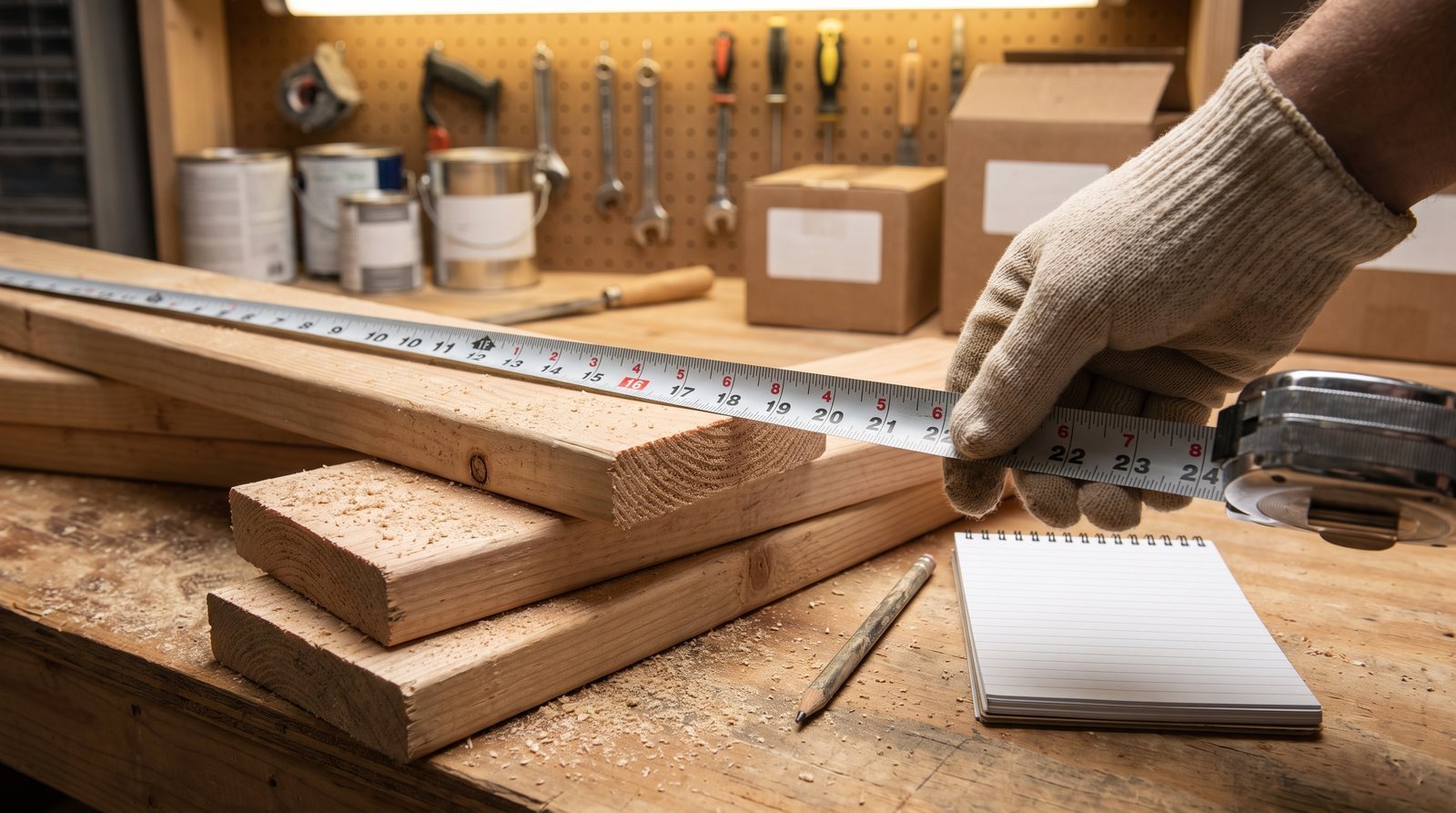
By the end of this guide you will know how to count the exact number of 2x4s, 1x6s, fence pickets, or deck boards for any project, add the right waste factor, and walk into the store with a number instead of a guess. The method works whether you are framing a wall, building a fence, decking a pool surround, or putting up garage shelves.
The one mistake that throws everything off
The single most common error is using the number printed on the label. A "2x4" is not 2 inches by 4 inches. It is 1.5 inches by 3.5 inches. A "1x6" is 3/4 inch by 5-1/2 inches. Fence pickets sold as 6 inches wide are typically 5-1/2 inches across the face. If you plug nominal sizes into your math, you will come up short on almost every project.
Write the actual dimensions on a sticky note and keep it where you do your figuring. Here are the ones that trip people up most:
| Nominal Size | Actual Size | Common Use |
|---|---|---|
| 2x4 | 1.5" x 3.5" | Wall framing, workbenches |
| 1x6 | 3/4" x 5-1/2" | Shelving, trim, planter boxes |
| 5/4 x 6 deck board | ~1" x 5-1/2" | Deck surfaces |
| 5/8 x 6 fence picket | 5/8" x 5-1/2" | Privacy fencing |
Linear footage: framing, shelving, and simple builds
For anything where boards run in one direction (wall studs, shelf supports, rail stock), you need linear feet.
Step 1: List every piece by length. Draw your project or work from a plan. Write down every board: eight studs at 92-5/8 inches, two plates at 10 feet, four cripples at 14-1/2 inches, and so on.
Step 2: Add up the total linear feet. Convert everything to feet or inches (pick one) and sum it.
Step 3: Divide by the board length you will buy. If your total is 96 linear feet and you are buying 8-foot (96-inch) boards, that is 96 / 8 = 12 boards before waste.
Step 4: Add waste. Multiply by your waste factor (more on that below). For a straightforward framing job, 12 boards x 1.15 = 13.8, so you buy 14.
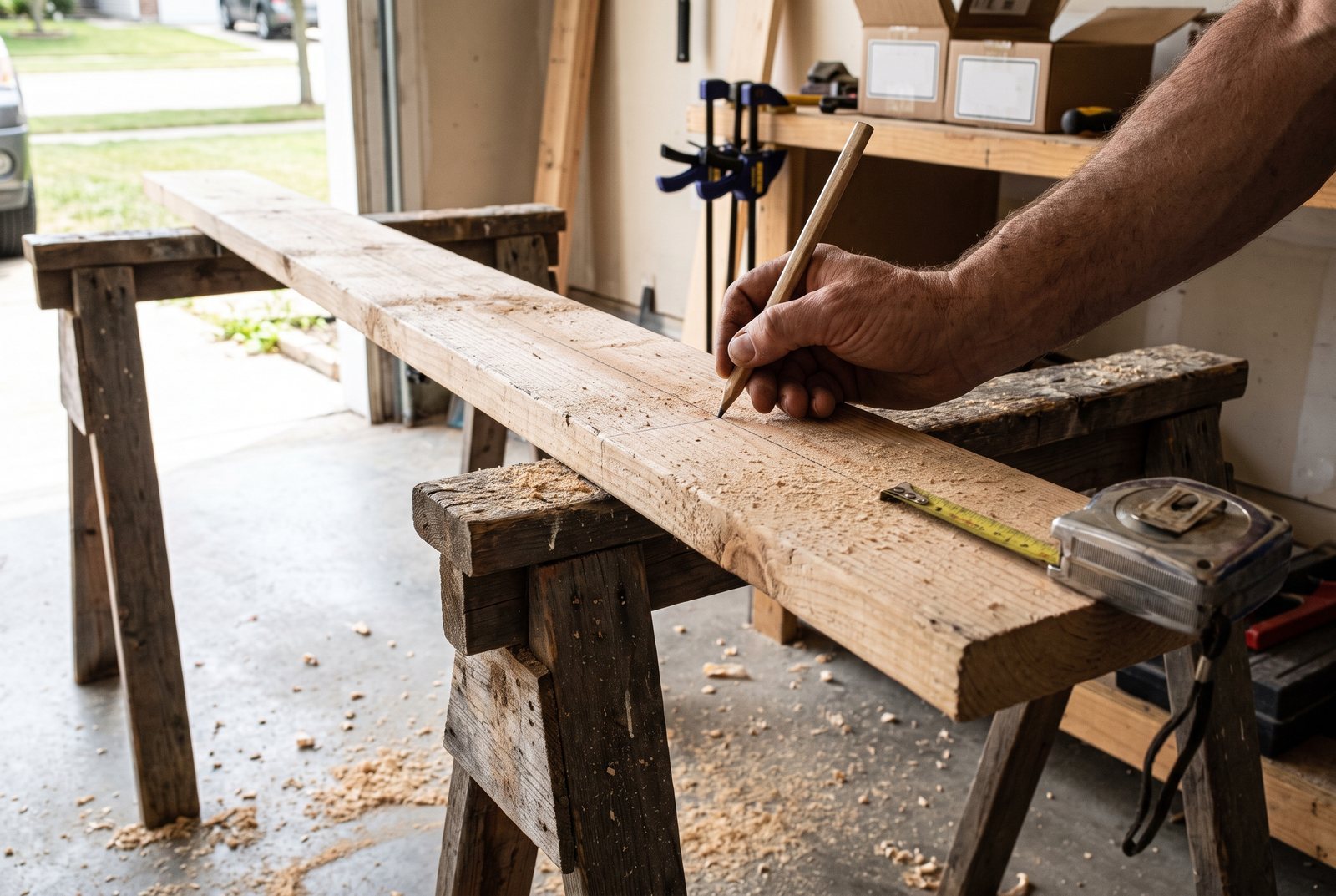
One thing people overlook: the saw kerf. Every cut removes about 1/8 inch of material. On a single board that barely matters. On a project where you are cutting dozens of short pieces from long stock, those eighths add up. If you are cutting six 16-inch pieces from an 8-foot board, you do not get six clean pieces; you get five, because the five saw cuts remove over half an inch of material. Lay out your cuts on paper before you assume how many pieces you can pull from each board.
Square footage: decking and panel coverage
Decking, sheathing, and some fencing projects are easier to think about in square feet.
Step 1: Measure the area. Length times width gives you the square footage. A 12 x 16 foot deck is 192 square feet.
Step 2: Find the coverage per board. A 5-1/2-inch-wide, 12-foot deck board covers 5.5/12 feet of width times 12 feet of length = 5.5 square feet. But deck boards need a gap between them for drainage and expansion, typically 1/8 to 3/16 inch. That gap is small per board but adds up over a full deck. A practical shortcut: treat each board as covering 5.67 inches of width (5.5 inches of board plus the gap), then calculate coverage from there.
Step 3: Divide and add waste. 192 sq ft / 5.5 sq ft per board = about 35 boards. Multiply by 1.10 to 1.15 for waste: 39 to 41 boards.
A large deck build is a good example of a project where getting the board count right matters. The build covers demolishing an old deck and framing a new, larger one from the ground up. On a project that size, being off by even 10% means a second trip and a lost afternoon.
Fence pickets: the gap formula
Picket fencing has its own calculation because the gap between pickets is a design choice, not a structural given.
The formula: Number of pickets = Total fence length (in inches) / (picket width + gap)
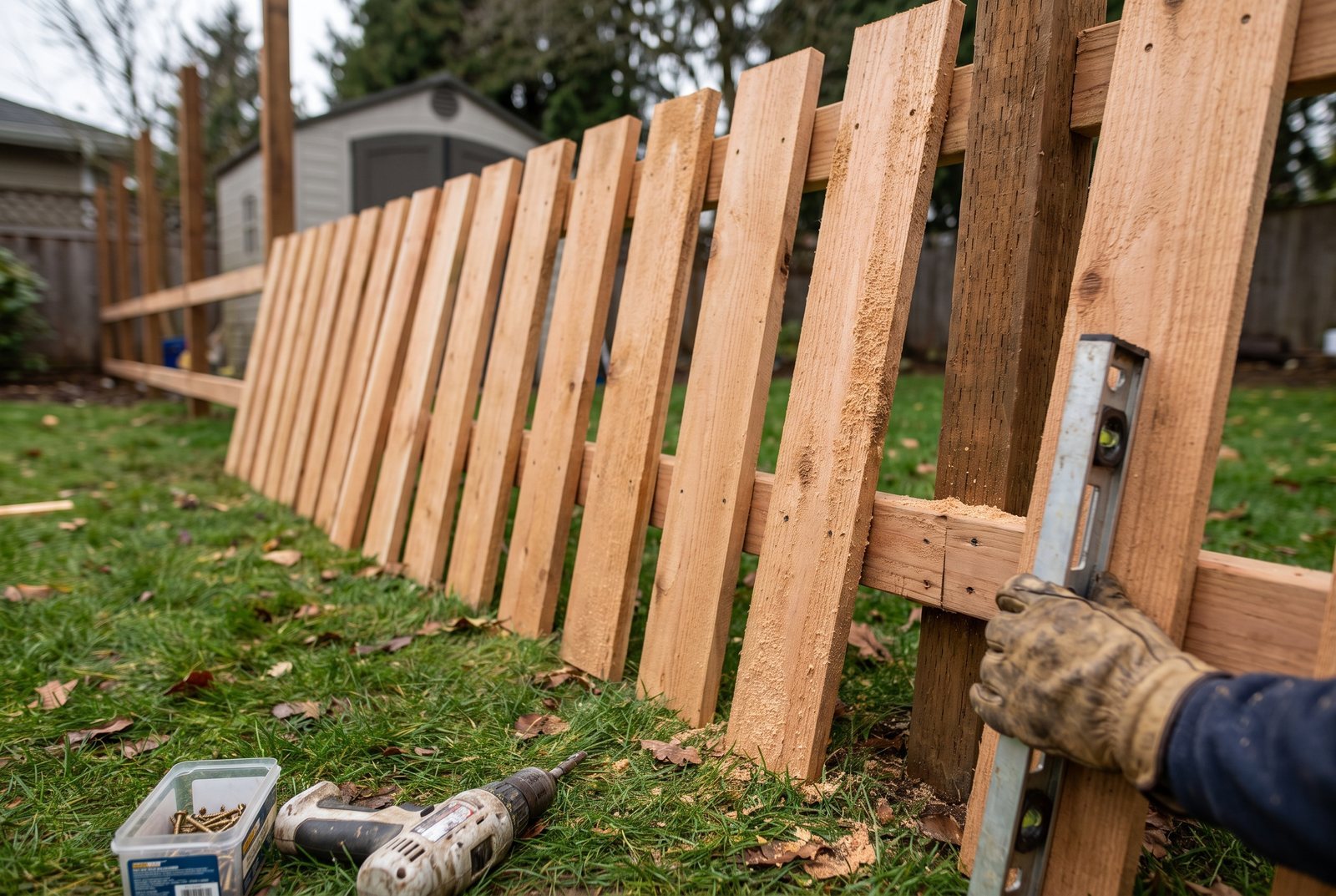
Say you are building 100 feet of privacy fence with 5-1/2-inch cedar pickets and no gap (boards touching). That is 1,200 inches / 5.5 inches = 218 pickets. If you want a 1/2-inch gap for a semi-private look, it becomes 1,200 / 6 = 200 pickets.
For a narrow section like a 36-inch-wide gate opening, the same math applies: 36 / 5.5 = 6.5, so you need 7 pickets if they are tight together.
Cedar pickets run about $4.38 each for a 5/8 x 5-1/2 x 6-foot board at the big-box stores. Buying by the pallet (around 560 pickets) can bring the unit cost down, but that only makes sense for long fence runs. For a full breakdown of keeping those pickets straight on sloped ground, see our guide on how to keep fence pickets level on uneven ground.
How much waste to add
There is no single right number, but here is how to think about it:
10% waste works for simple, straight cuts in decent lumber: a basic deck, a flat fence on level ground, shelving from clean 1x6 stock.
15% waste is better for framing, where you have angled cuts, cripples, headers, and the occasional board that comes off the pile looking like a banana.
20% or more is appropriate when you are working with lower-grade lumber, making complex cuts, or matching grain. If you are building furniture-grade shelves from common boards and rejecting anything with large knots, 20 to 30% is realistic.
When in doubt, round up. An extra 2x4 at roughly $3.98 is cheap insurance against a return trip. Leftover lumber is never wasted in a shop; it becomes braces, shims, test pieces, or next month's project.
Putting it all together: a worked example
Suppose you are building a simple 8 x 10 foot storage shed wall (one side) with studs 16 inches on center.
- Studs: 10 feet = 120 inches. At 16 inches on center, you need (120 / 16) + 1 = 8.5, rounded to 9 studs. Each is 92-5/8 inches (standard for an 8-foot wall with a double top plate and single bottom plate).
- Plates: Three plates (one bottom, two top) at 10 feet each = 30 linear feet.
- Total linear feet of 2x4: Nine studs at 92.625 inches = 833.6 inches = 69.5 feet, plus 30 feet of plates = 99.5 linear feet.
- Board count: Buying 8-foot studs for the verticals (9 boards) and 10-foot stock for the plates (3 boards) = 12 boards.
- Add 15% waste: 12 x 1.15 = 13.8, so buy 14 boards.
At about $3.98 per 8-foot 2x4, that wall costs roughly $56 in studs alone. If you want to estimate the full project cost including fasteners, finishes, and your time, our guide on estimating the real cost of a DIY project walks through the rest.
Tools you actually need for this
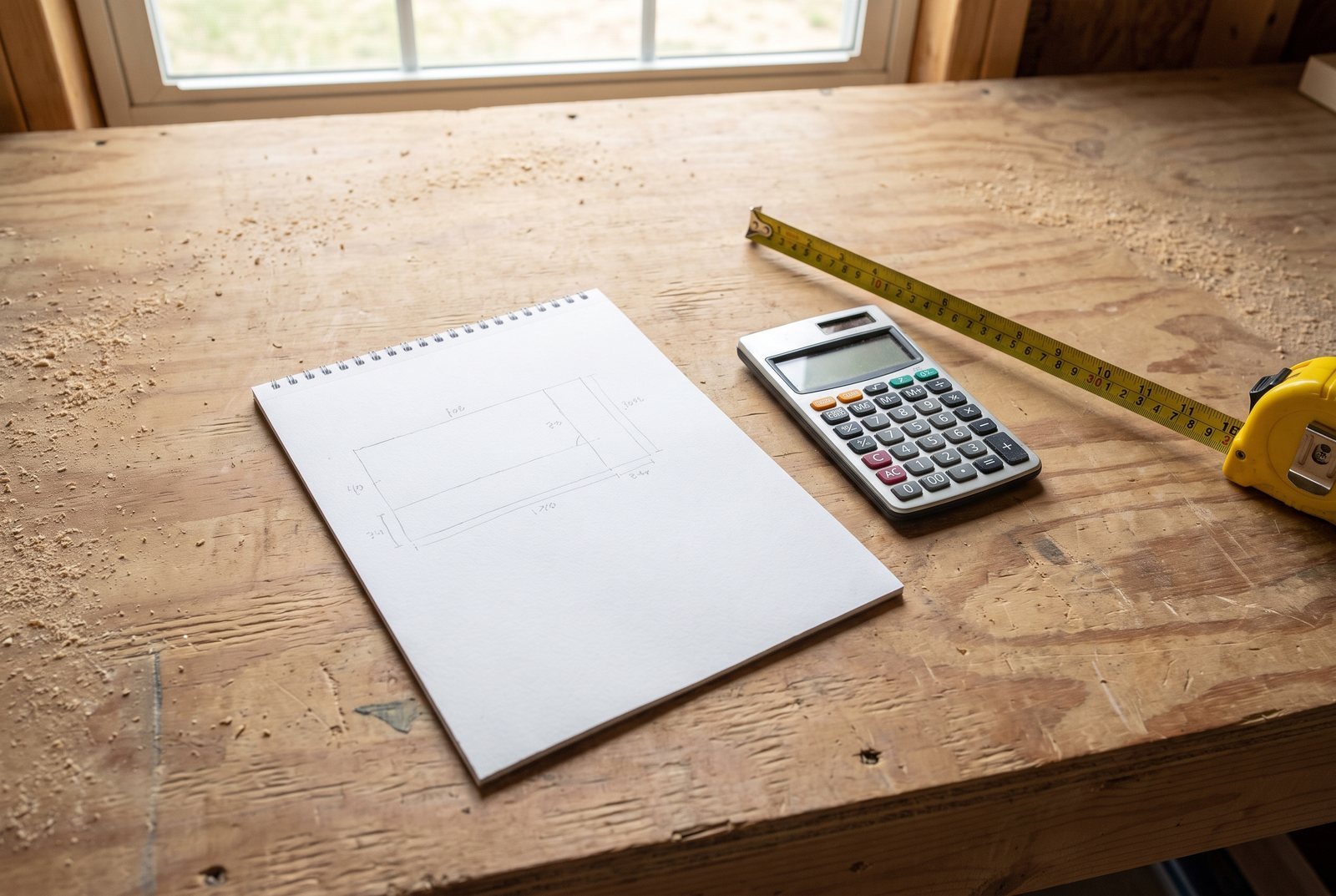
You do not need a table saw or a lumber calculator app. You need a tape measure, a pencil, and a piece of paper (or a phone calculator). For cutting, a circular saw handles 2x4s, 1x6s, pickets, and deck boards. Always wear safety glasses and follow the manufacturer's instructions when using power tools. If you are wondering whether a table saw is worth the investment, we have a separate post on what you can build without one.
The real skill here is not math. It is patience. Measure twice, list everything, then count. People who skip the list and eyeball it at the store almost always come home short.
Quick answers
How many 2x4s do I need for a wall?
Count the studs (wall length in inches divided by stud spacing, plus one), add your top plates (two) and bottom plate (one), then add 15% waste. For a 10-foot wall with studs at 16 inches on center, expect about 14 boards.
What waste factor should I use for lumber?
Use 10% for simple straight cuts in good lumber, 15% for framing, and 20% or more for projects with complex cuts or lower-grade stock where you will reject some boards.
How many fence pickets do I need for 100 feet of fence?
Divide the total fence length in inches (1,200) by the actual picket width plus your desired gap. With 5-1/2-inch pickets and no gap, that is about 218 pickets. Add 10% for waste: around 240.
Do I use nominal or actual lumber dimensions in my calculations?
Always use actual dimensions. A 2x4 is 1.5 by 3.5 inches, and a 1x6 is 3/4 by 5-1/2 inches. Using the nominal size will leave you short on materials every time.
The project in this post
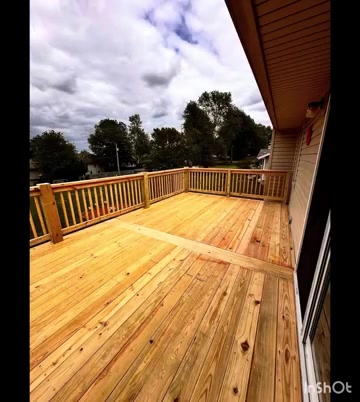
Building a Raised Wooden Deck
by VITALIK TATALIK
Open the project guideKeep reading
All posts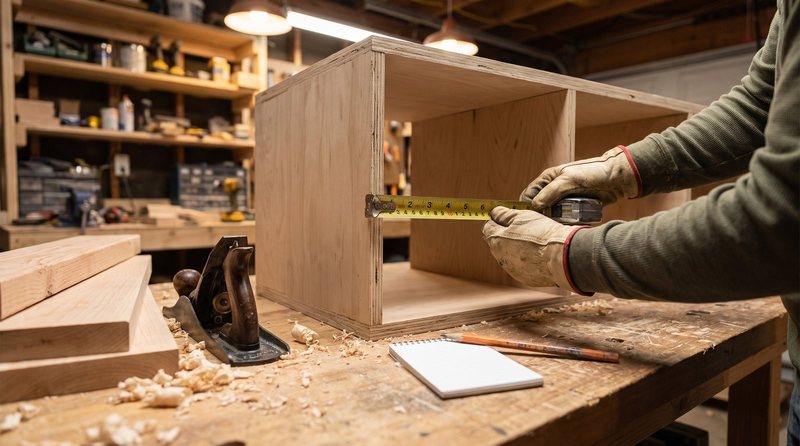
How to Resize DIY Plans Without Wrecking the Design
A guide to scaling woodworking plans up or down. Learn the scaling factor formula, how to adjust joints and material thickness, and common mistakes to avoid.
How to Estimate DIY Project Time and Save Your Weekend
Most beginners underestimate DIY project time by half. Learn to break projects into phases and set realistic hours, including drying time nobody plans for.
How to Estimate the Real Cost of a DIY Project
A step-by-step framework for listing materials, calculating board feet and coverage, adding waste, and checking current prices so your budget actually holds.