Do You Really Need a Table Saw? What You Can Build Without One
A practical guide mapping common DIY projects to the tools that can substitute for a table saw, so you know when to invest and when to work around it.
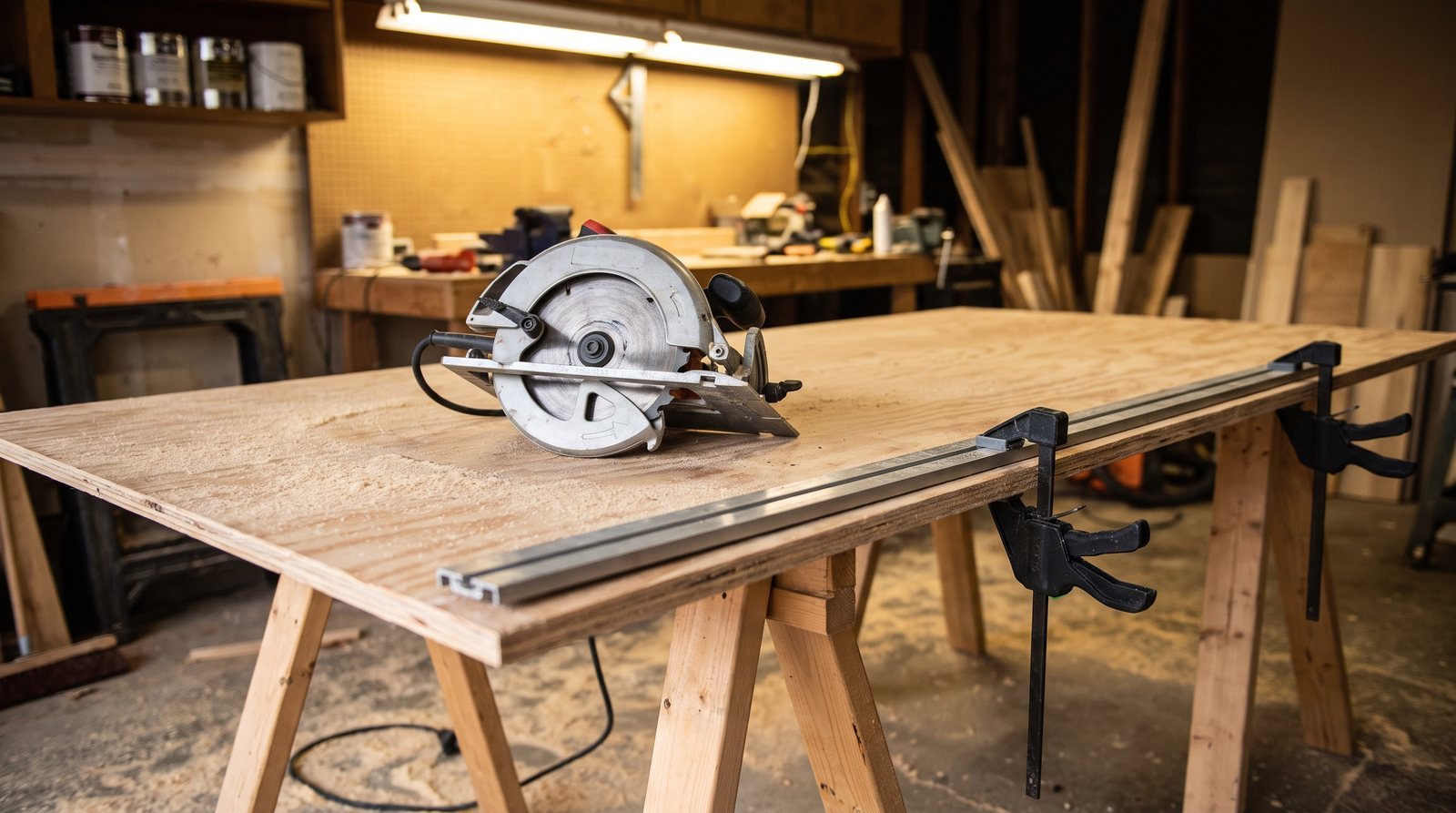
This guide will help you figure out whether you actually need a table saw for the projects on your list, or whether a circular saw with a guide, a track saw, or even a jigsaw can get you there. We'll map specific project types to the tools that work, the tools that sort of work, and the ones that don't, so you can spend your money where it matters.
What a table saw actually does better than anything else
A table saw is not a universal cutting machine. It excels at a narrow set of tasks, and if your projects don't include those tasks, you may never need one.
The table saw's real strengths come down to three things: ripping long boards to a consistent width using the fence, making the same cut over and over to identical dimensions (think drawer parts, face frames, cabinet doors), and cutting joinery like dados, rabbets, and tenons with a dado stack. If you're building furniture with traditional joints or producing a batch of identical cabinet parts, a table saw saves enormous time and keeps tolerances tight.
It also handles bevel cuts on long stock better than portable tools, and it's the safest way to cut small pieces when you use proper push blocks and jigs.
That said, most of what beginner and intermediate DIYers build does not require those capabilities.
The circular saw and guide: your most versatile substitute
A circular saw paired with a straightedge guide handles a surprising range of work. For breaking down plywood and other sheet goods, it's actually preferable to a table saw. Trying to wrestle a full 4x8 sheet onto a table saw in a small garage is awkward and dangerous. Lay the sheet on a piece of rigid foam insulation on the floor, clamp a straight factory edge of plywood as your guide, and cut with full support underneath. The foam acts as a sacrificial surface and prevents tear-out on the bottom face.
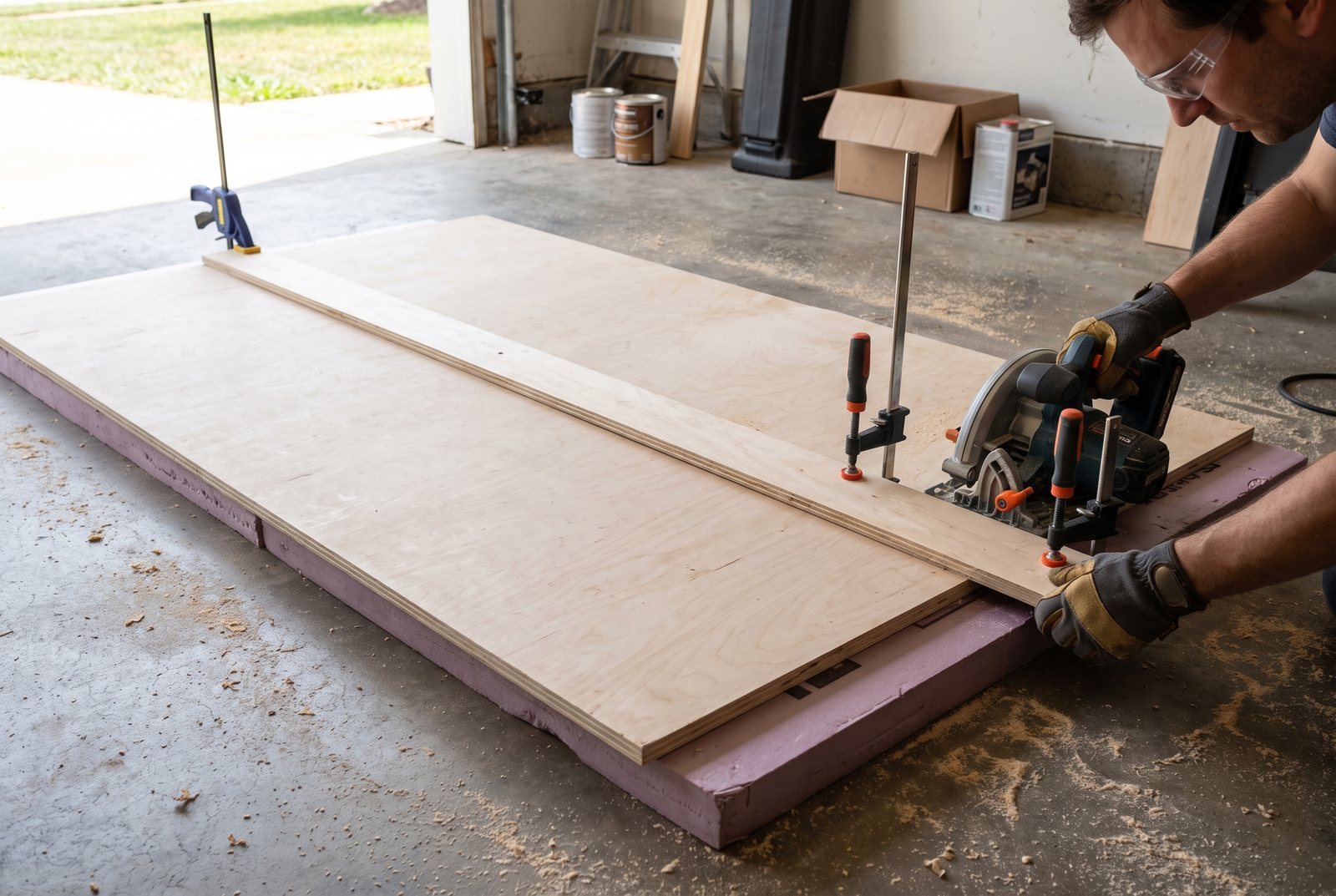
With a clamped straightedge and a sharp blade, you can expect accuracy within about 1/16 inch over an 8-foot cut. That's more than good enough for shelving, cabinets, planter boxes, and most built-in furniture.
Commercial guides like the Kreg Rip-Cut ($40 to $50) and Kreg Accu-Cut ($80 to $100) speed up the setup for repeatable rip cuts and crosscuts. Or you can build your own jig from a single sheet of plywood. Indy Farm Life has a DIY Circular Saw Track Guide project that walks through making a simple, inexpensive track jig for long, straight cuts in sheet goods. Once you have a jig like that, breaking down plywood becomes fast and repeatable.
A decent corded 7-1/4 inch circular saw runs $60 to $150. Cordless models with brushless motors cost $120 to $250 for the tool only. Either way, you're spending a fraction of what a jobsite table saw costs (a popular model like the DeWalt DWE7491RS runs $455 to $650).
What you can build with a circular saw and guide:
- Simple cabinets and carcasses (Indy Farm Life's Simple Plywood Garage Cabinet is a good example, built with a circular saw and brad nailer)
- Custom shelving
- Outdoor furniture and planter boxes
- Basic framing and home repairs
- Shiplap and wall paneling from ripped plywood sheets
Where it falls short: Ripping narrow boards (under about 3 inches) gets awkward and less safe. Dados require multiple shallow passes to clear out the waste, which is slow and leaves a rougher bottom than a dado stack. A router handles dados better if you don't have a table saw. And any project requiring 20 identical pieces cut to the same width will take significantly more setup time than running them through a table saw fence.
The track saw: a premium middle ground
A track saw is a circular saw that rides on a dedicated aluminum track with a zero-clearance edge. The track eliminates splintering along the cut line and shows you exactly where the blade will cut. Dust collection is typically much better than a standard circular saw.
For breaking down sheet goods with finish-ready edges, cutting doors to size, or making long straight cuts in assembled pieces, a track saw is genuinely excellent. Many serious hobbyists with small shops use one as their primary saw and skip the table saw entirely.
The tradeoff is cost. The Kreg 20V Cordless 6-1/2 inch Plunge-Cut Track Saw runs about $399 for the tool, battery, and charger, plus roughly $109 for a 62-inch guide track. A premium blade like the Forrest Woodworker II in 165mm costs around $194. You're approaching table saw money before you're done.
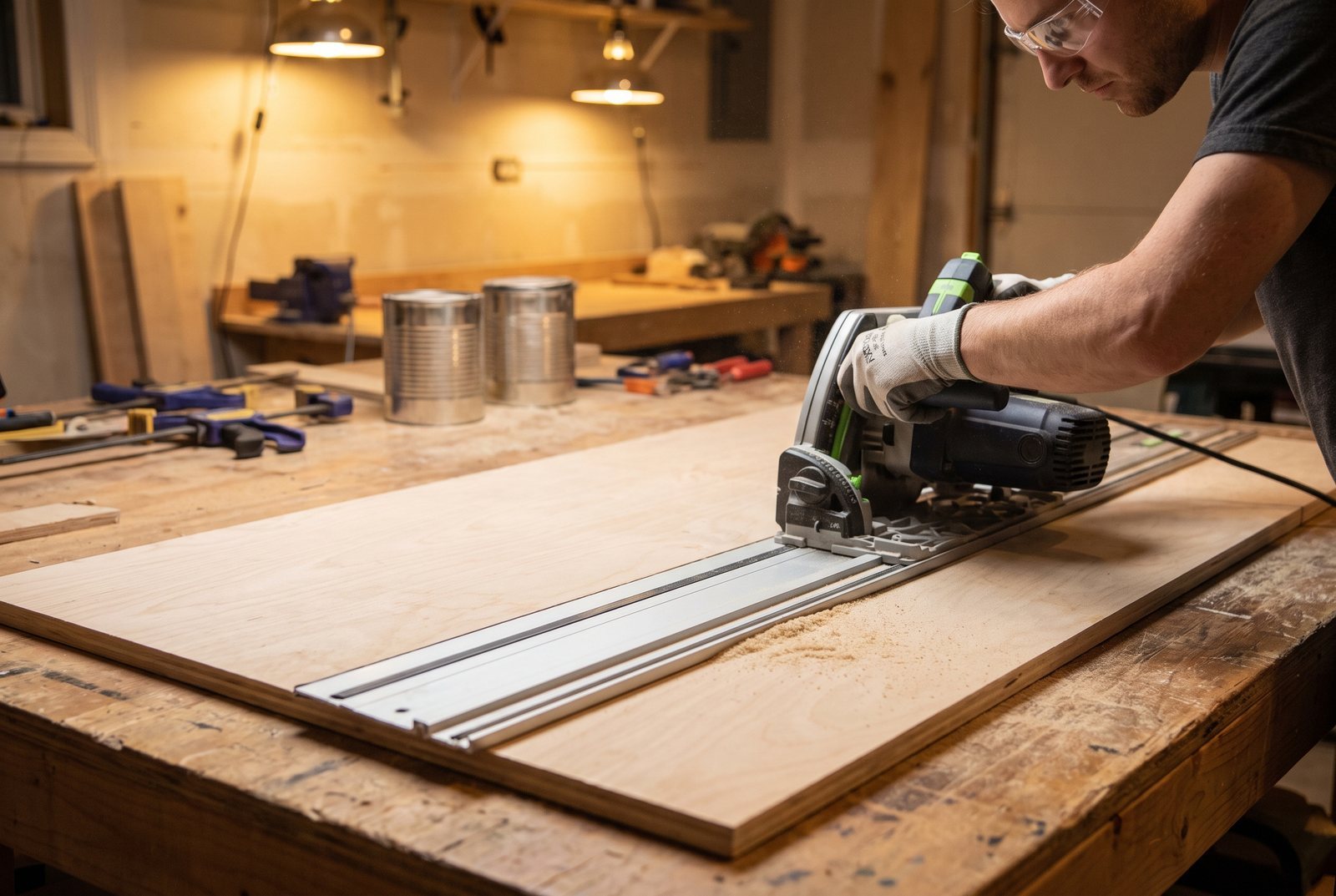
Track saws also max out at about 2-1/8 inches of cut depth at 90 degrees, compared to 3-1/8 to 3-1/2 inches for a 10-inch table saw. Thick hardwood can be a challenge. And while you can rip narrow boards with accessories, a table saw is simply faster when you need to rip a dozen strips to the same width.
The debate over whether a track saw can fully replace a table saw is real and ongoing. For a shop that mostly works with plywood and does occasional solid wood projects, a track saw and a router can cover a lot of ground. For someone building furniture with traditional joinery, the table saw is hard to replace.
The jigsaw: useful but not a substitute
A jigsaw cuts curves. That's its primary job, and it does it well. It also handles cutouts for sinks and electrical boxes. But it is not a straight-line tool.
Even with a guide clamped to the workpiece, a jigsaw blade can wander in thicker material, leaving a beveled edge that's out of square. It's slower than a circular saw, leaves a rougher finish, and works best in material under 1-1/2 inches thick for softwood and 3/4 inch for hardwood.
If a project calls for straight cuts and a jigsaw is all you own, you can make rough cuts and then clean up the edge with a hand plane or sanding block. But if straight cuts are a regular part of your work, a circular saw (corded models start around $60) is worth adding to the kit.
Matching your project list to the right tool
This table maps common DIY projects to the best tool for the job, assuming you don't own a table saw.
| Project | Circular Saw + Guide | Track Saw | Jigsaw | Table Saw Needed? |
|---|---|---|---|---|
| Breaking down plywood sheets | Great | Excellent | Poor | No |
| Simple cabinets from plywood | Good (with careful setup) | Excellent | No | No |
| Custom shelving | Good | Excellent | No | No |
| Outdoor furniture (2x lumber) | Good | Good | Rough cuts only | No |
| Shiplap/wall paneling from plywood | Good | Excellent | No | No |
| Furniture with dado/rabbet joinery | Possible (use a router instead) | Possible (use a router instead) | No | Strongly recommended |
| Batch of identical narrow rips | Slow, less safe | Slow with accessories | No | Yes |
| Cabinet face frames from hardwood | Possible but tedious | Possible but tedious | No | Strongly recommended |
| Deck building (framing, boards) | Good (with miter saw for crosscuts) | Overkill | No | No |
| Curved decorative cuts | No | No | Yes | No |
The pattern is clear. If your projects are mostly plywood-based (cabinets, shelves, built-ins, wall treatments), a circular saw with a good guide or a track saw handles nearly everything. If you're doing fine woodworking with solid hardwood, making joinery, or producing batches of identical narrow parts, a table saw earns its space.
When to buy what (and in what order)
If you're starting from scratch, here's the order we'd recommend for most DIYers:
First: A circular saw and a straightedge guide. This covers 70 to 80 percent of cutting tasks in a home shop. Build or buy a track jig and you're set for sheet goods.
Second: A router. A plunge router with a straight bit and an edge guide handles dados, rabbets, and edge profiles, filling the joinery gap left by not having a table saw.
Third: Decide between a track saw and a table saw based on what you're building. If your work is mostly sheet goods in a small space, the track saw is the better investment. If you're moving into furniture and need to rip solid hardwood to width repeatedly, the table saw is the right call.
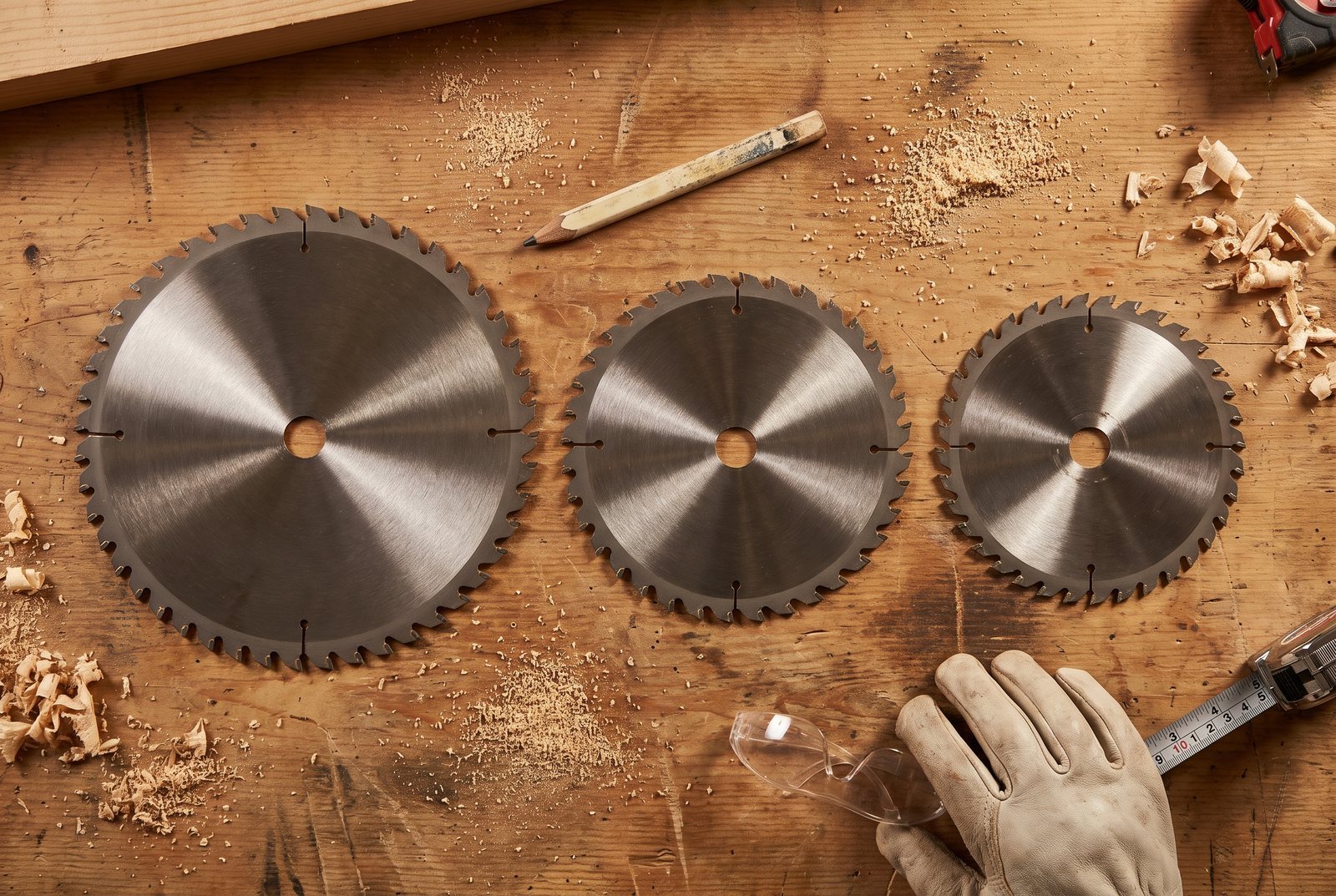
One thing to watch: blade quality matters more than most people expect. A cheap blade on any saw tears out material, burns edges, and strains the motor. A good combination blade (40 to 50 teeth for a 10-inch table saw, higher tooth count for plywood on a circular saw) makes a noticeable difference in cut quality regardless of the tool.
Safety notes that actually matter
Table saw kickback is the injury most DIYers underestimate. Never crosscut against the rip fence without a miter gauge or crosscut sled. The wood binds between the blade and the fence, and the saw throws it back at you. Stand to the side of the blade's path, not directly behind it. Use a push stick for any piece narrower than 6 inches. Keep the blade guard and riving knife on unless the specific cut makes it impossible.
For circular saws, set the blade depth so it extends no more than 1/4 inch below the material. This reduces kickback force and the severity of any contact injury. Always clamp the workpiece before cutting. Check that the lower blade guard retracts and snaps back freely before every session.
Quick answers
Can I build cabinets without a table saw?
Yes. A circular saw with a straightedge guide or a track saw handles plywood cabinet carcasses well. You'll need a router or multiple shallow passes for any dado joints. The main thing you lose is speed on repeated identical cuts.
What's the cheapest way to make straight cuts in plywood?
A corded circular saw ($60 to $150) and a DIY straightedge guide made from a strip of plywood with a factory edge. Clamp it to your workpiece, and you'll get cuts within 1/16 inch over 8 feet.
Is a track saw worth it over a circular saw with a guide?
If you regularly cut plywood and want clean, splinter-free edges with less setup time, yes. If you only cut sheet goods a few times a year, a circular saw with a clamped guide does the job for a fraction of the cost.
When should I definitely get a table saw?
When your projects regularly require ripping solid hardwood to consistent widths, cutting joinery (dados, rabbets, tenons), or producing batches of identical parts. For plywood-heavy work, you can often skip it entirely.
Projects in this post
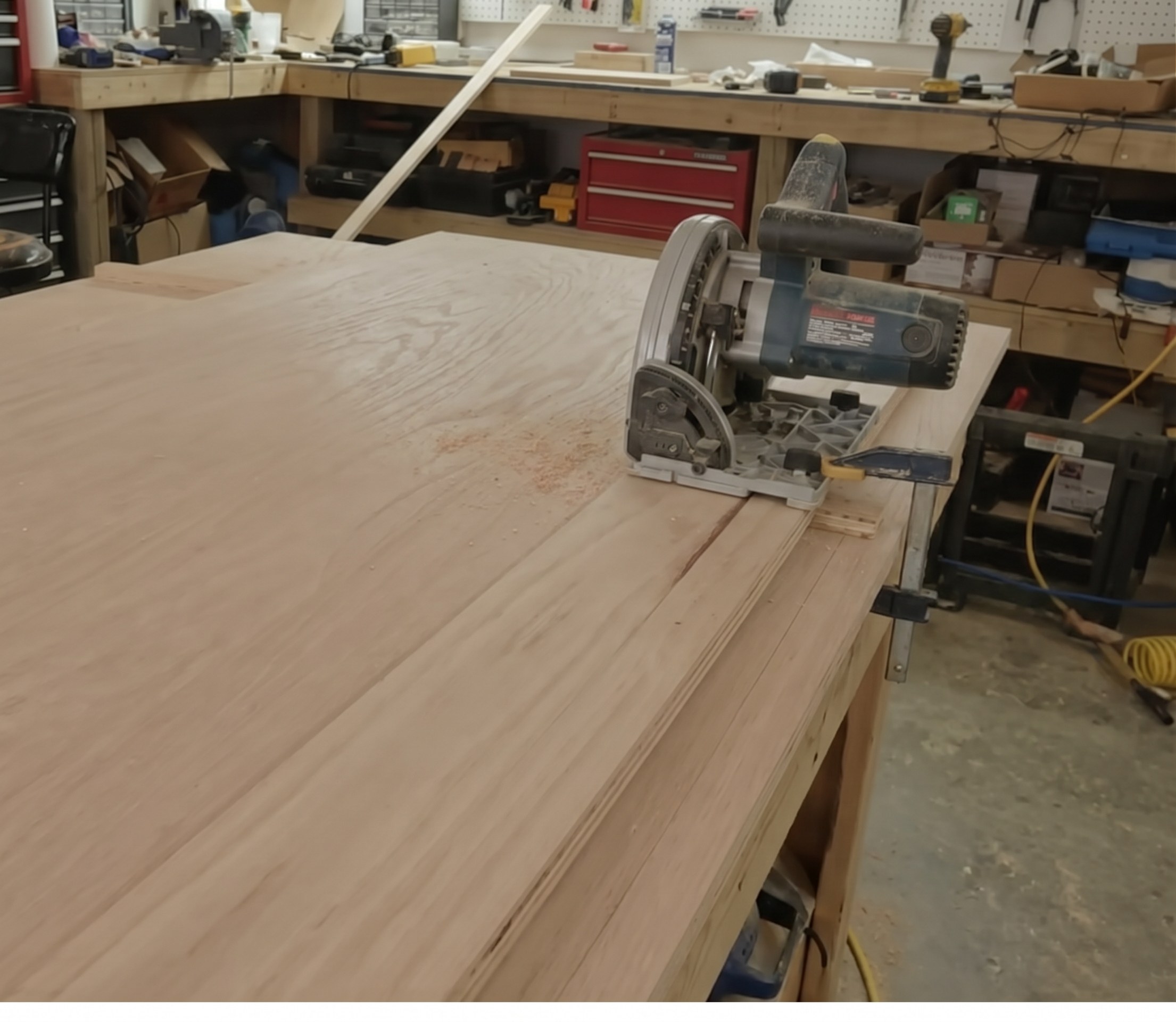
DIY Circular Saw Track Guide
by Indy Farm Life
Open the project guide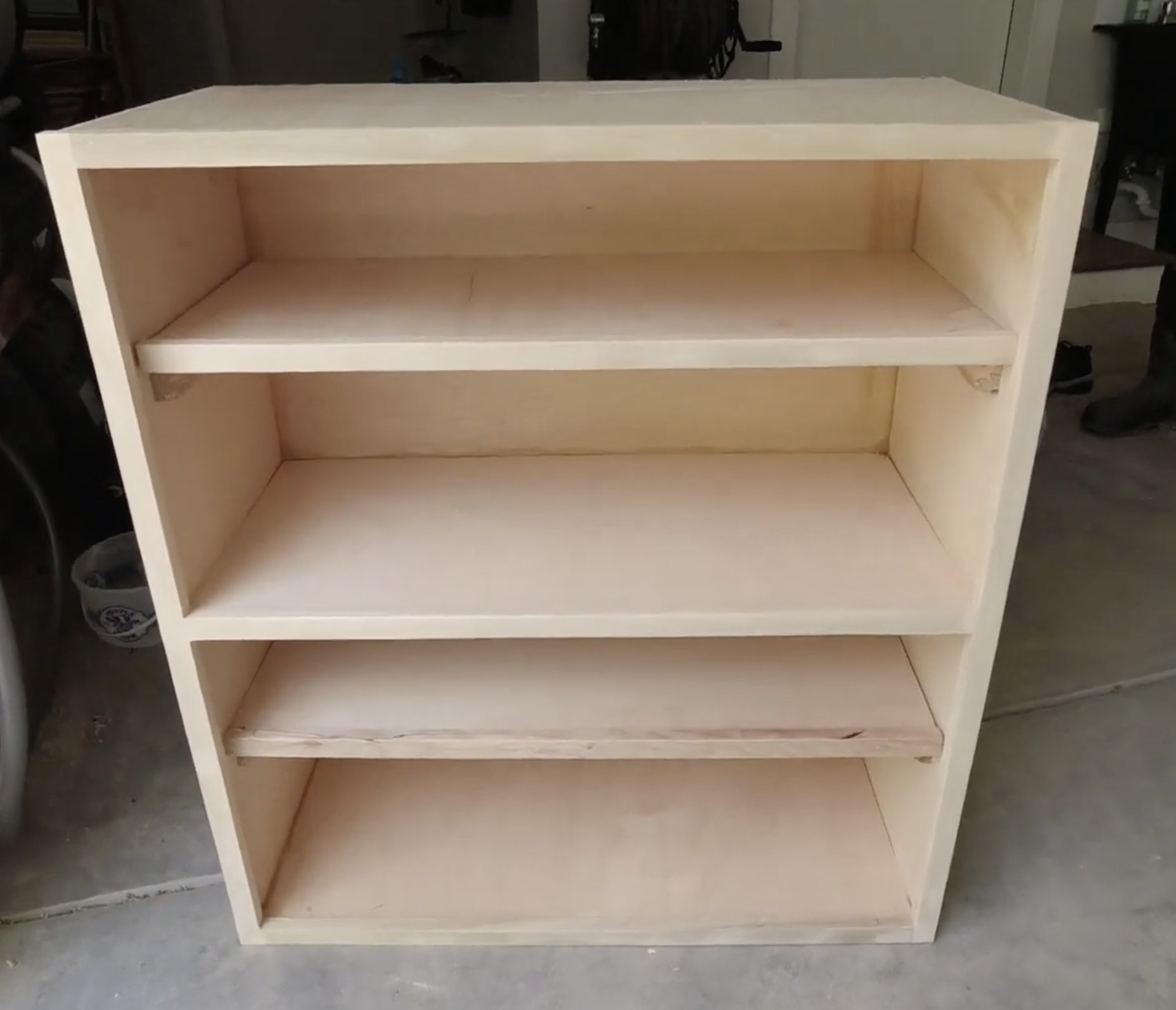
Simple Plywood Garage Cabinet
by Indy Farm Life
Open the project guideKeep reading
All posts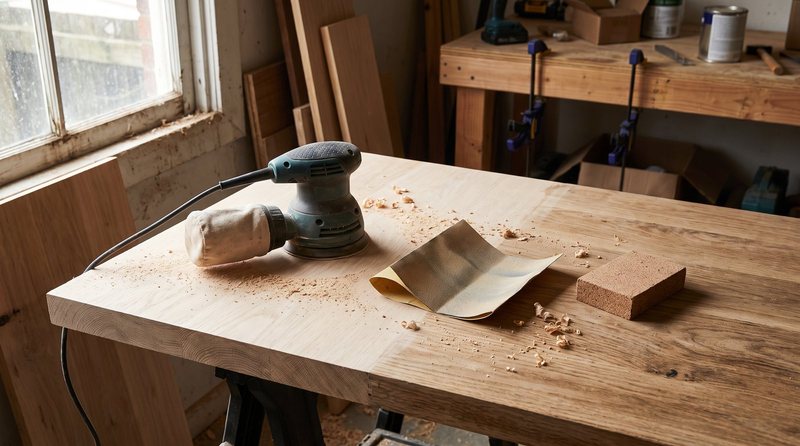
Orbital Sander vs Hand Sanding: When to Use Which
A scenario-by-scenario look at when to use an orbital sander and when hand sanding works better, covering flat surfaces, curves, edges, and more.
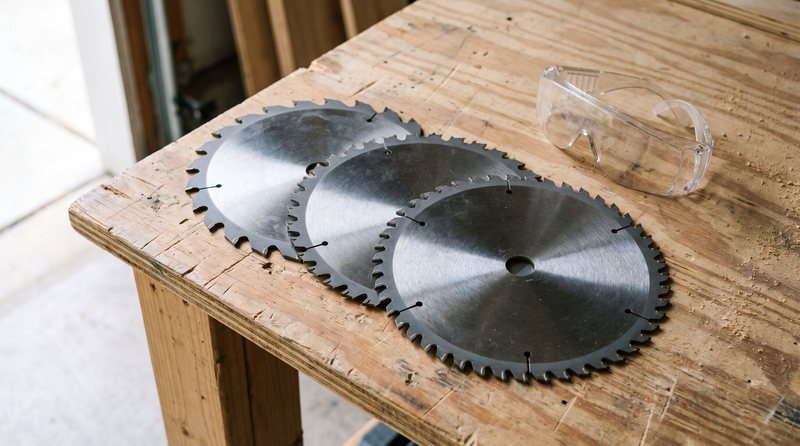
How to Choose a Circular Saw Blade for Plywood, Framing, and Trim
Tooth count, kerf, and hook angle explained for the three cuts DIYers make most. Plus why your new blade might be cutting worse than the old one.
How to Build a Plywood Garage Cabinet with a Circular Saw
A simple 3/4" plywood garage cabinet built with a circular saw and brad nailer. Covers plywood choice, cost, assembly, and tips for beginners.