How to Estimate the Real Cost of a DIY Project
A step-by-step framework for listing materials, calculating board feet and coverage, adding waste, and checking current prices so your budget actually holds.
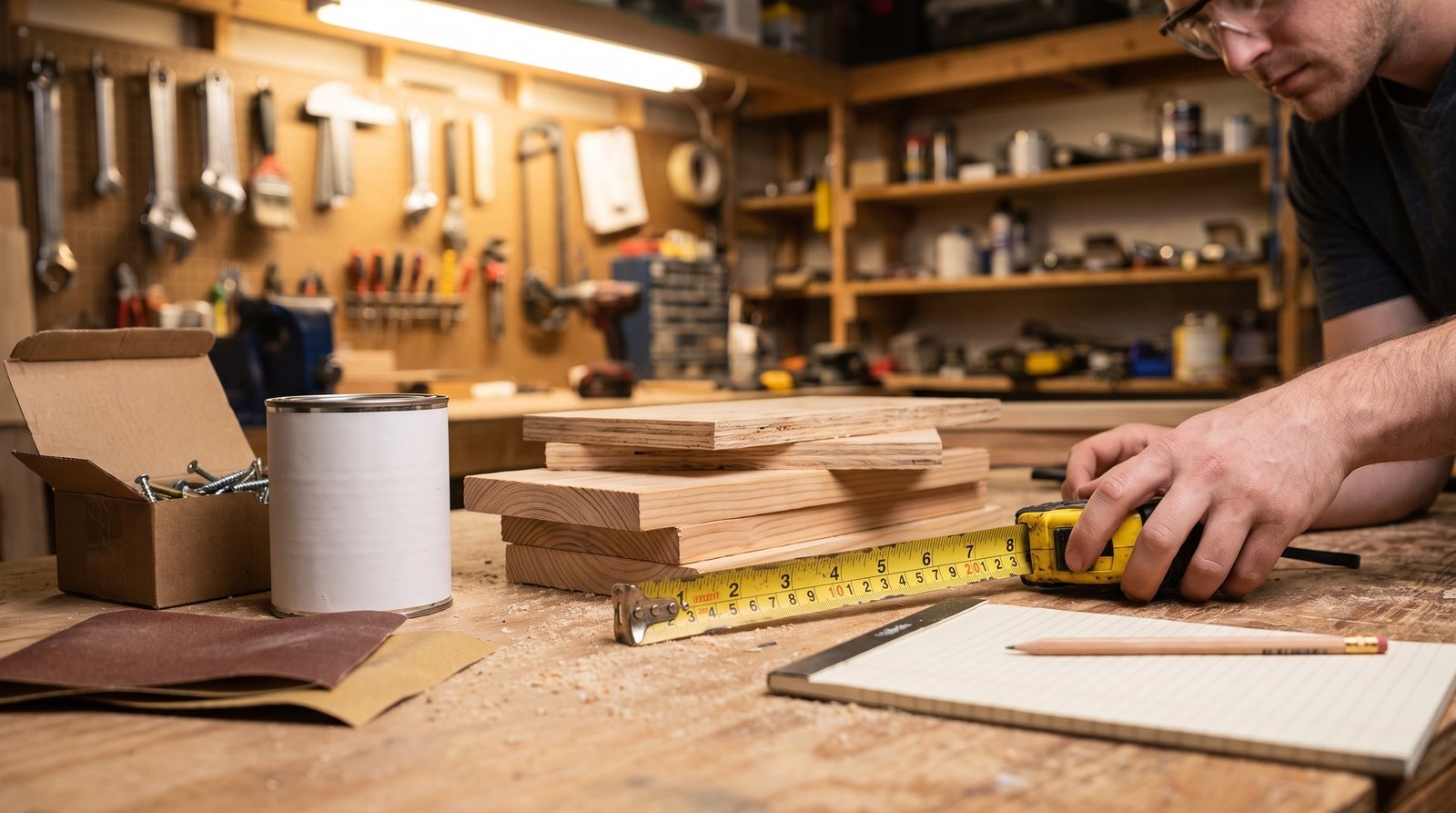
The single question people ask most about any build is "how much will this really cost?" Not the YouTube thumbnail estimate, not the materials-only number with the sandpaper and screws left out. The real, walk-out-of-the-store total. This guide gives you a repeatable framework: list every material, calculate how much you need, add an honest waste factor, price it at today's rates, and then catch the hidden costs that blow budgets apart. By the end you will have a spreadsheet-ready method you can use on any project, from a coat rack to a floating dock.
Start with a complete materials list, not a partial one
Most budget surprises come from the list itself, not the math. People remember lumber and forget fasteners, adhesive, finish, brushes, sandpaper, shims, and drop cloths. Before you calculate a single quantity, walk through the project step by step and write down every physical thing that gets used up or left behind.
Break the list into categories:
- Structural materials (lumber, plywood, concrete, steel)
- Fasteners and hardware (screws, nails, bolts, hinges, brackets)
- Finishes (paint, stain, polyurethane, sealer)
- Consumables (sandpaper, brushes, rollers, tape, caulk, glue)
- Rentals or one-time tools (anything you don't own and won't reuse)
That last category is easy to overlook. If a project needs a miter saw you don't have, a $40/day rental or a $180 purchase changes the budget significantly. Decide now, not at the store.
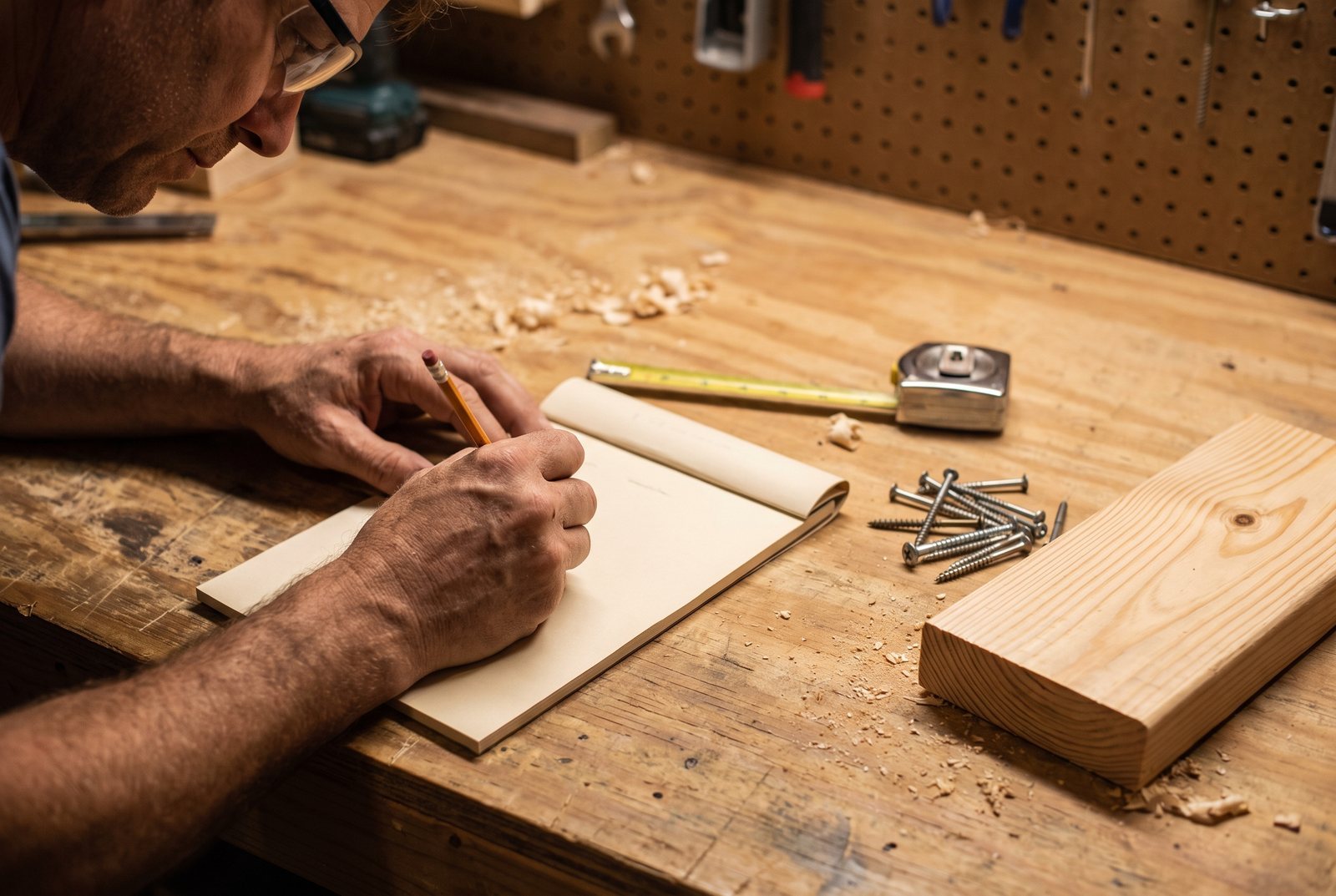
How to calculate lumber in board feet
Lumber is usually the biggest line item, and it is also where the biggest math errors happen. Hardwood dealers sell by the board foot. A board foot is a volume: 1 inch thick, 12 inches wide, 12 inches long.
The formula, using inches for thickness and width but feet for length:
(Thickness × Width × Length in feet) / 12 = Board Feet
So a 4/4 (1-inch thick) board that is 6 inches wide and 8 feet long is (1 × 6 × 8) / 12 = 4 board feet.
One common and costly mistake: using nominal dimensions instead of actual ones. A construction 2×4 is really 1.5 inches by 3.5 inches. If you are buying dimensional softwood from a home center, the price is per piece or per linear foot, so board-foot math matters less. But when you are ordering hardwood from a yard, getting the thickness wrong (confusing 4/4 rough stock at 1 inch with 5/4 stock at 1.25 inches) can shift your total by 25%. Always confirm whether the seller quotes rough or surfaced thickness.
Fasteners, finish, and the costs people skip
Fasteners add up faster than you expect. For a deck project using 6-inch wide boards on joists spaced 16 inches on center, you will need roughly 350 screws per 100 square feet of decking. A 5-pound box of #10 × 2-1/2 inch composite deck screws runs about $29 and holds around 425 screws, so 100 square feet of deck needs most of a box. Scale that to a 200 square foot deck and you are looking at $50 to $60 just in screws.
For finishes, coverage per gallon varies:
| Finish type | Coverage per gallon (approx.) | Typical price range (Oct 2026) |
|---|---|---|
| Interior latex paint | 350-400 sq ft per coat | $62-$87 per gallon |
| Polyurethane (oil or water) | 350-600 sq ft per coat | Varies by brand |
| Wood stain (quart) | Varies by porosity | ~$16 per quart |
If you are painting a 12 × 14 foot room with 8-foot ceilings, the wall area is roughly 416 square feet. Two coats of interior latex means you need about 2 to 2.5 gallons. At $62 to $87 per gallon, that is $124 to $218 just for wall paint, before primer, ceiling paint, or trim paint.
Don't forget that finishes need specific conditions. Most wood stains and interior paints require application temperatures between 50°F and 90°F. And "dry to the touch" is not "cured." Latex paint feels dry in 1 to 2 hours but takes 21 to 30 days to fully cure. Pushing furniture against a wall after a weekend of painting is a recipe for peeled finish and regret.
Adding a waste factor that actually works
The blanket advice is "add 10%." That is fine for buying drywall for a simple rectangular room, but it will leave you short on a lumber project with angled cuts or grain-matching.
Here is a more honest breakdown:
- Lumber, simple project (straight cuts, few joints): 10-15%
- Lumber, complex project (many angles, grain matching, lower-grade stock with defects): 20-30%
- Flooring, straight layout: 5-10%
- Flooring, diagonal layout: 15%
- Tile, straight layout: 10%
- Tile, herringbone or diagonal: 15-20%
- Drywall, simple rooms: 5-8%
- Drywall, complex layouts: 12-15%
The waste factor is not just about bad cuts. It covers boards with hidden knots you reject, pieces that split when you drive a screw, and the offcuts too short to use. If you are new to a technique, lean toward the higher end. There is no shame in that. The alternative is a second trip to the store and a project stalled mid-build.
Check prices the week you buy, not the week you plan
Lumber prices move. As of mid-October 2026, lumber futures sit around $532 per thousand board feet, down about 16% from a year ago. Western Spruce-Pine-Fir 2×4 #2&Btr KD was at $464 per thousand board feet in early October. That is a meaningful dip, and if your project is flexible on timing, buying during a price trough saves real money on a lumber-heavy build.
But futures prices are wholesale benchmarks. What you pay at the register depends on your retailer, your region, and how quickly wholesale changes filter through. The practical move: price your full materials list at your local store (most big-box retailers let you build a cart online) the week you plan to buy. Compare it to your estimate. If lumber has spiked 15% since you planned, you can delay or substitute.
For a project like Indy Farm Life's DIY Wooden Farm & ATV Wagon, which uses a full 4×8 foot lumber bed on a steel running gear kit, the lumber portion of the budget swings noticeably with the market. Checking prices the week you buy, rather than the week you sketch the plan, keeps the estimate honest.
Catch the hidden costs before they catch you
A 2026 survey found that the average homeowner spends $1,852 fixing a DIY mistake, and 58% of those who made mistakes ended up spending more than hiring a professional would have cost. Most of those overruns are not from one dramatic failure. They are from a dozen small things nobody budgeted for.
Here is a checklist of commonly forgotten costs:
- Permits. A deck, a fence, or any structural change may require one. Fees vary by municipality, but skipping the permit can mean tearing out finished work.
- Sandpaper and abrasives. A refinishing project can burn through $20 to $40 in discs and sheets.
- Brushes, rollers, and trays. Budget $15 to $30 for a painting project, more if you want quality brushes you will clean and reuse.
- Adhesives and caulk. Construction adhesive, wood glue, painter's caulk. A tube here, a bottle there, and suddenly you have spent $25.
- Disposal. Old materials, demo debris, and empty containers. Some municipalities charge for bulk pickup.
- Safety gear. Dust masks, safety glasses, hearing protection. If you don't already own them, add $20 to $40.
For any project involving mains electrical work, gas lines, or structural modifications to your home, get a licensed professional involved. The cost of a permit and an electrician's hour is always less than the cost of a house fire or a failed inspection.
Put it all together: a sample estimate
Say you want to build a simple storage shelf unit: three shelves, 4 feet wide, 16 inches deep, using 3/4-inch birch plywood and pine 1×2 edge banding, finished with two coats of polyurethane.
- Plywood: Three shelves at 4 ft × 16 in each, plus two sides at 4 ft × 16 in. You can cut all five pieces from a single 4×8 sheet. One sheet of 3/4-inch birch plywood runs roughly $55 to $70 at a home center.
- Edge banding / trim: About 24 linear feet of pine 1×2. A few dollars per 8-foot piece, so roughly $10 to $15 total.
- Fasteners: Pocket screws or wood screws plus glue. A small box and a bottle of wood glue: $15 to $20.
- Finish: Two coats of polyurethane over roughly 30 square feet of surface (both sides of shelves, visible faces of sides). A quart covers about 125 square feet, so one quart is plenty. Around $10 to $16.
- Consumables: 220-grit sandpaper, a foam brush or two, a tack cloth. Call it $8 to $12.
- Waste factor: Simple cuts from sheet goods, so 5-10%. You are already buying a full sheet, so waste is built in.
Estimated total: $98 to $133 in materials. That is a real number you can walk into a store with. Compare that to the vague "$50 to $100" you might see in a video description.
Quick answers
How do I calculate board feet for a lumber order?
Multiply the thickness in inches by the width in inches by the length in feet, then divide by 12. Use actual dimensions, not nominal ones. A 4/4 board (1 inch thick), 6 inches wide, and 8 feet long is 4 board feet.
What waste percentage should I add to my materials estimate?
It depends on the material and project complexity. For lumber with simple straight cuts, 10-15% is reasonable. For projects with angled cuts, grain matching, or lower-grade stock, go 20-30%. Tile and diagonal flooring layouts need 15-20%.
Are lumber prices high right now in late 2026?
Lumber futures are around $532 per thousand board feet as of mid-October 2026, which is roughly 16% lower than a year ago. It is a relatively favorable time to buy for a lumber-heavy project, though retail prices vary by store and region.
What hidden costs do people forget when budgeting a DIY project?
Sandpaper, brushes, rollers, adhesives, caulk, safety gear, and permits are the most common. A 2026 survey found the average homeowner spends $1,852 fixing DIY mistakes, so budgeting for the right materials and fasteners up front is cheaper than fixing shortcuts later.
The project in this post
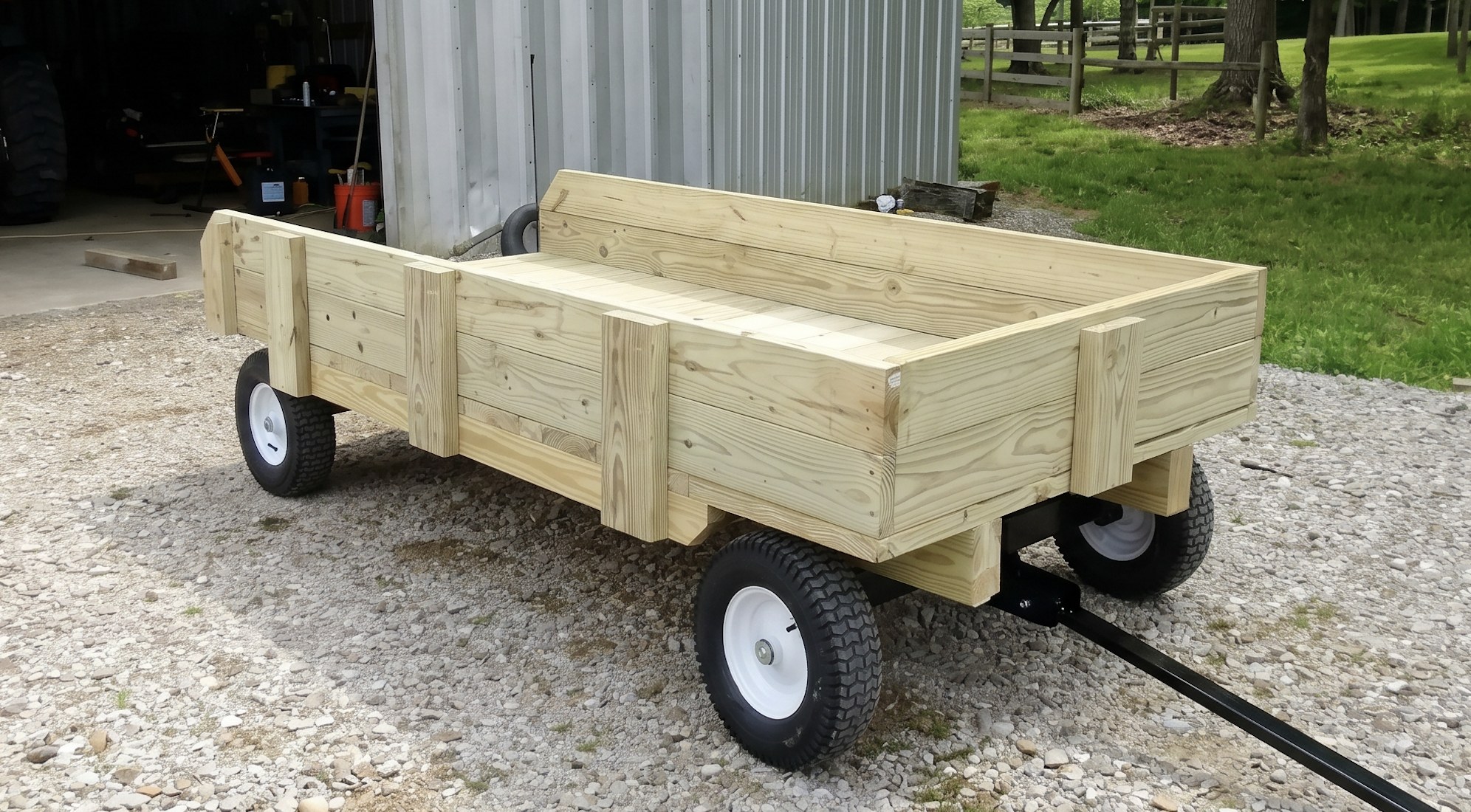
DIY Wooden Farm & ATV Wagon
by Indy Farm Life
Open the project guideKeep reading
All posts
How to Estimate DIY Project Time and Save Your Weekend
Most beginners underestimate DIY project time by half. Learn to break projects into phases and set realistic hours, including drying time nobody plans for.
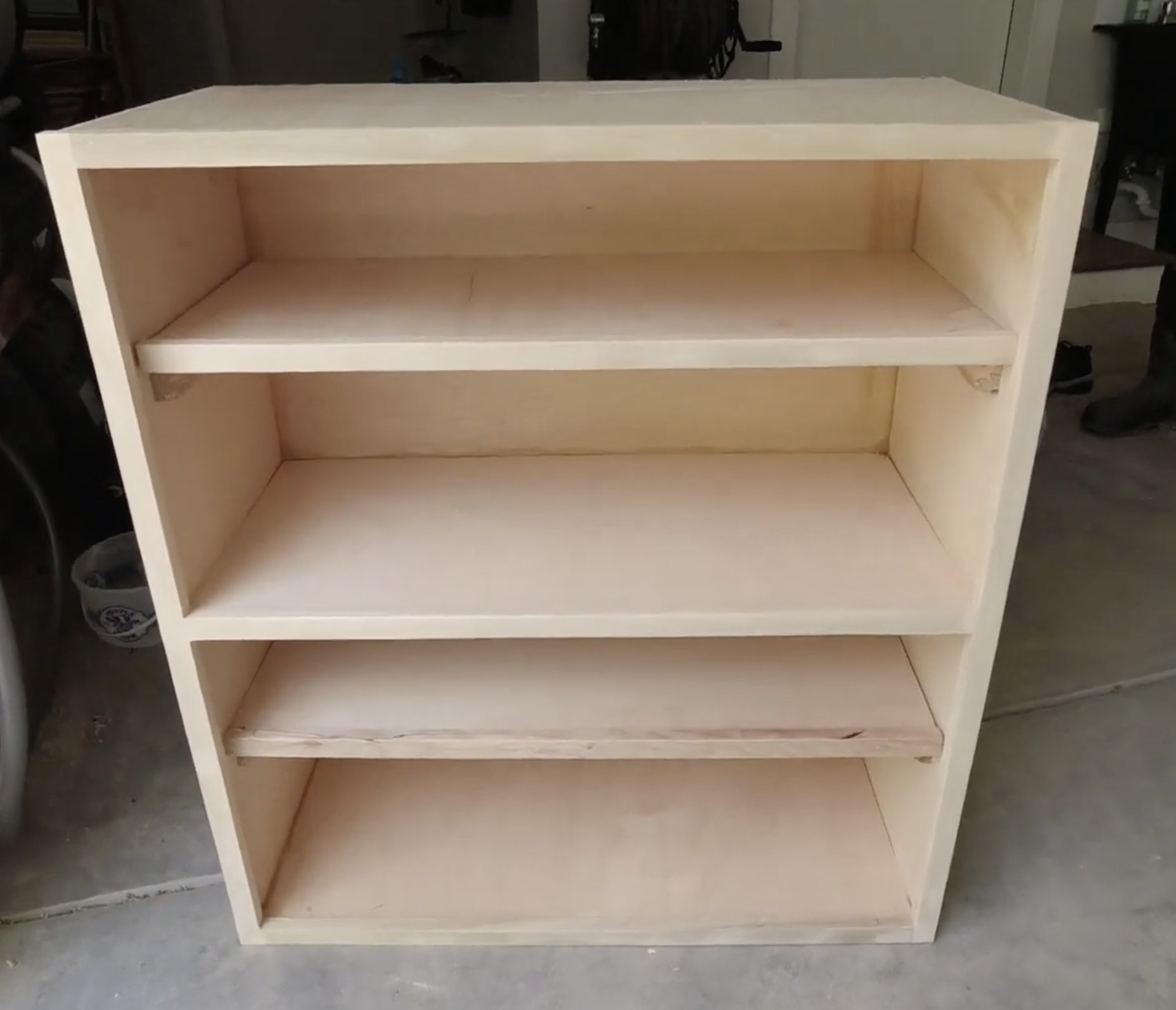
How to Build a Plywood Garage Cabinet with a Circular Saw
A simple 3/4" plywood garage cabinet built with a circular saw and brad nailer. Covers plywood choice, cost, assembly, and tips for beginners.
Orbital Sander vs Hand Sanding: When to Use Which
A scenario-by-scenario look at when to use an orbital sander and when hand sanding works better, covering flat surfaces, curves, edges, and more.