How Black Sheep House Got a Streak-Free Black Dresser Finish
Follow Black Sheep House's black dresser refinish using the brush-then-roll method and matte topcoat trick to avoid the streaks most painted furniture gets.
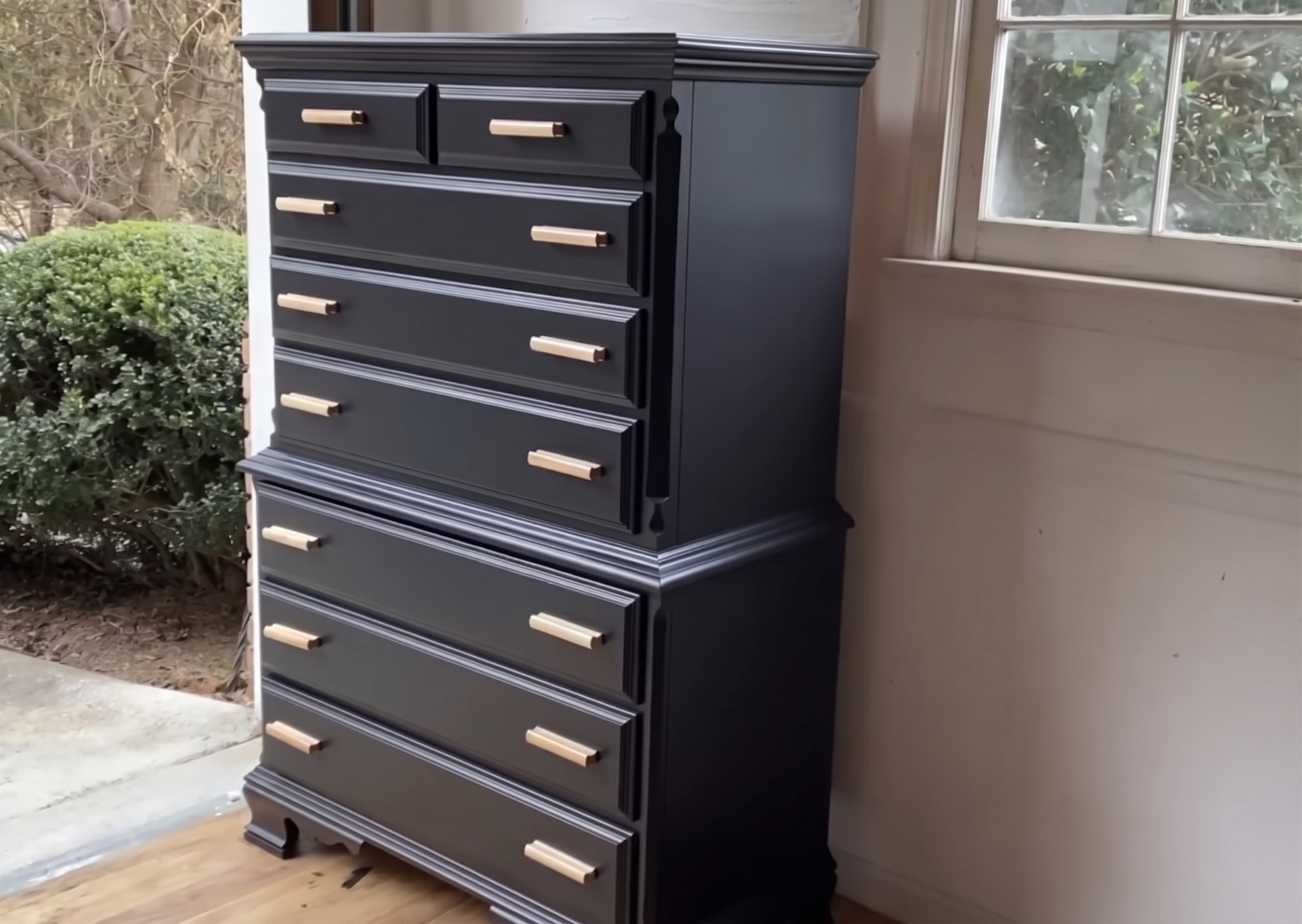
Black paint on furniture is unforgiving. Every brush mark, every lap line, every bubble in the topcoat shows. That is exactly why Black Sheep House's dresser refinish is worth studying. The project turns a dated wooden dresser into a smooth, matte black piece using two specific techniques: a brush-then-roll paint application and a foam roller "wiping" method for the topcoat. The whole build takes about 4 hours of active work (plus dry time between coats) and lands in the $140 to $160 range including new hardware.
Here is how it came together, what makes it work, and what to watch for if you try it yourself.
Prep that actually matters
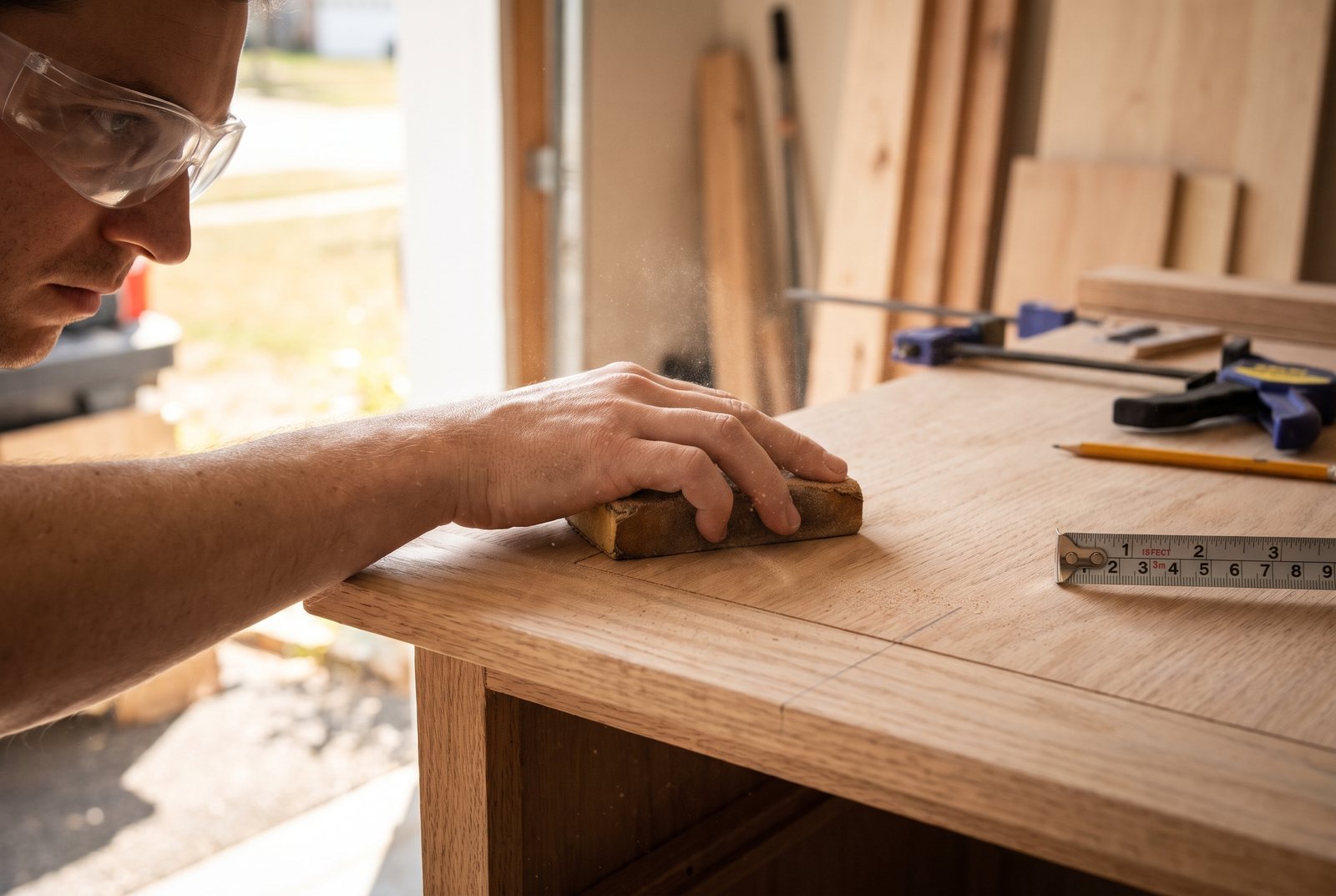
Black Sheep House starts by pulling all the original drawer pulls with a screwdriver, then scuff sanding every surface with a sanding sponge. The grit here is around 220, and the goal is not to strip the old finish. You are just scratching it enough to give the new paint a mechanical grip.
After sanding, the dresser gets vacuumed with a shop vac, washed down with dish soap and water, and wiped one last time with a tack cloth. That three-step cleaning sequence matters more than people think. Sanding dust left behind creates grit under the paint, and soap residue or skin oils prevent adhesion. One tip from the build: go light with the tack cloth. Pressing hard can leave a waxy film on the surface that interferes with paint bonding.
If you are working on a dresser made before 1978, test for lead paint before you sand. Do not skip this.
For a deeper look at the cleaning and deglossing options available before you paint, our guide on TSP alternatives, sanding, and deglosser for furniture prep covers the tradeoffs.
Why the paint choice rules out chalk paint
Black Sheep House uses an acrylic enamel (HGTV Home by Sherwin-Williams Ovation Plus in the color "Caviar") rather than chalk paint or standard latex. The reason is practical: chalk paint reactivates when you apply a water-based topcoat over it, pulling color up into the poly and creating a muddy, streaky mess. That problem is especially visible on dark colors.
Oil-enriched and urethane alkyd enamels are the other strong options for black furniture. Valspar Cabinet and Furniture Oil-Enriched Enamel runs about $25 to $30 a quart at Lowe's, and you can have the Sherwin-Williams "Caviar" color mixed right into that base. Benjamin Moore ADVANCE in matte or satin is a premium alternative at roughly $35 a quart. All of these self-level better than standard latex, which helps the roller do its job.
A quart of enamel covers around 400 square feet per gallon, so a single quart is more than enough for a standard six-drawer dresser with paint to spare.
The brush-then-roll technique
This is the core of the build and the reason the finish comes out smooth.
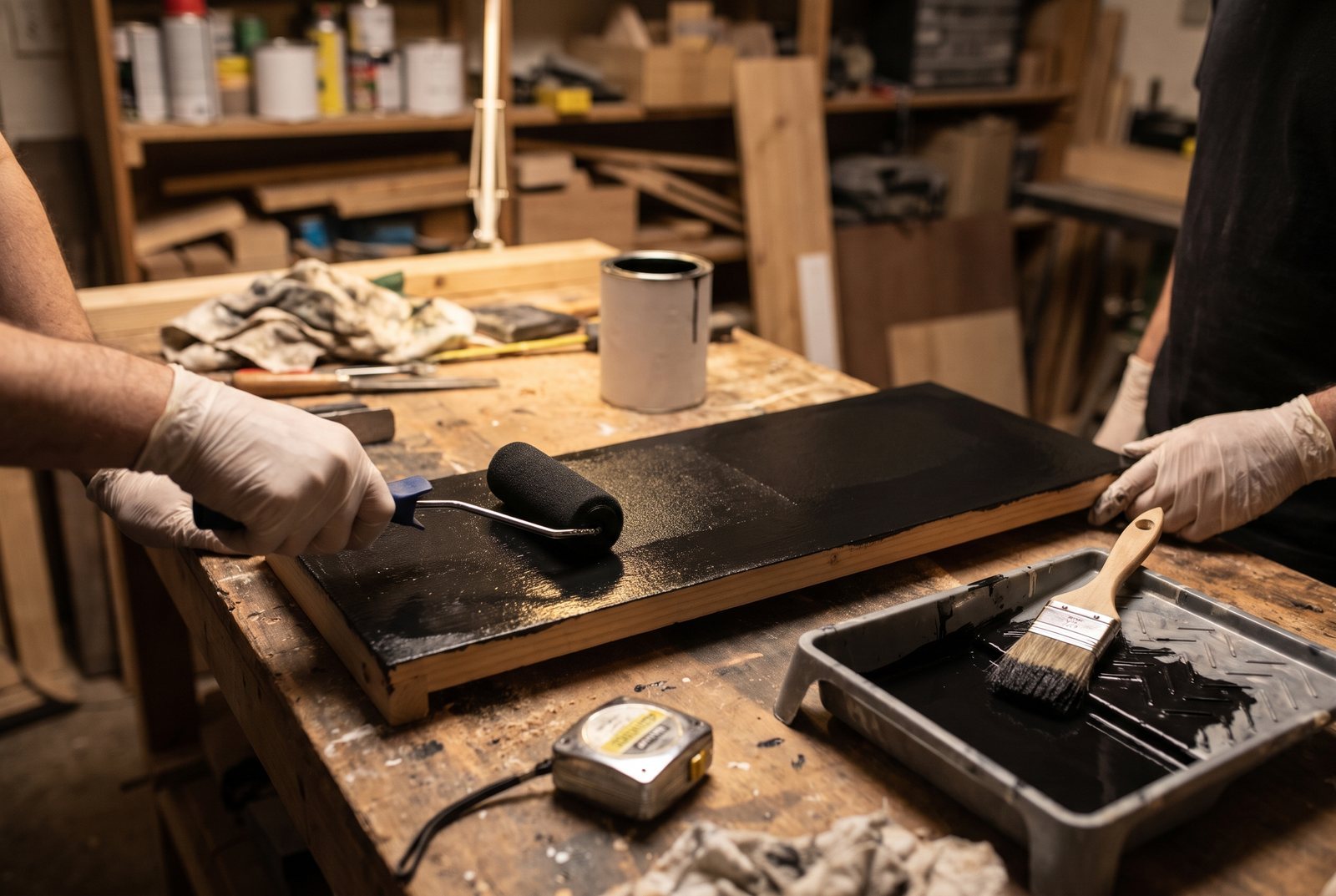
On each section of the dresser, Black Sheep House works in the same order. First, a good quality, soft-bristled angled brush goes into the detailed edges, grooves, and corners where a roller cannot reach. Immediately after, while the brushed paint is still wet, a high-density foam roller (a Whizz Cabinets and Doors roller, 4 or 6 inches) goes over every flat surface. The roller picks up and levels out the brush marks before they can set.
The word "immediately" is doing real work in that sentence. If you brush a section, walk away, then come back with the roller, the paint will have started to tack up. You will drag it instead of smoothing it, and the finish will look worse than if you had just brushed the whole thing. Work in small sections, keep a wet edge, and move fast enough that the brushed area is still fluid when the roller hits it.
For the first coat, Black Sheep House paints all the drawer fronts this way, then moves to the sides and frame. The second coat goes on the same way after the first is dry. Recoat time for most oil-enriched enamels is 4 to 12 hours depending on the brand. If you are using the Valspar product, 4 hours is the recommendation.
One more detail worth borrowing: if you are painting a large flat surface like the dresser top, adding Floetrol to the paint extends the working time. That keeps the paint open longer so you can maintain a wet edge across the full width without the leading edge drying before you finish.
The matte topcoat trick
This is where most black furniture projects fall apart. You get the paint smooth, then the topcoat goes on streaky or cloudy and ruins everything.
The problem is specific to matte finishes. Matte water-based polyurethane contains flattening agents, tiny particles suspended in the liquid. If you overwork the product with a brush or keep rolling back and forth, those particles clump unevenly and leave visible streaks, especially over dark paint where there is maximum contrast.
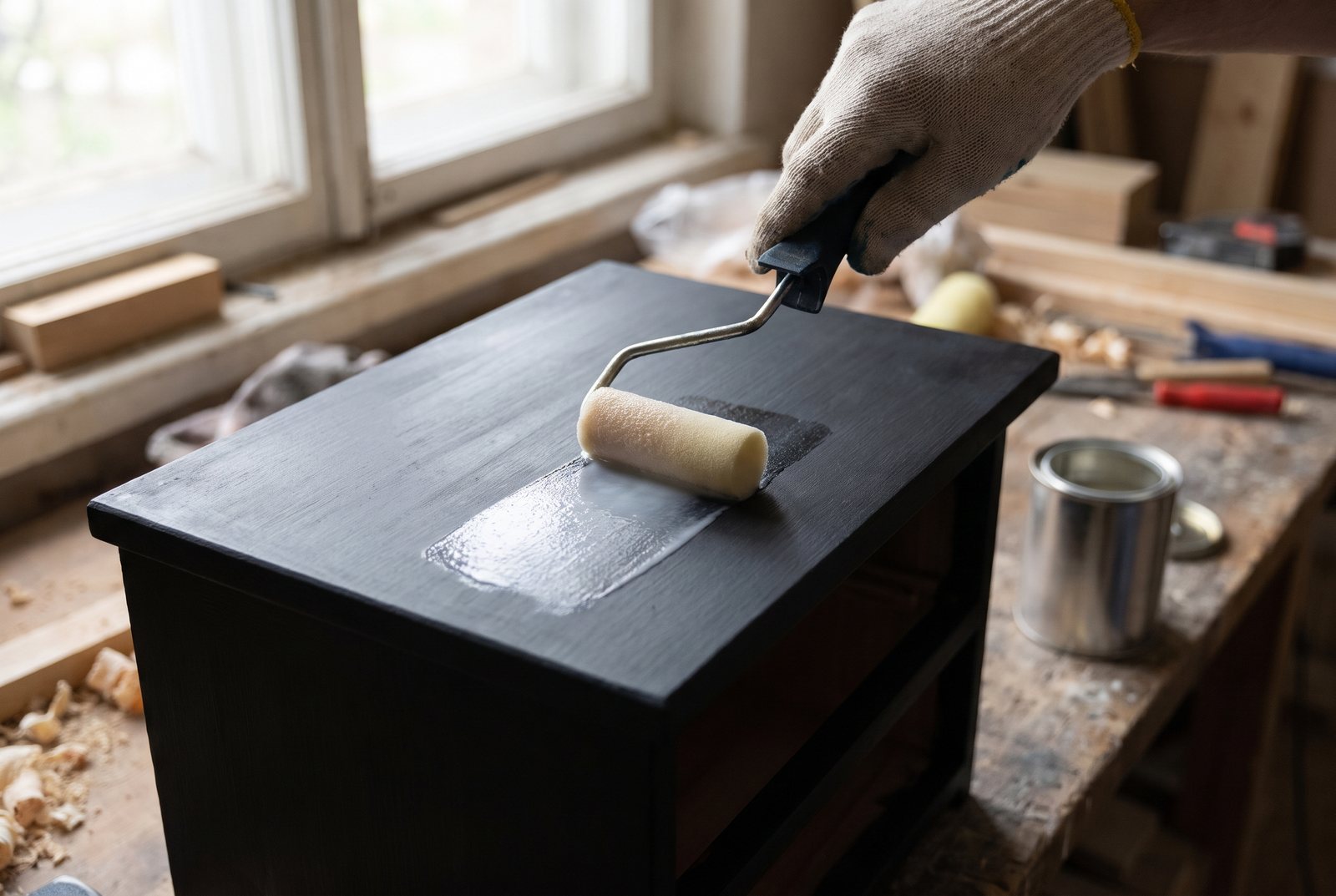
Black Sheep House's solution: use a foam roller as a wiper, not a roller in the traditional sense. Dip just the end of the foam roller into the poly (Varathane Water-Based Polyurethane in matte, about $20 to $25 a quart), then lay it across the surface in one long, continuous stroke from edge to edge. Do not roll back over what you just put down. One pass, move to the next strip, overlap slightly, keep going. On detailed areas the roller cannot reach, a foam brush with light, even strokes works.
Before you open the can, mix the polyurethane thoroughly with a drill mixer. The flattening agents settle to the bottom, and if you do not get them fully dispersed, the sheen will be uneven across the piece. Stirring by hand often is not enough.
Keep the roller damp but not dripping. Too much product means drips and bubbles. Too little means drag marks. You want a thin, even film that self-levels and dries flat.
The topcoat dries to the touch in about an hour and can be recoated after 2 hours. A light sanding with 320-grit or higher between topcoat layers will give you an even smoother result, though it is optional for a single coat.
Dry time and cure time are not the same thing
The dresser will feel dry in a few hours, but the paint is not fully cured for up to 7 days. Black Sheep House's build takes about 4 hours of hands-on work, but you need to plan for drying windows between coats and a cure period before you load the drawers back up with clothes.
Wait at least 3 days before light use. A full month is the safe window for the paint to reach maximum hardness. Setting heavy objects on a dresser top that has not cured will leave impressions. For more on how dry time and cure time differ across paint types, we have a full breakdown in our post on how long to let paint dry between coats.
Apply paint between 50°F and 90°F. A garage in summer or a climate-controlled room works. A cold garage in winter does not.
New hardware and the screw-length detail
Black Sheep House finishes the project by installing new solid wood drawer pulls. It is a small thing that changes the whole look of the piece.
If your new pulls use a different bolt pattern than the originals, you will need to drill new holes and fill the old ones with wood filler before painting. If the bolt spacing matches but the screws are the wrong length, measure the thickness of the drawer front and add about 1/4 inch. Screws too long can be spaced out with washers on the inside of the drawer. Screws too short may need a countersink drilled on the inside face so the head sits deeper.
What this build costs and what it takes
| Item | Approximate Cost |
|---|---|
| 1 quart acrylic or oil-enriched enamel paint | $25 to $35 |
| 1 quart matte water-based polyurethane | $20 to $25 |
| Foam roller kit (roller, tray, handle) | Under $10 |
| 2.5-inch angled brush | $8 to $12 |
| Sanding sponge, tack cloths, dish soap | $5 to $10 |
| 10 new drawer pulls | Varies (included in project total) |
| Total | $140 to $160 |
The skill level is beginner. If you can sand, brush, and roll, you can do this. The technique is more about discipline (small sections, wet edges, one-pass topcoat) than about advanced skill.
Work in a ventilated space. Open windows and run a fan if you are indoors. Wear gloves, and use a respirator when sanding to keep dust out of your lungs.
Where to start
Pick up a quart of enamel and a foam roller, and try the brush-then-roll technique on a single drawer before committing to the whole dresser. If the finish levels out smooth on that test drawer, you know your paint, your roller, and your pace are right. Black Sheep House's full project guide walks through every step with visuals if you want to follow along.
Quick answers
How do I paint a dresser black without brush strokes?
Brush the paint into edges and details first, then immediately smooth all flat surfaces with a high-density foam roller while the paint is still wet. Use a self-leveling enamel (oil-enriched or urethane alkyd), not chalk paint or standard latex.
Does matte topcoat streak over black paint?
It can, because matte polyurethane contains flattening agents that clump when overworked. Apply it in single passes with a foam roller, do not roll back over it, and make sure you mix the product thoroughly before use.
Do I need primer before painting a dresser black?
If you are painting over an existing finish with a dark color, you can skip primer after scuff sanding with 220 grit. Primer becomes more important when covering dark wood with a light color or painting raw, unsealed wood.
How long before I can use a freshly painted dresser?
The paint feels dry in 2 to 4 hours and can be recoated after 4 to 12 hours depending on the product. Wait at least 3 days before light use and up to a month for the finish to fully cure and reach maximum hardness.
The project in this post
Refinishing a Dresser with Black Paint
by Black Sheep House
Open the project guideKeep reading
All posts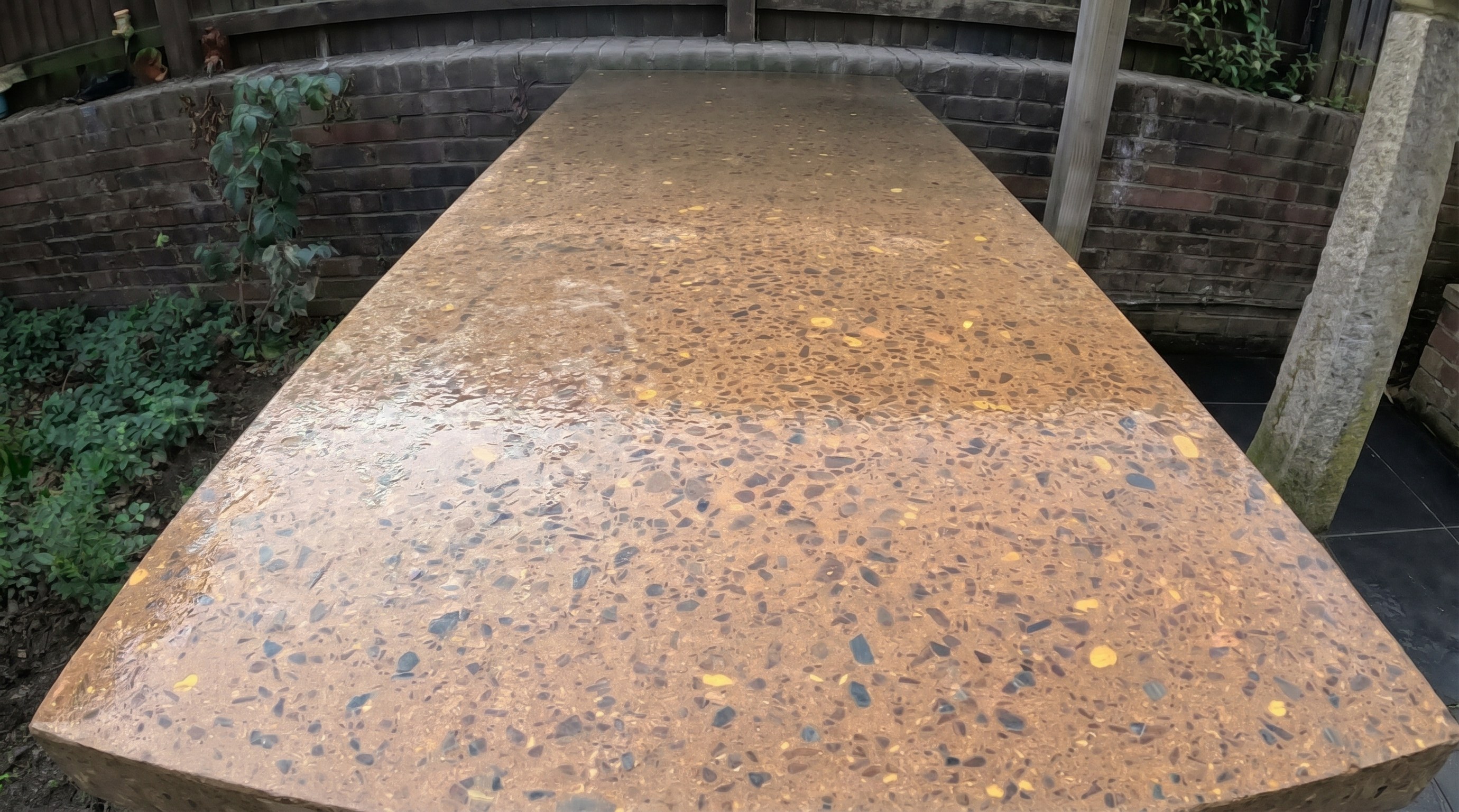
How to Build a Polished Concrete Outdoor Countertop
A full build covering a block base, cast slab, diamond pad progression, and the hardener step most guides skip to get a terrazzo finish outdoors.
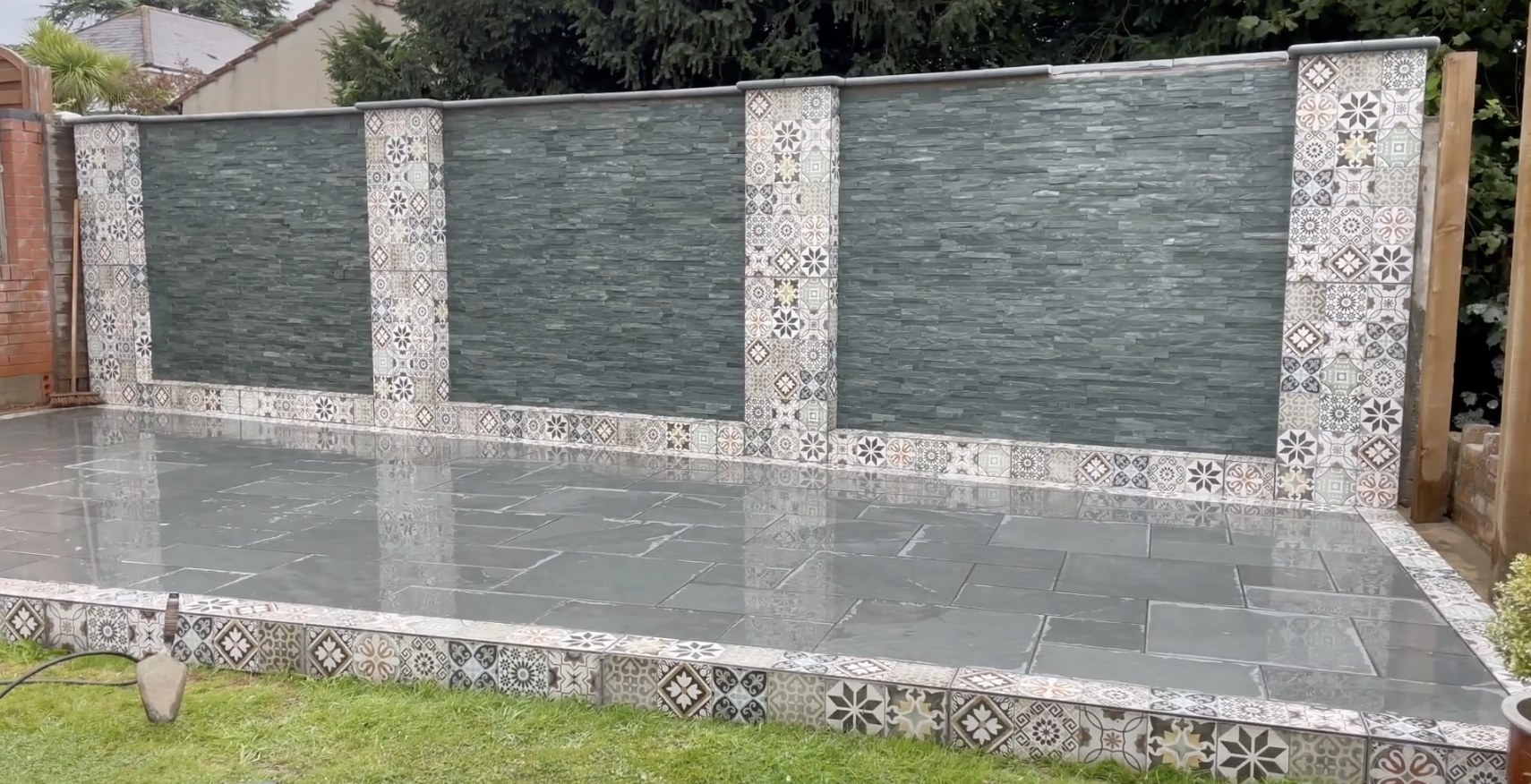
How a Garden Feature Wall with Slate and Patterned Tiles Holds Up
A build story breaking down the drip groove, dual-surface priming, and coping stone details that keep an outdoor slate feature wall looking good for years.
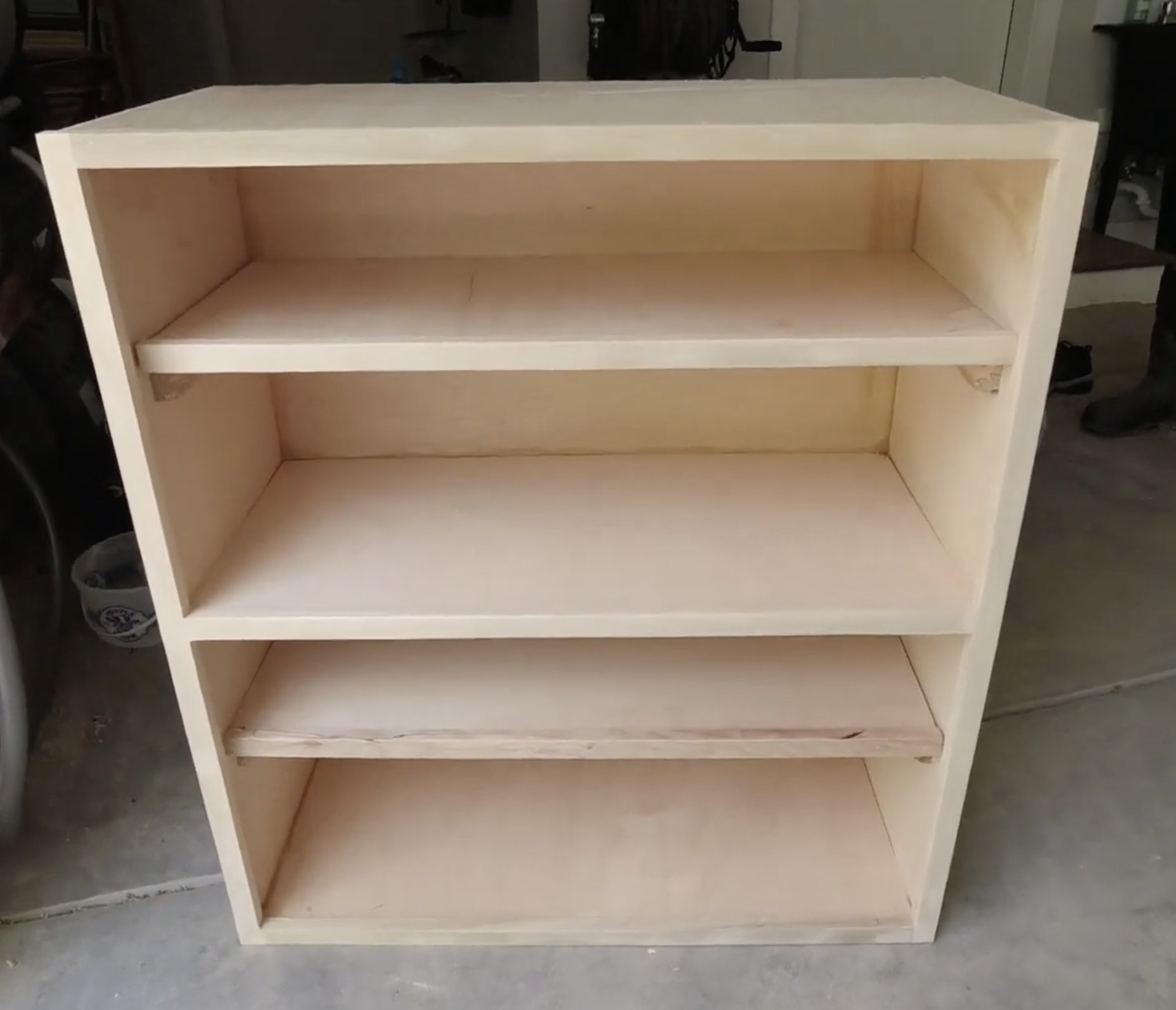
How to Build a Plywood Garage Cabinet with a Circular Saw
A simple 3/4" plywood garage cabinet built with a circular saw and brad nailer. Covers plywood choice, cost, assembly, and tips for beginners.