How Long to Let Paint Dry Between Coats (and Cure Times)
Dry to the touch doesn't mean done. Learn recoat times for latex, chalk paint, and polyurethane, plus why a full 21 to 30 day cure prevents chips and marks.
Your paint feels dry an hour after you rolled it on. You can touch the wall and nothing transfers. So you move the couch back, hang the shelves, and two days later there's a gouge in the finish that peels right off. The problem isn't bad paint. It's the difference between dry and cured, and almost every frustrated furniture or wall painter we've seen trips over it.
This guide covers recoat windows for latex wall paint, chalk paint, and polyurethane topcoats, then explains the longer cure timeline that actually determines whether your finish holds up.
Dry vs. cured: two different things
Drying is solvent evaporation. In latex paint, the solvent is water. Once enough water leaves the film, the surface feels dry to the touch. That can happen in 30 to 60 minutes under good conditions (around 70°F, 50% relative humidity).
Curing is a chemical process. The paint's resin molecules cross-link into a hard, continuous film. Until that cross-linking finishes, the coating is softer than it will eventually be. A latex wall paint takes roughly 21 to 30 days to fully cure. Chalk paint is similar. Oil-based polyurethane can need a full 30 days.
The practical takeaway: a surface that passes the touch test can still dent under a picture frame, scuff when you slide a vase, or peel where tape was pressed against it. If you've ever peeled painter's tape and pulled a strip of fresh paint with it, you probably removed the tape before the film had enough time to harden.
Recoat times for latex interior paint
Most latex interior paints are ready for a second coat in 2 to 4 hours. Premium lines like Benjamin Moore Regal Select and Sherwin-Williams Duration Home tend to sit at the shorter end of that range. The number is printed on the can label, and it's worth reading because formulas vary.
A few things push the recoat window longer:
- High humidity. Above about 60% RH, water leaves the film more slowly. A coat that would be ready in two hours on a dry fall afternoon might need four hours on a muggy August evening.
- Thick application. If you loaded the roller heavy and left ridges, the high spots hold more moisture. Thin, even coats dry faster and lay down smoother.
- Cool temperatures. Below 50°F, most latex paints won't film properly at all. The sweet spot is 50°F to 85°F.
What happens if you recoat too early? The fresh layer traps moisture underneath. You get a patchy look, uneven sheen, or soft spots that eventually peel. It's one of the most common reasons a two-coat job looks worse than one coat.
For coverage planning, a gallon of latex typically covers 350 to 400 square feet in a single coat. Many current formulas are sold as "paint and primer in one," which can get you to full coverage in two coats over a properly prepped surface. If your home was built before 1978, test for lead paint before sanding or scraping, as lead dust is hazardous.
Recoat times for chalk paint
Chalk paint dries to the touch fast, sometimes in 5 to 15 minutes, which tempts people into rushing the second coat. The recoat window is longer than the touch-dry time suggests. Wait at least 1 to 2 hours between coats. Annie Sloan, the original Chalk Paint brand, recommends a full 24 hours between coats for best results.
The cure time for chalk paint is 21 to 30 days, the same ballpark as latex. If you seal with wax (a common finish for chalk-painted furniture), the wax itself needs 5 to 21 days to cure depending on room temperature. So a chalk-painted dresser that gets waxed might need close to a month before it's truly ready for daily use.
Kathartic Studios' Rustic Farmhouse Dining Table Refinish is a good example of layering chalk paint and then a glaze for an aged look. On a piece like that, where a dining table will see plates, glasses, and elbows every day, respecting the full cure window is the difference between a finish that lasts years and one that wears through in weeks.
Recoat and cure times for polyurethane topcoats
Polyurethane is where oil-based and water-based timelines split sharply.
| Water-based poly | Oil-based poly | |
|---|---|---|
| Dry to touch | 1 to 2 hours | 6 to 8 hours |
| Recoat window | 2 to 4 hours | Up to 24 hours |
| Full cure | About 21 days | About 30 days |
Water-based polyurethane has gotten much better in recent years. Current formulas rival oil-based for durability, dry faster, have less odor, clean up with soap and water, and most are non-ambering (they won't yellow over time the way oil-based finishes do).
One safety note for oil-based finishes: rags soaked with oil-based polyurethane or stain can spontaneously combust. Lay them flat outdoors to dry completely, or submerge them in a sealed container of water before disposal. This is not a theoretical risk. It happens in garages every year.
Why the cure window matters more than you think
The question people really want answered is: "When can I actually use this?" Here's a realistic timeline for a freshly painted interior wall:
- After 2 to 4 hours: Apply your second coat.
- After 24 to 48 hours: You can carefully move furniture back into the room, but keep pieces a few inches from the walls.
- After about 14 days: You can gently clean or wipe the surface.
- After 21 to 30 days: The paint is fully cured. Push furniture against it, hang heavy frames, scrub marks, live normally.
For furniture projects, the stakes are higher because painted surfaces get touched, bumped, and set on constantly. Black Sheep House's Refinishing a Dresser with Black Paint project covers techniques for getting a smooth, streak-free finish on a dresser. Even with perfect application, a piece like that needs the full cure period before you load the drawers and start opening and closing them daily.
During the cure period, treat the surface gently. Don't stack books on a freshly painted shelf. Don't press painter's tape against trim you finished last weekend. Don't wipe walls with a wet cloth. The paint is still soft enough to mark, even though it feels dry.
Sanding between coats: when it actually helps
This is a point where advice varies. Some painters sand lightly between every coat with 220-grit or finer sandpaper. Others skip it entirely.
For flat interior walls, sanding between coats is usually unnecessary if the first coat went on smoothly. Modern latex paints are formulated to bond to themselves without mechanical abrasion.
For furniture, trim, and cabinets, a light scuff-sand between coats is worth the five minutes. It knocks down any dust nibs or brush marks and gives the next coat a slightly better grip. Use 220-grit or higher, wipe the dust off with a tack cloth, and apply the next coat. The goal is not to sand through the paint. You're just smoothing the surface.
The distinction between sanding to smooth and sanding to distress matters here. Smoothing is a few light passes to level imperfections before the next coat. Distressing is done after all coats are applied and cured, deliberately wearing through to the layer below for an aged look. Different purpose, different timing.
Conditions that speed up or slow down everything
Temperature and humidity are the two biggest variables. Paint in a well-ventilated room between 50°F and 85°F with moderate humidity, and the times on the can will be close to accurate. Outside that range, adjust your expectations.
Opening windows helps, and running a box fan in the doorway moves air without blowing directly on wet paint (which can cause dust to stick). In winter, if you're painting a room with the heat on, the air may be very dry, which actually speeds drying but can cause the paint to skin over before it levels out. A humidifier in the next room can help in extremely dry conditions.
If you're painting in a garage or basement with no climate control, check the humidity with a cheap hygrometer before you start. Above 70% RH, you'll want to run a dehumidifier or wait for a drier day.
The short version for your next project
Read the recoat time on the can and follow it. Don't trust the touch test alone. After the final coat, give the surface 21 to 30 days before you subject it to real life. That patience is the single cheapest thing you can do to make a paint job last.
If you're about to start a furniture refinish or a room repaint, check the weather forecast and the humidity in your workspace before you open the can. That's the first step that most guides skip.
Quick answers
How long should I wait between coats of latex paint?
Wait 2 to 4 hours between coats of latex interior paint. The exact time depends on the formula, temperature, and humidity. Check the label on your specific can.
How long does paint take to fully cure?
Latex paint and chalk paint both take approximately 21 to 30 days to fully cure. Oil-based polyurethane can take up to 30 days. During this period the finish is softer than its final hardness and can be damaged by pressure, scrubbing, or tape.
Can I sleep in a freshly painted room?
Low-VOC and zero-VOC latex paints, which are now the standard for interior use, produce minimal fumes. With good ventilation (open windows, a fan), most people can sleep in a freshly painted room the same night. If you're sensitive to odors or used a higher-VOC product, wait 24 to 48 hours with windows open.
Do I need to sand between coats of paint?
For walls, usually not. For furniture, cabinets, and trim where you want a smooth finish, a light pass with 220-grit sandpaper between coats removes dust nibs and brush marks. Wipe with a tack cloth before applying the next coat.
Projects in this post
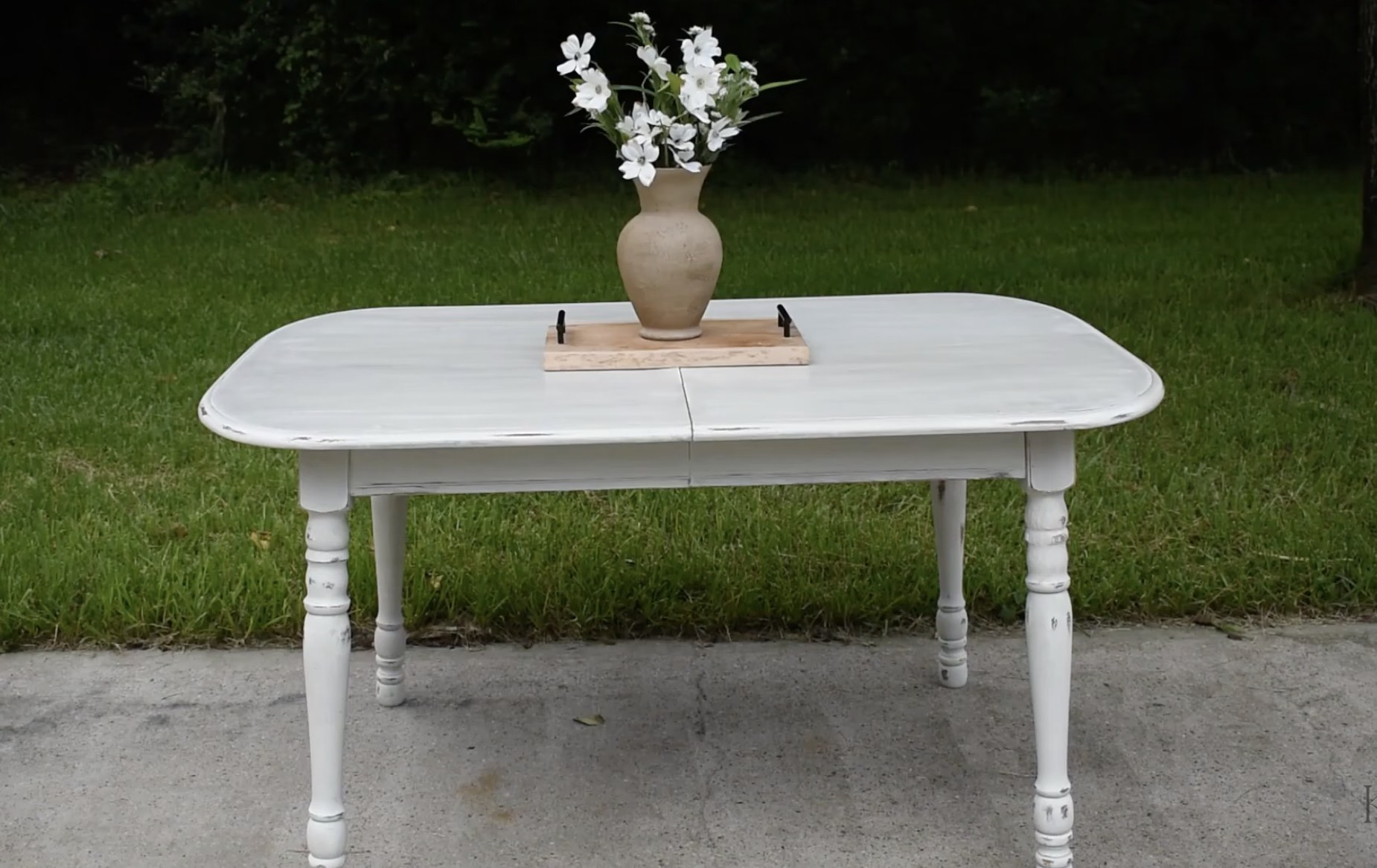
Rustic Farmhouse Dining Table Refinish
by Kathartic Studios
Open the project guide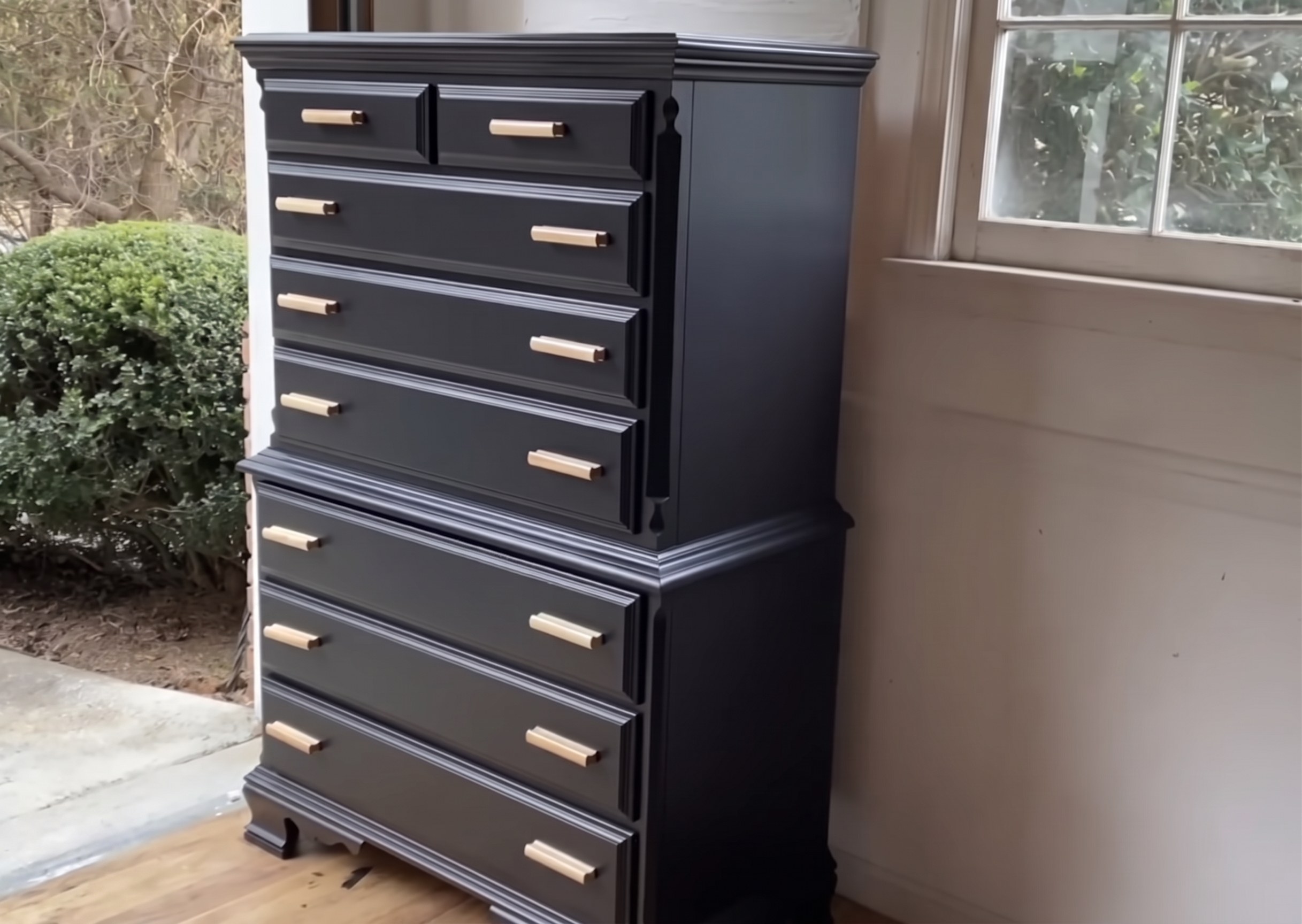
Refinishing a Dresser with Black Paint
by Black Sheep House
Open the project guideKeep reading
All posts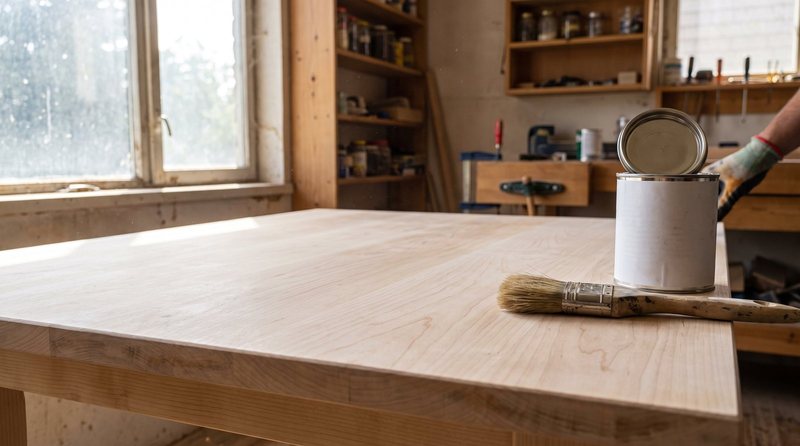
Clear Wood Finishes That Won't Yellow or Darken Your Wood
Water-based poly, hardwax oil, and paste wax compared for keeping wood looking raw and natural. Which one protects without changing the color.
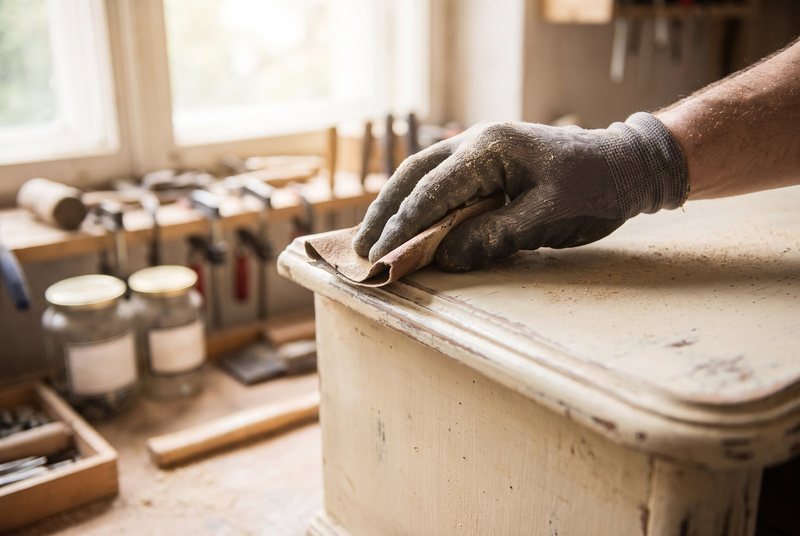
Sanding for Distressing vs Sanding to Smooth Furniture
Distressing and smoothing use sandpaper in opposite ways. Here's how grit choice, pressure, direction, and where you sand differ for each technique.
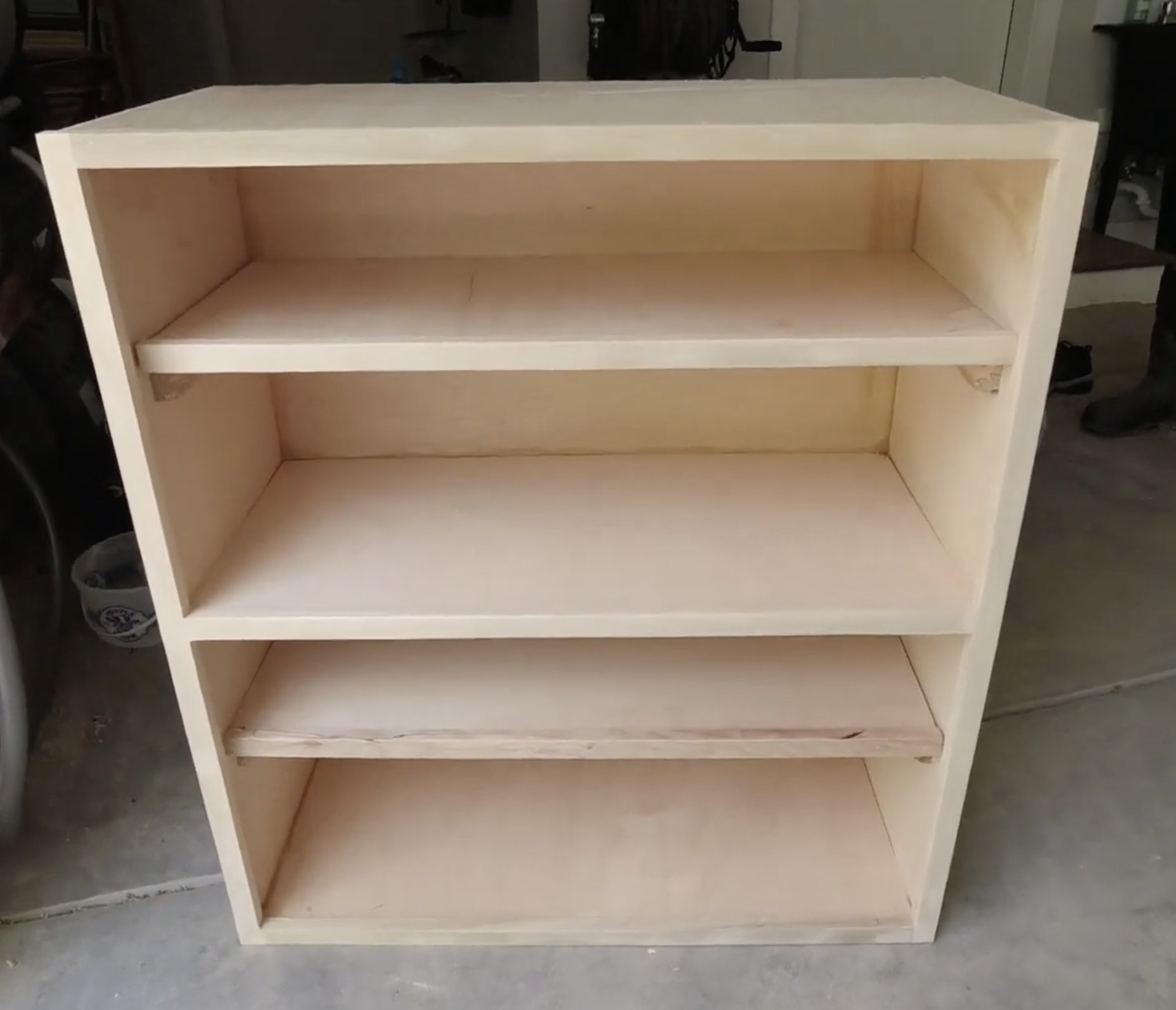
How to Build a Plywood Garage Cabinet with a Circular Saw
A simple 3/4" plywood garage cabinet built with a circular saw and brad nailer. Covers plywood choice, cost, assembly, and tips for beginners.