Fixed vs Adjustable Shelves: When and Why Each One Matters
Fixed shelves stop racking and sag in tall cabinets and bookcases. Learn when to use fixed shelves, when adjustable ones work better, and why most builds need both.
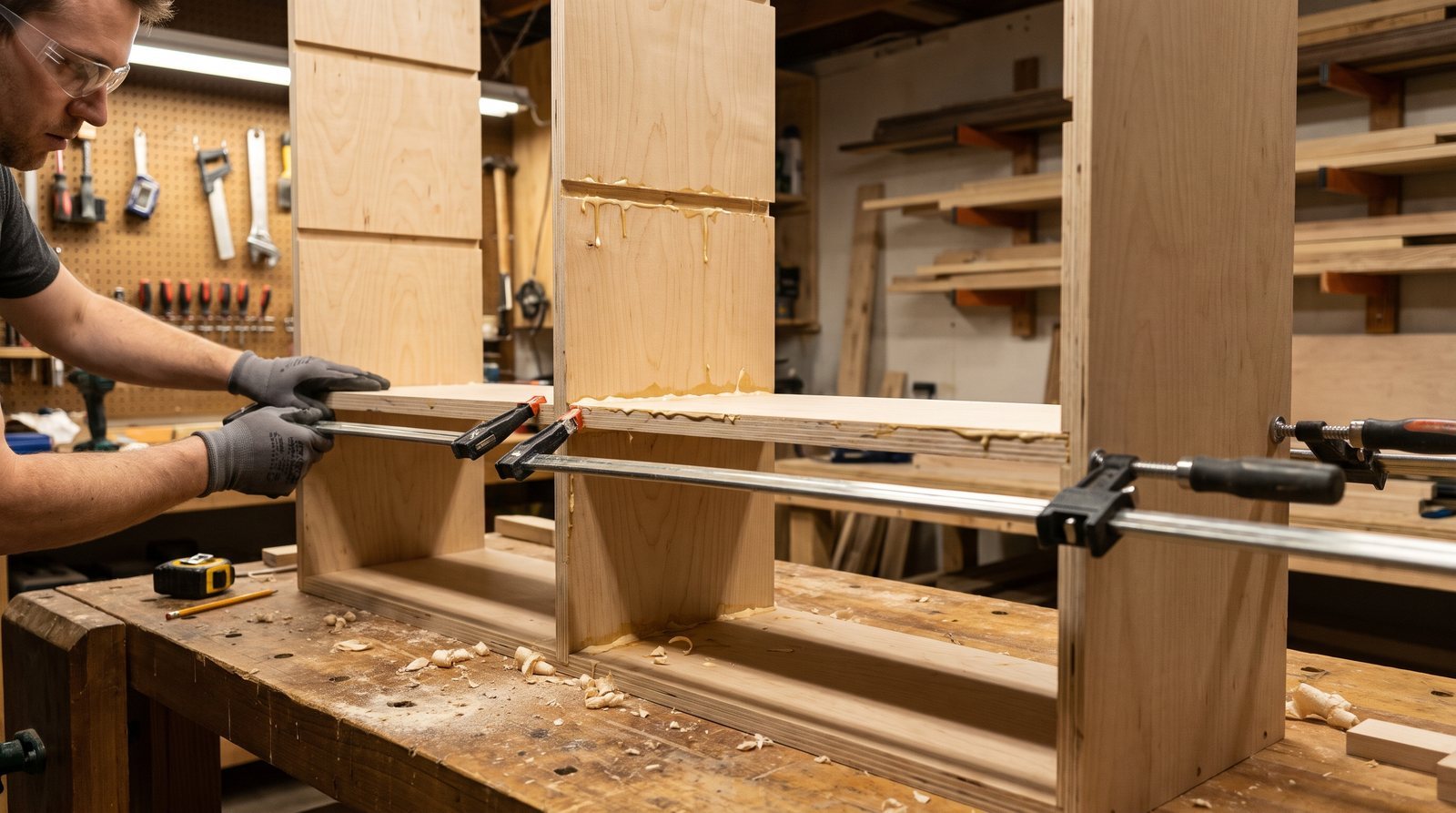
A fixed shelf is not just a shelf that doesn't move. It's a structural brace. If you're building a bookcase or cabinet and wondering whether to make every shelf adjustable for maximum flexibility, this guide will help you understand why at least one fixed shelf usually belongs in the design, how to decide which shelves should be fixed, and how material choice and span affect whether your shelves stay flat or slowly bow under load.
What a fixed shelf actually does
An adjustable shelf sits on pins. It can be repositioned, which is useful, but it contributes almost nothing to the structural rigidity of the cabinet. A fixed shelf, glued and screwed (or joined with dadoes) into the side panels, ties the whole box together.
Without that connection, tall or wide cabinets are vulnerable to racking: a slow, parallelogram-style lean where the sides shift and the unit loses square. Once a cabinet racks even slightly, doors bind, drawers stick, and the whole piece looks off. A solid plywood back panel helps resist racking, but in units over about four feet tall, a back panel alone often isn't enough, especially if it's only 1/4-inch material.
Fixed shelves also keep the vertical panels correctly spaced. In a kitchen cabinet run or a built-in bookcase, that spacing determines whether doors hang right and face frames line up. If you've ever fought a cabinet door that won't close flush, the root cause may be panels that drifted apart or squeezed together because nothing held them in place.
The hybrid approach most pros use
The practical answer for most bookcases and storage cabinets is a mix: one or more fixed shelves for structure, with adjustable shelves filling in the rest.
For a bookcase over four feet tall, a single fixed shelf near the middle of the unit is a common recommendation. It divides the case into two shorter sections, each of which is more rigid on its own, and gives you a solid structural tie right where the side panels are most prone to bowing. Above and below that fixed shelf, you drill pin holes and use adjustable shelves so you can rearrange spacing as your collection changes.
For very tall units (six feet and up), two fixed shelves, roughly dividing the case into thirds, give even better rigidity. The trade-off is less flexibility in shelf placement, but the stability gain is significant. For any tall unit, it is also critical to securely anchor the case to wall studs to prevent a dangerous tip-over accident.
If you're building a plywood garage cabinet, where the contents are heavy and the look doesn't need to be furniture-grade, fixed shelves throughout can be the simplest and strongest choice. Indy Farm Life's Simple Plywood Garage Cabinet is a good example of this approach: straightforward construction from 3/4-inch plywood with basic tools, built for utility rather than adjustability.
Sag: the other reason to think about shelf type
Even if your cabinet doesn't rack, shelves themselves can sag over time. This is where material, span, and how the shelf is supported all come into play.
A shelf on pins is supported only at four points (two pins on each side). A fixed shelf glued into dadoes is supported along its entire edge on both sides. That continuous support distributes load more evenly and resists sag better, all else being equal.
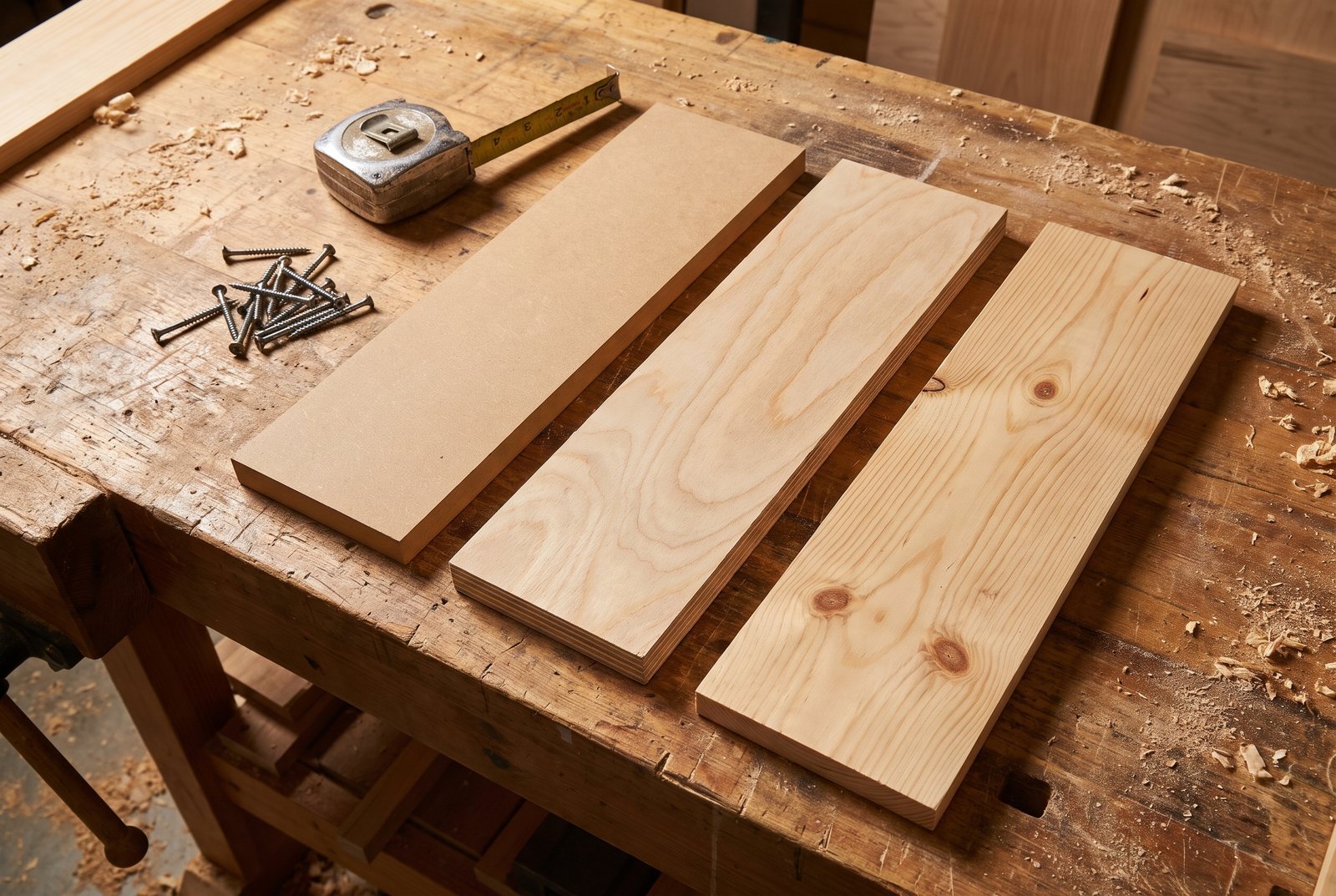
But the biggest factor in sag is the unsupported span relative to the shelf material. Here are the recommended maximum spans for 3/4-inch shelves carrying heavy loads like books:
| Material (3/4-inch) | Max recommended span |
|---|---|
| MDF or particleboard | 24 to 28 inches |
| 1x10 pine lumber | 24 inches |
| 1x12 pine lumber | 28 inches |
| Plywood | 36 inches |
These numbers assume no reinforcement. If your shelf needs to span wider than the material allows, you have a few options: add a vertical divider to break the span, use a thicker shelf, or glue a 1x2 hardwood strip (sometimes called a nosing or apron) to the front edge and optionally the back edge. That strip dramatically increases stiffness because it effectively makes the shelf deeper in cross-section, which is where bending resistance comes from.
A common question is whether MDF can work for the cabinet box itself. It can, for smaller units in dry environments, but it sags more readily than plywood and doesn't hold screws as well at the edges. For shelves that will carry real weight, cabinet-grade plywood (birch or maple, roughly $90 for a 4x8 sheet) is a better investment. Sande plywood at around $70 a sheet is a reasonable middle ground. MDF at about $50 a sheet makes sense for painted panels and light-duty shelves, not for long spans under load.
How to attach a fixed shelf properly
A fixed shelf needs a solid mechanical connection to both side panels. The strongest traditional method is a dado joint: a groove cut into each side panel that the shelf slides into, then gets glued. A 1/4-inch-deep dado in 3/4-inch plywood is standard. If you have a table saw or a router with a straight bit, dadoes are straightforward, but always wear safety glasses and follow your tool's safety instructions.
If you don't have a router or table saw, you can attach a fixed shelf with screws driven through the side panels into the shelf ends. Use #8 or #10 wood screws, 1-1/2 to 2 inches long, with pilot holes. Three screws per side is a reasonable minimum for a shelf up to 36 inches wide. Add wood glue to the joint for a much stronger bond.
One important note: do not use drywall screws for this. They're made from brittle steel and can snap under shear load. Use actual wood screws or construction screws.
Getting the shelf square during assembly matters. If you glue and screw a fixed shelf even slightly out of square, the whole cabinet inherits that error. Measure diagonals, use a framing square, and clamp before driving screws. Our guide on squaring a cabinet during clamping covers the technique in detail.
Adjustable shelves: when they earn their place
Adjustable shelves are the right call when the contents will change. A pantry where jar heights vary, a child's bookcase that needs to accommodate picture books now and novels later, a display cabinet where you'll rearrange things seasonally: these are all cases where the flexibility of pin-supported shelves outweighs the structural benefit of fixing them.
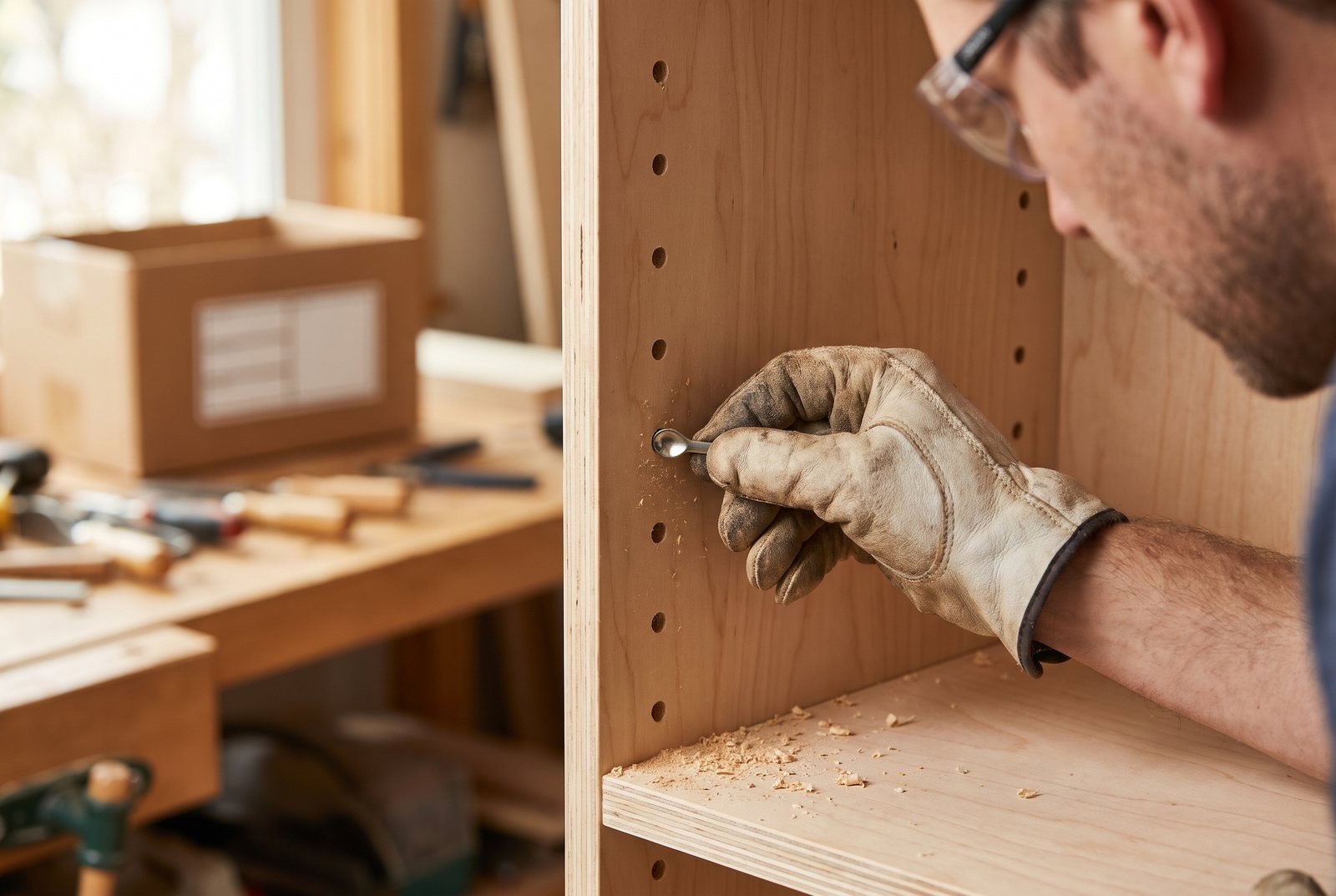
The hardware is simple and cheap. A pack of 8 to 12 metal shelf pins runs $2 to $4. The two most common pin sizes are 5mm and 1/4-inch; match the pin to the hole you drill, and use a drill stop or a piece of tape on the bit to keep hole depth consistent. Sloppy or oversized holes make shelves wobble, which is one of the most common complaints with adjustable systems.
For load capacity, standard steel 5mm pins are rated for roughly 35 pounds per shelf. Spoon-style supports handle around 50 pounds. Plastic pins top out near 15 pounds and aren't worth using for anything heavier than decorative items. The style of the pin (L-shape, spoon, flat) matters more for stability than whether it's 5mm or 1/4-inch.
Putting it together: a decision framework
Rather than choosing one type exclusively, think about each shelf's job:
Make it fixed if the shelf is in the middle of a tall unit and the case needs bracing, if it will carry a permanently heavy load (a turntable, a printer, a row of cast iron), or if the items on it are always the same height and won't need rearranging.
Make it adjustable if the contents will change, if you want to maximize vertical space for items of different heights, or if the unit is short and sturdy enough (under four feet, with a solid back) that racking isn't a concern.
For most bookcases, the answer is one fixed shelf in the middle and adjustable shelves everywhere else. For kitchen cabinets, the face frame and solid back usually provide enough rigidity that all interior shelves can be adjustable. For garage and shop cabinets holding heavy tools, fixed shelves throughout are simpler and stronger.
Quick answers
Do I really need a fixed shelf if my bookcase has a plywood back?
A plywood back helps resist racking, but on units over four feet tall, it's often not enough on its own, especially if the back is only 1/4-inch thick. One fixed shelf near the middle adds significant rigidity.
How far can a 3/4-inch plywood shelf span without sagging?
For heavy loads like books, 36 inches is the recommended maximum for 3/4-inch plywood. You can extend that by gluing a 1x2 hardwood strip to the front edge to stiffen it.
What size shelf pins should I use?
The most common sizes are 5mm and 1/4-inch. Either works well in steel. Match the pin to the hole size exactly, and avoid plastic pins for anything heavier than about 15 pounds.
Can I convert an adjustable shelf to a fixed shelf later?
Yes. Remove the shelf, apply wood glue to both ends, set it back in place, and drive #8 or #10 wood screws (1-1/2 to 2 inches long) through the side panels into the shelf ends. Clamp and check for square before the glue sets.
The project in this post
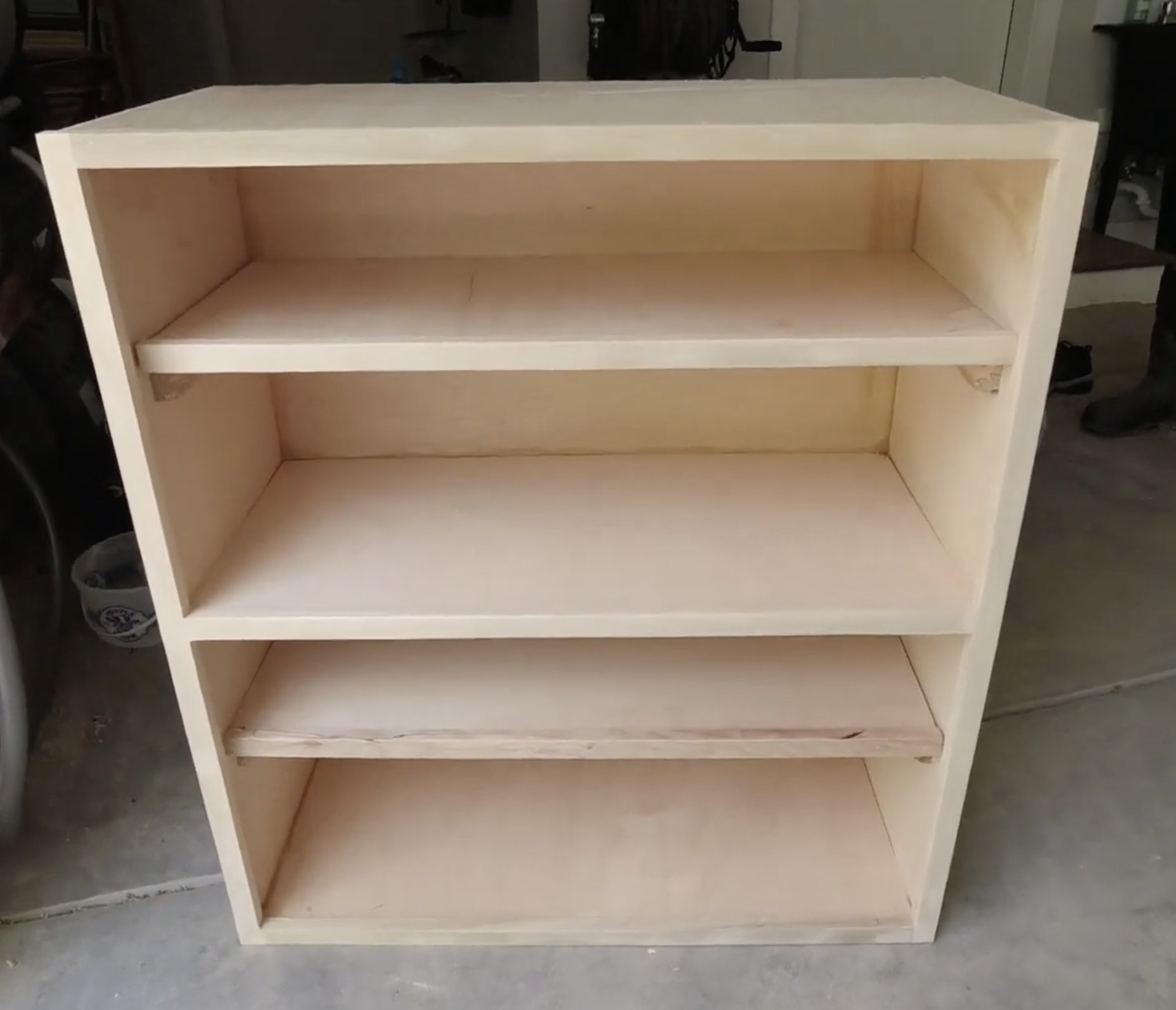
Simple Plywood Garage Cabinet
by Indy Farm Life
Open the project guideKeep reading
All posts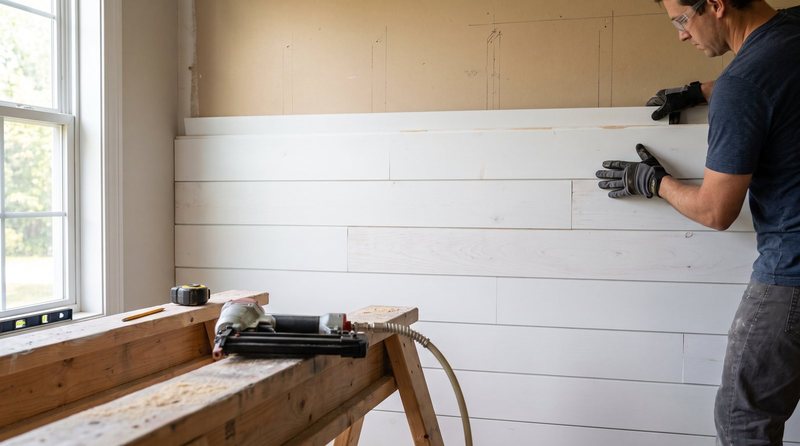
How to Stagger Shiplap Joints So Seams Never Line Up
A simple way to stagger plank joints on shiplap, board-and-batten, and accent walls. Covers the cut-off formula, stud-landing tips, and common mistakes.
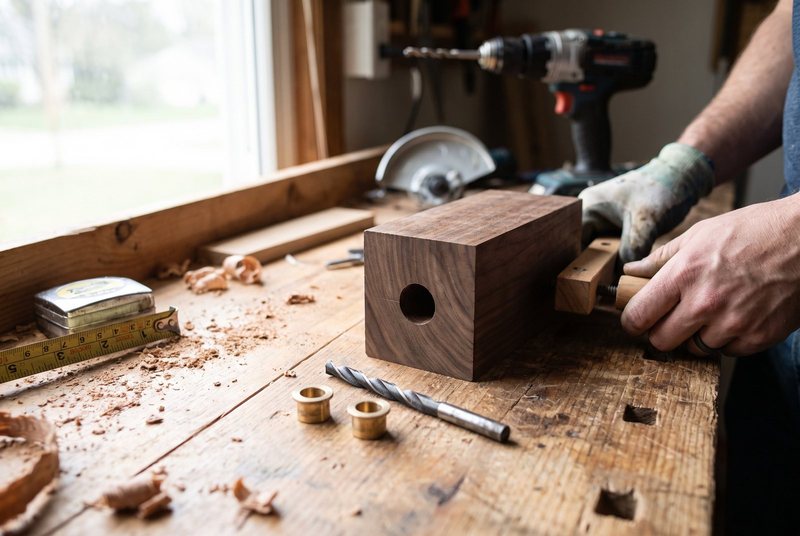
How to Drill Straight Holes Without a Drill Press
Three proven methods for drilling perpendicular holes by hand: a shop-made guide block, the square-and-mirror trick, and portable drill guide attachments.
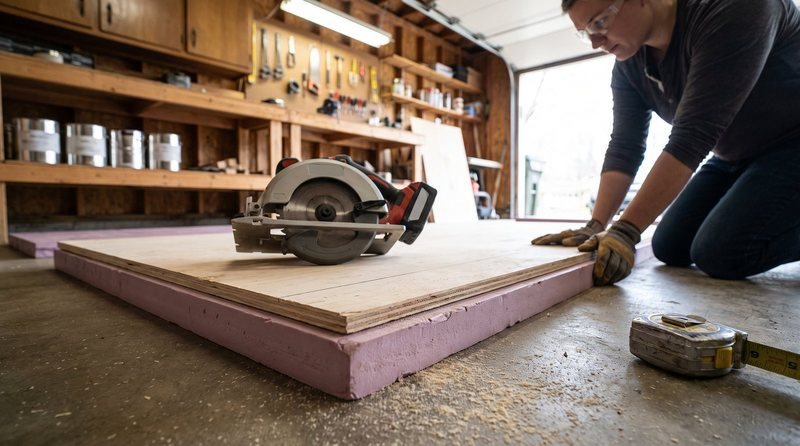
How to Support Plywood for Solo Cutting Without a Table Saw
Three setups for cutting a full 4x8 plywood sheet alone: foam board on the ground, 2x4 rails on sawhorses, and a cutting grid with dimensions and costs.