How Deep Should Fence Post Holes Be? Depth and Concrete Guide
Learn how deep to dig fence post holes, how wide to make them for 4x4 and 6x6 posts, and how many bags of concrete you need. Covers frost lines by region.
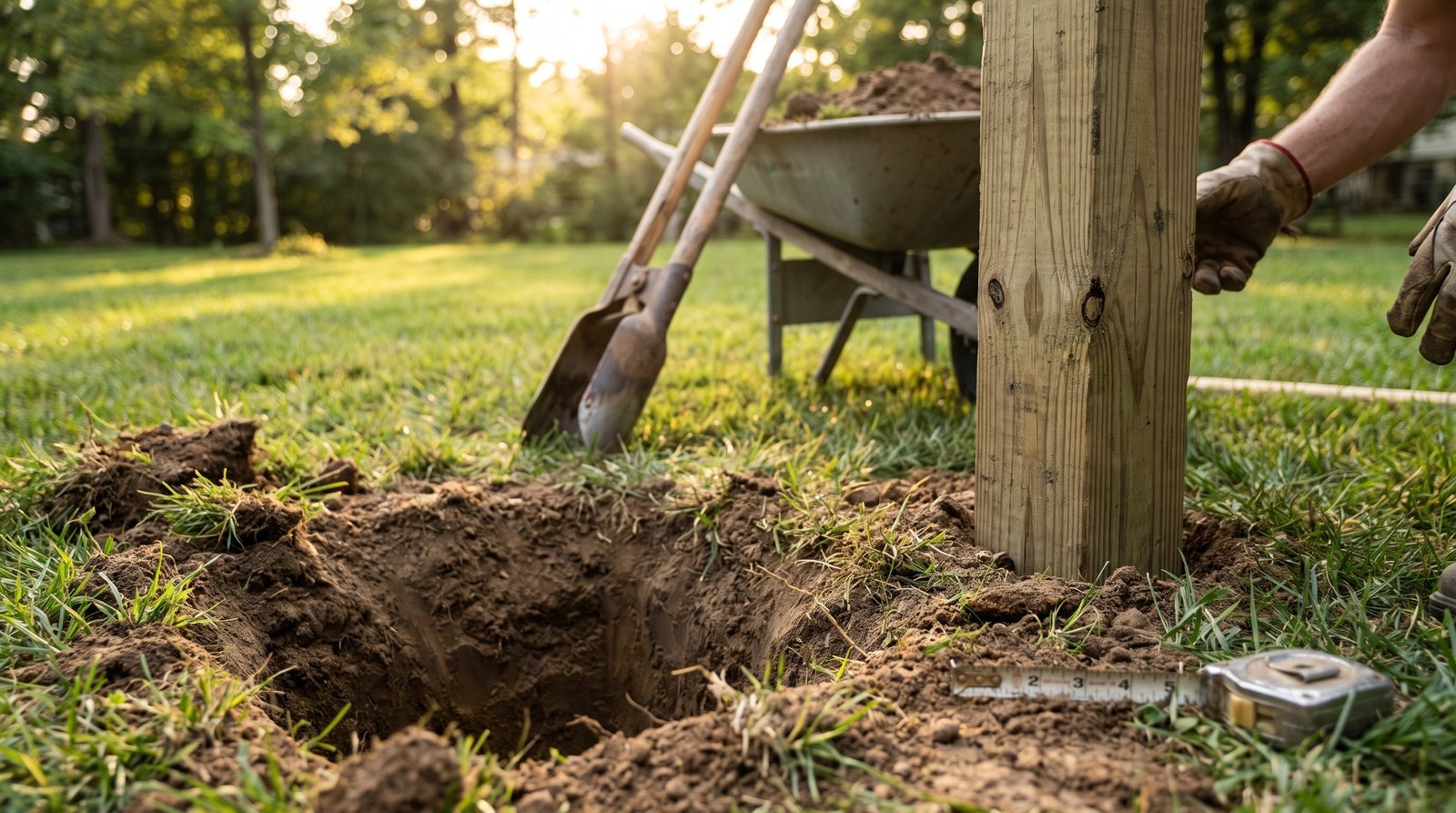
By the end of this guide you'll know exactly how deep and wide to dig your fence post holes, how to adjust for your local frost line, and how many bags of concrete to buy for the whole run. These are the numbers that keep a fence standing straight five and ten years from now, and they're the step most fence-building tutorials rush past in about fifteen seconds.
The one-third rule (and when it's not enough)
The simplest guideline: bury at least one-third of the total post length underground. For a standard 6-foot privacy fence, that means buying 8-foot posts and sinking them 24 inches deep. It's easy math, it works in mild climates with stable soil, and it's the number you'll hear most often.
But there's a second formula worth knowing. Some manufacturers and professional references call for a depth of half the finished fence height, minus 6 inches. For that same 6-foot fence, the math comes out to 30 inches ((72 ÷ 2) − 6 = 30). That's 6 inches deeper than the one-third rule gives you.
Which one should you follow? Use whichever number is larger once you also factor in your frost line (more on that below). In southern states the one-third rule is usually fine. In Ohio or Minnesota, frost depth will push you well past both formulas anyway.
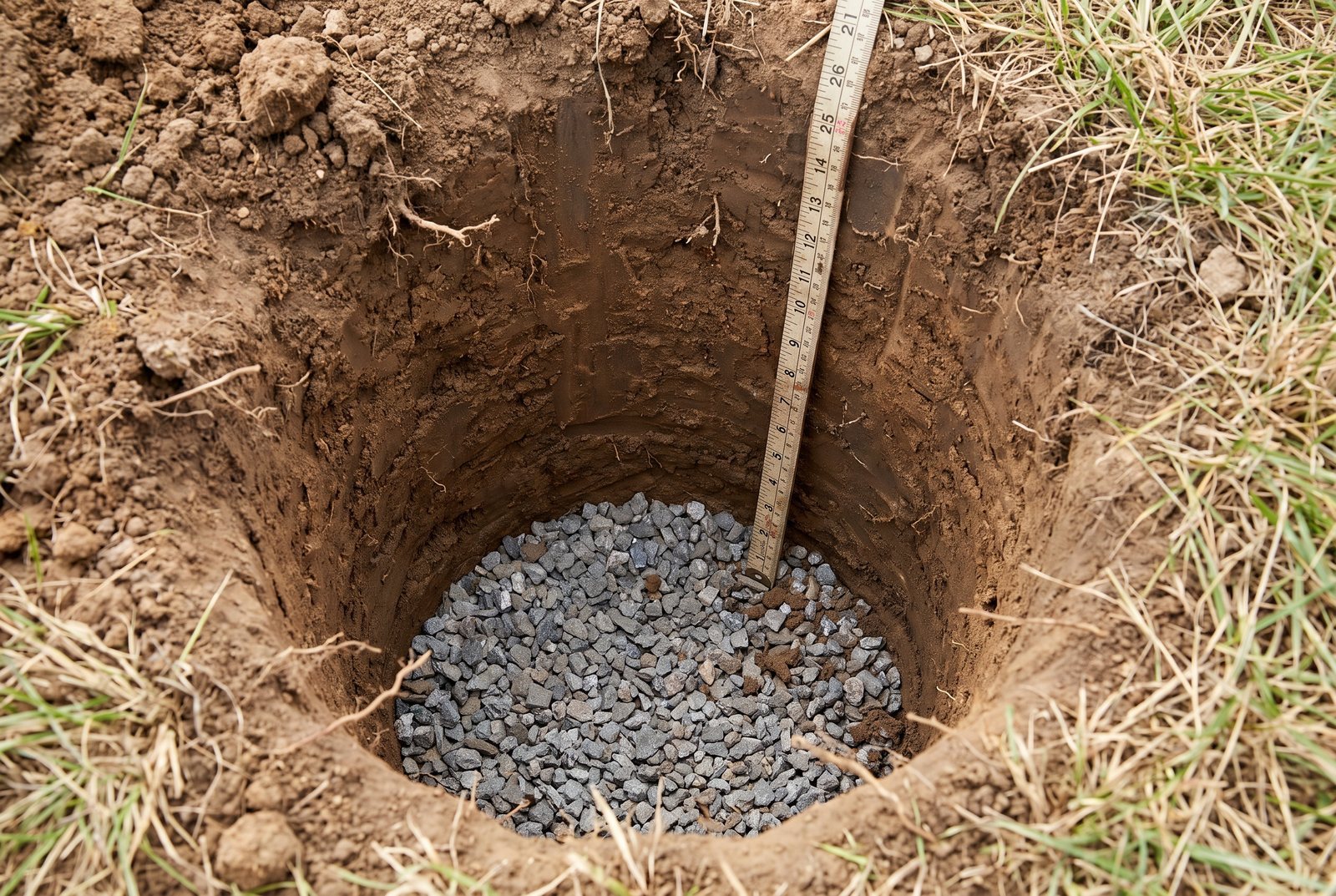
One more thing: add 6 inches to whatever depth you calculate. That extra space at the bottom is for a gravel drainage base, which keeps water from pooling under the post and accelerating rot.
Frost line: the number that overrides everything else
The frost line is the depth at which the ground freezes in winter. If the bottom of your concrete footing sits above it, the freeze-thaw cycle will slowly shove your posts upward. This is called frost heave, and it's the single most common reason fences lean and sag in cold climates.
Your post's concrete footing needs to reach at least 6 inches below the frost line. Here's where that line sits in broad regional terms:
| Region | Frost line depth | Post hole minimum (frost line + 6 in. + 6 in. gravel) |
|---|---|---|
| Southern states (FL, TX) | 6 to 12 in. | 18 to 24 in. |
| Mid-Atlantic (VA, TN) | 18 to 24 in. | 30 to 36 in. |
| Midwest (OH, IL) | 30 to 36 in. | 42 to 48 in. |
| Northern states (MN, WI) | 42 to 48 in. or more | 54 to 60 in. |
Those northern numbers are not typos. A 54-inch hole is four and a half feet deep. It's a serious amount of digging, and it's the reason a gas-powered auger rental (around $50 for four hours, $150 for a full day) is worth every dollar when you have more than a handful of posts to set.
Your local building department can give you the exact frost line for your county. Call them before you start. While you're at it, call 811 (the national "call before you dig" line) a few days ahead so utility lines get marked for free. Hitting a buried gas or electric line is the kind of mistake you only get to make once.
Hole diameter: how wide for 4x4 and 6x6 posts
The general rule is three times the width of the post. Since lumber dimensions are nominal (a 4x4 actually measures 3.5 inches square, and a 6x6 is 5.5 inches square), here's what that looks like in practice:
- 4x4 posts: 10 to 12-inch diameter hole.
- 6x6 posts: 12 to 18-inch diameter hole.
Go toward the wider end of those ranges for corner posts, end posts, and gate posts. These carry more lateral force than a line post in the middle of a straight run, and the extra concrete around them makes a real difference.
Gate posts deserve special attention beyond just width. They should be set 6 to 8 inches deeper than your line posts. A gate swings, slams, and gets leaned on. That deeper footing is what keeps it from working loose over the years.
How much concrete per post
This is the question that sends people to the store twice. The amount depends on hole diameter, hole depth, and the size of the post sitting in the middle. Rather than do the cylinder-volume math yourself, here are the practical numbers:
- 4x4 post in a 10 to 12-inch hole: 1 to 2 bags of 50-lb concrete mix per post.
- 6x6 post in a 12 to 18-inch hole: 2 to 4 bags of 50-lb mix, or 1 to 3 bags of 80-lb mix.
A 50-lb bag yields about 0.375 cubic feet of mixed concrete. An 80-lb bag yields about 0.60 cubic feet. The 80-lb bags are usually more cost-effective per pound ($5 to $9 per bag versus $4 to $7 for the 50-lb size), but they're also genuinely heavy to wrestle around a job site all day.
Buy one or two extra bags beyond your calculation. Returning unopened concrete is easy. Making a second trip to the store with wet concrete already setting in your holes is not.
Setting the post right: details people skip
Getting the hole dimensions correct is half the job. The other half is what happens when you actually drop the post in.
Gravel first. Pour about 6 inches of all-purpose gravel into the bottom of the hole and tamp it down. This creates a drainage layer so water doesn't sit against the end grain of the post. A half-cubic-foot bag of gravel ($4 to $6) is enough for one or two holes.
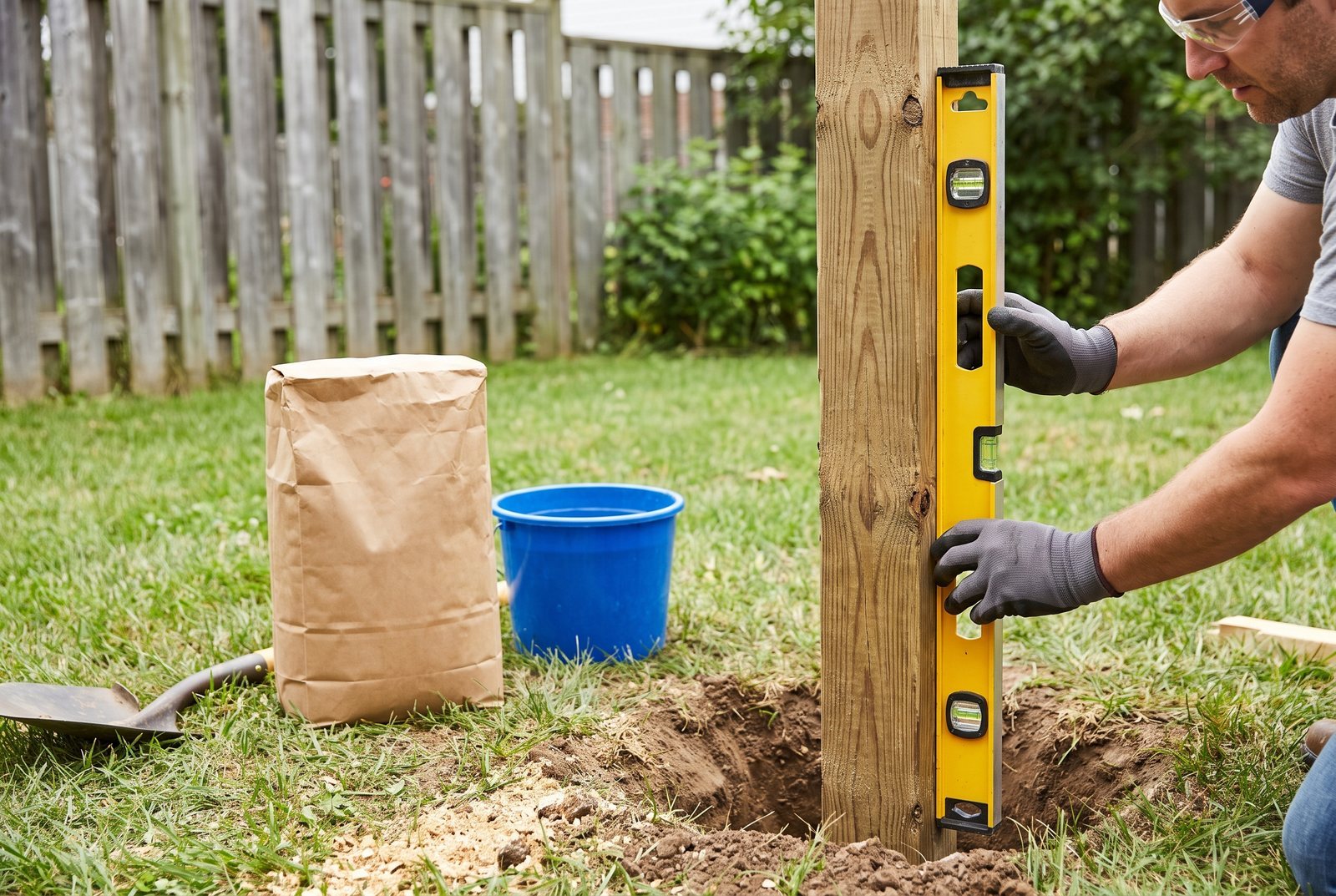
Plumb before you pour. Hold a level on two adjacent faces of the post and brace it in position before adding concrete. Once the mix starts to set, you have maybe 15 to 20 minutes to make adjustments, and that window closes fast on a warm day.
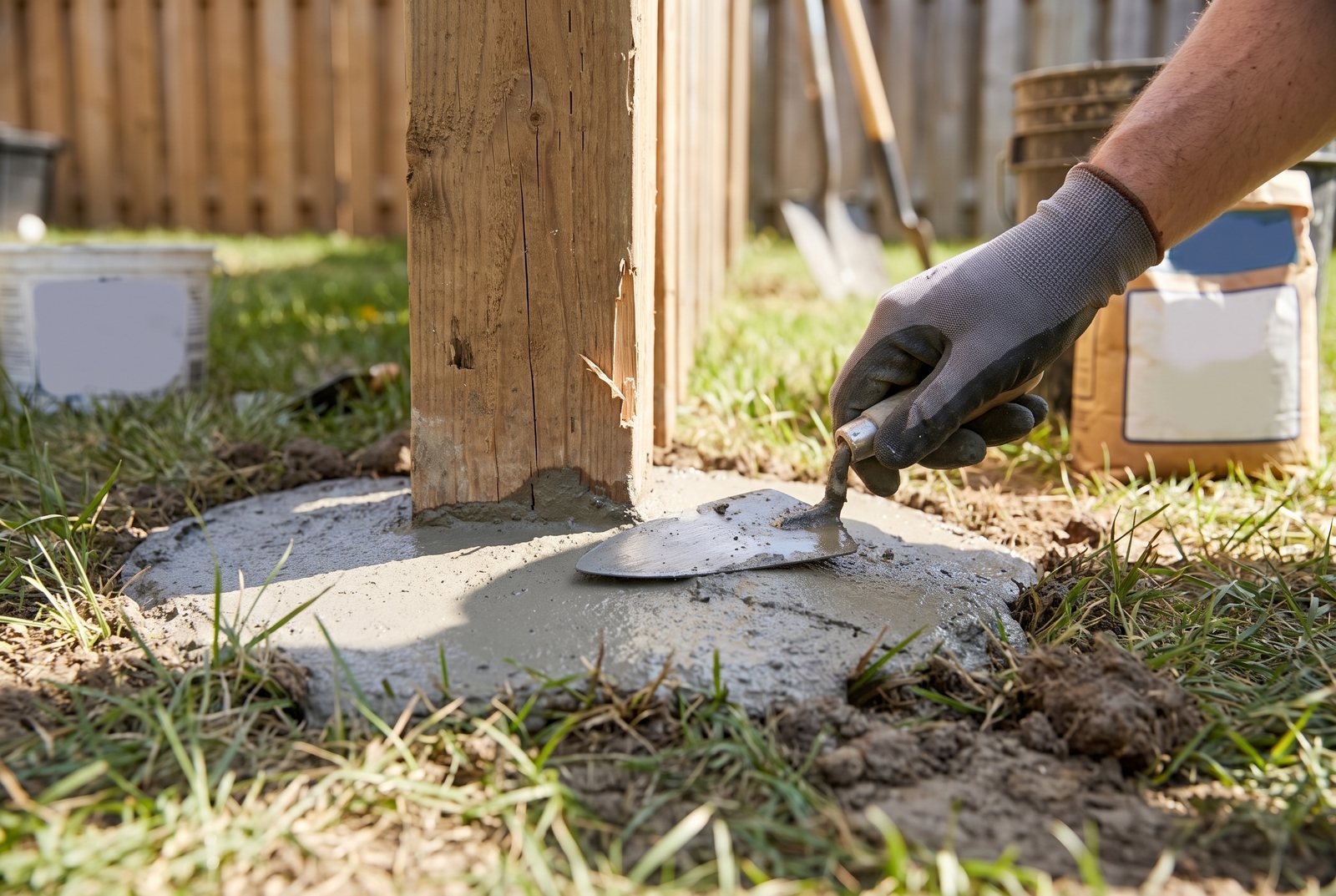
Slope the top of the concrete. Build the concrete up slightly around the post and shape it so it slopes away, like a tiny hill. Water that pools on a flat concrete collar will wick into the wood and start rot at exactly the spot where the post meets the ground.
Don't pour into standing water. If your holes have water in them after a rain, bail or pump them out first. Pouring concrete into a puddle weakens the mix and gives you a footing you can't trust.
One concern that comes up often: whether concrete itself causes posts to rot faster than gravel-only backfill. In most cases, pressure-treated posts set properly in concrete with a gravel base and a sloped top will last for years. Gravel-only backfill can work in well-drained sandy soils and mild climates, but for privacy fences and gates, concrete is the standard recommendation because it resists the lateral forces that eventually loosen a gravel-set post.
Soil types and when to go deeper
Sandy soil drains well but doesn't grip the footing the way clay does. In loose or sandy ground, lean toward the deeper end of your range and consider a wider hole to give the concrete more surface area to bear against.
Clay is the opposite problem. It holds water and expands when wet, then shrinks when dry, creating a cycle that can loosen footings over time. In heavy clay, a wider hole with good gravel drainage at the bottom helps. Some builders in clay-heavy areas flare the bottom of the hole slightly wider than the top (called a bell shape) so the footing resists being pushed upward.
If you're digging and hit rock or roots that stop you short of your target depth, don't just shrug and set the post. A post that's 6 inches too shallow will be the first one to lean. Break through the obstruction, or adjust your fence layout to move the post a few inches.
Permits, property lines, and the things that bite you later
Fences over 6 feet tall almost always require a building permit, and some municipalities require one for any fence regardless of height. Check before you dig.
More importantly, know exactly where your property line is. A fence built 8 inches onto your neighbor's land is a fence you might have to tear out. If there's any doubt, a property survey is cheaper than a dispute.
Quick answers
How deep should a fence post hole be for a 6-foot fence?
At minimum 24 inches (using the one-third rule with an 8-foot post), plus 6 inches for a gravel base. In cold climates, the frost line may push the total depth to 36 inches or more. Always use whichever number is deepest.
How many bags of concrete do I need per fence post?
For a 4x4 post, plan on 1 to 2 bags of 50-lb mix. For a 6x6 post, plan on 2 to 4 bags of 50-lb mix or 1 to 3 bags of 80-lb mix. The exact amount depends on hole diameter and depth.
How wide should a fence post hole be?
Three times the width of the post. That means 10 to 12 inches for a 4x4 post and 12 to 18 inches for a 6x6 post. Go wider for corner and gate posts.
Do I need to go below the frost line for fence posts?
Yes. The bottom of your concrete footing should sit at least 6 inches below your local frost line. Ignoring this in cold climates leads to frost heave, which pushes posts out of the ground over one or two winters.
Keep reading
All posts
How to Keep Fence Pickets Level on Uneven Ground
A string line, the right layout method, and a plan for your slope are all it takes. Here's how to get a straight fence top on ground that isn't.
Best Wood for Raised Garden Beds: Cedar, Redwood, PT, and Pine
Cedar, redwood, pressure-treated pine, and untreated pine compared for longevity, food safety, and cost. Clear recommendations by budget and climate.
How to Build a Plywood Garage Cabinet with a Circular Saw
A simple 3/4" plywood garage cabinet built with a circular saw and brad nailer. Covers plywood choice, cost, assembly, and tips for beginners.