Cedar vs Pressure-Treated Pine vs Redwood for Outdoor Projects
Comparing cedar, pressure-treated pine, and redwood for fences, planters, and raised beds. Covers cost, durability, workability, and looks.
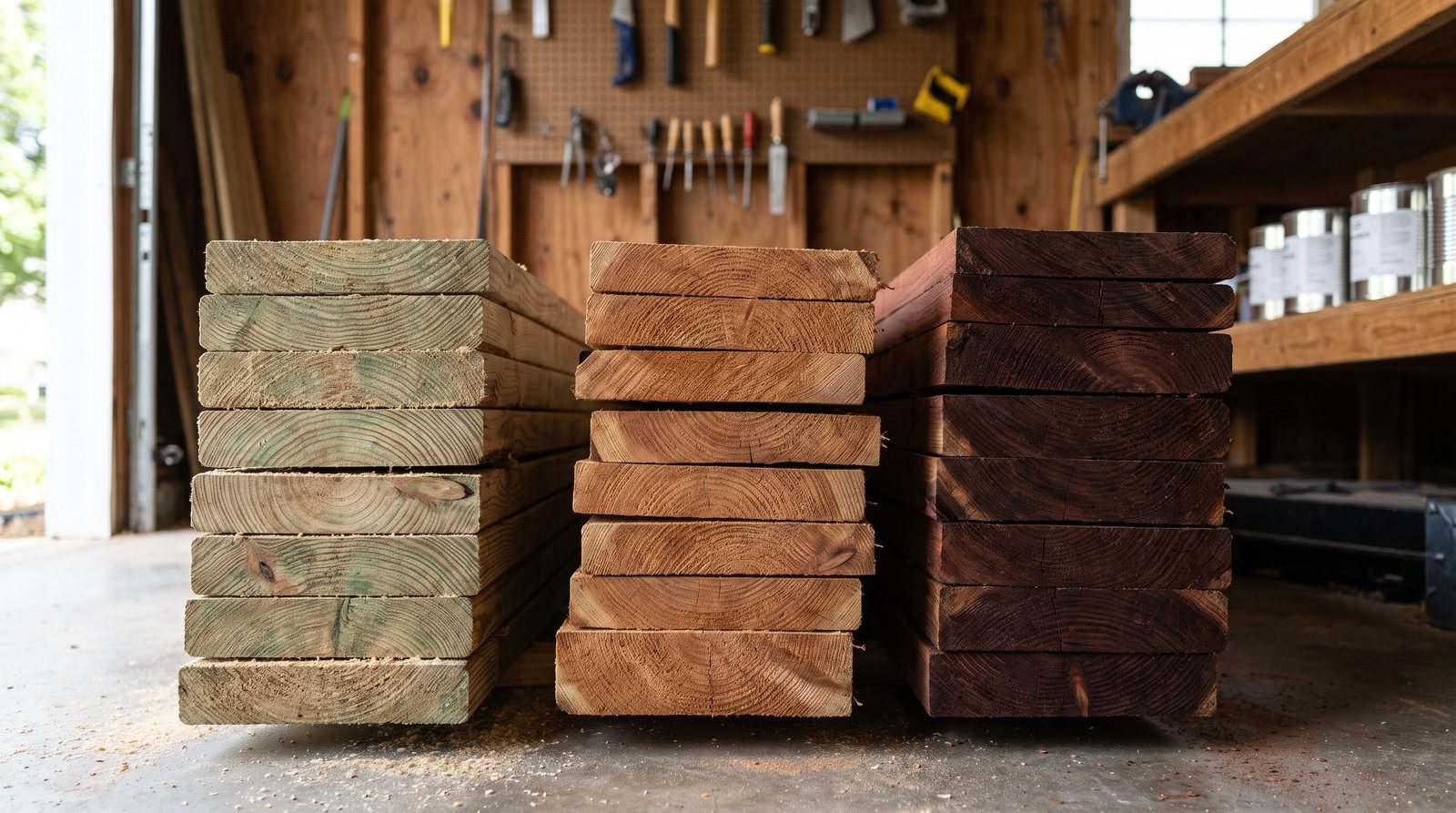
Every outdoor project starts with the same question: what wood should I use? If you're building a fence, a planter, or a raised garden bed, the real choice comes down to three options: cedar, pressure-treated (PT) pine, and redwood. This guide breaks down cost, durability, workability, and appearance so you can pick the right lumber for your project and your budget, then get building.
What each one costs right now
PT pine is the cheapest option by a wide margin. A 4x4x8' PT post runs about $15 to $20, and a standard 1x6x6' fence picket costs $2 to $4. Cedar sits in the middle: that same 4x4x8' post is roughly $30 to $40, and a 1x6x6' picket runs $4 to $6 depending on grade and whether it's rough-sawn or surfaced. Redwood is the premium pick, and pricing is harder to pin down because it varies heavily by region and grade (construction heart vs. sapwood). Expect a significant jump over cedar. Big-box stores don't always stock it, so call local lumberyards for an accurate quote.
To put it in fence terms: a 200-foot privacy fence uses around 400 to 440 pickets, depending on the exact width of the boards and how you space them. In PT pine pickets alone, that's roughly $660 to $1,320. In cedar, it's $1,320 to $1,980. Redwood pushes the material cost higher still, and availability outside the West Coast can be limited.
| Feature | Pressure-Treated Pine | Cedar | Redwood |
|---|---|---|---|
| 4x4x8' post | $15 - $20 | $30 - $40 | Check local yards |
| 1x6x6' picket | $2 - $4 | $4 - $6 | Varies widely |
| Lifespan | 15 - 20 years | 15 - 25 years | 20 - 30+ years |
| Natural rot resistance | No (chemical treatment) | Yes (oils/tannins) | Yes (superior) |
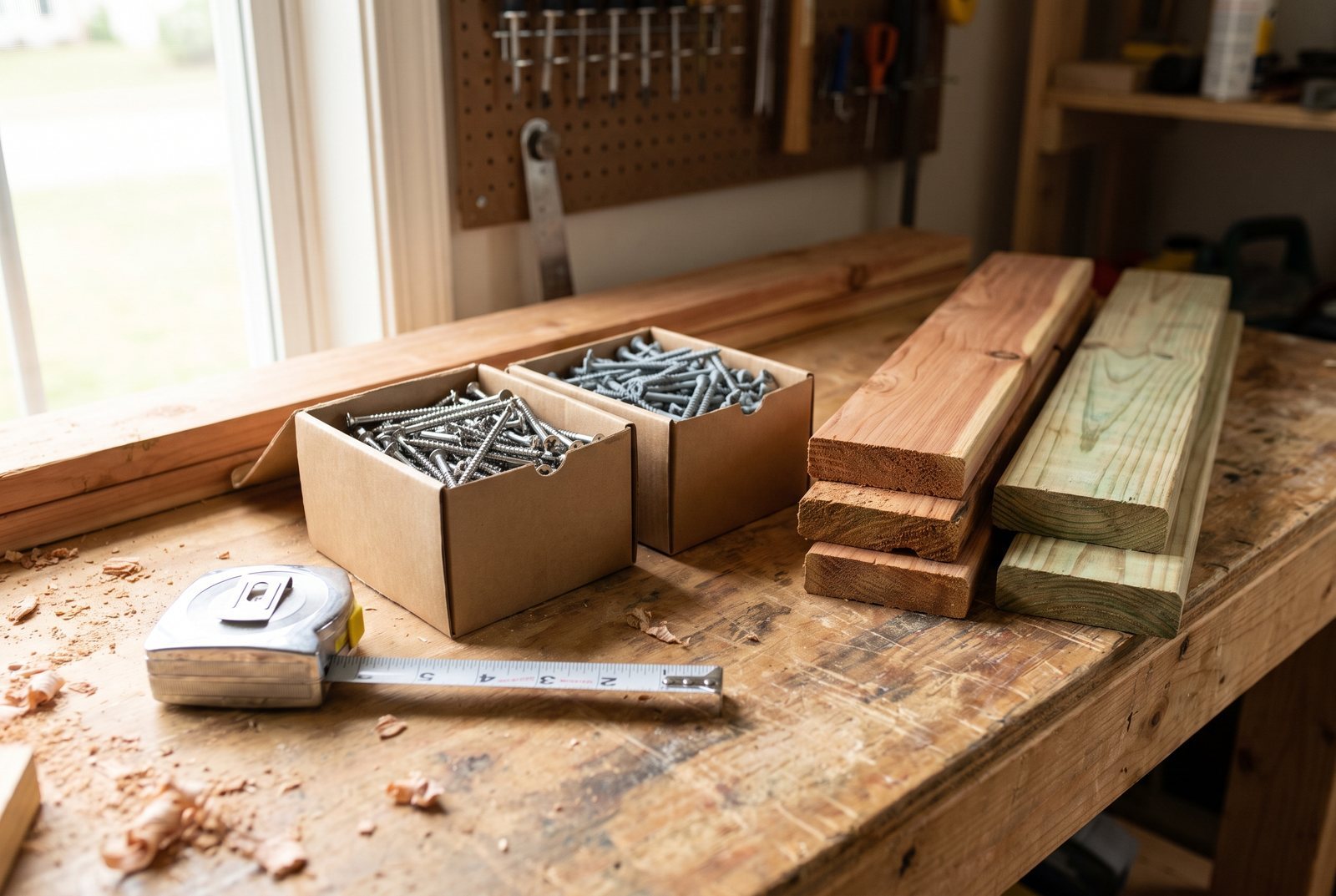
| Best fastener | Hot-dipped galvanized or stainless | Stainless steel (304 or 316) | Stainless steel |
| Untreated color | Green/brown tint, fades | Reddish-brown to pink | Rich reddish-brown |
How long each wood lasts outdoors
PT pine gets its durability from copper-based preservatives (modern lumber uses MCA, Micronized Copper Azole, not the old arsenic-based CCA that was phased out in 2004). It'll last 15 to 20 years with regular maintenance, and it resists rot and insects well. The trade-off is that it needs sealing or staining once it dries out, and it can warp or check if left unfinished.
Cedar lasts 15 to 25 years with proper care. Its natural oils repel insects and resist decay, but it's not bulletproof. In very wet climates, cedar can still rot at ground contact points. If you're setting cedar fence posts directly in soil, expect to replace them sooner than the pickets above.
Redwood heartwood is the most durable of the three, often lasting 20 to 30 years or more. Its natural resistance to rot and insects is generally considered superior to cedar's. The key word is "heartwood." Redwood sapwood (the lighter-colored outer wood) is significantly less resistant, so grade matters when you're paying the premium.
Workability: fasteners, sanding, and finishing
All three are softwoods, which means they cut and sand easily. The differences show up in fastener choice and finishing.
PT pine requires hot-dipped galvanized or stainless steel screws. The copper in the treatment corrodes plain steel and even some coated fasteners over time. For 2x4 framing, use 2 1/2" to 3" screws. For attaching 1" thick pickets to rails, 1 1/4" to 1 3/4" screws work well. The biggest mistake people make with PT pine is staining it too soon. Fresh-from-the-store PT lumber is saturated with treatment solution and needs weeks, sometimes months, to dry. Sprinkle water on the surface: if it beads up, the wood isn't ready. Once dry, start sanding with 60 to 80 grit to remove mill glaze before you apply stain.
Cedar and redwood both demand stainless steel screws (304 or 316 grade). Use anything else and the tannins in the wood react with the metal, leaving dark black streaks that are nearly impossible to remove. For 3/4" thick cedar pickets, 1.5" to 2" screws are standard. Both woods are soft enough that over-driving screws is a common problem. Crushed wood fibers create a small cup around the screw head where water pools and accelerates rot. Drive screws flush with the surface, not below it. A clutch setting on your drill or a depth-stop bit helps.
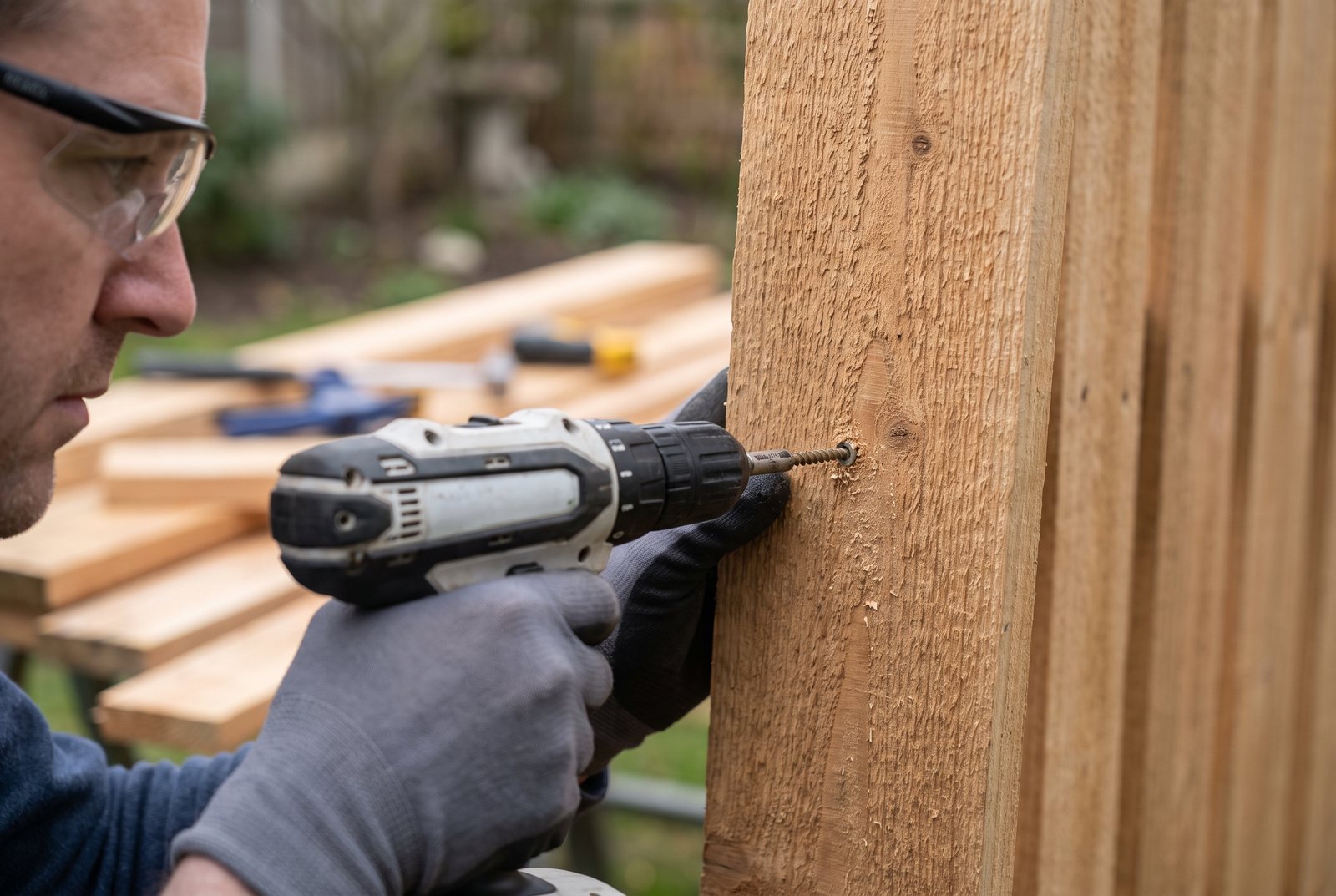
Both cedar and redwood sand easily with 60 to 80 grit paper and accept stain beautifully. You can also leave either one unfinished and let it weather to a silvery gray patina. Whether to seal cedar is genuinely debatable: sealing preserves the warm color and adds moisture protection, but it also adds a maintenance cycle. Leaving it bare means less work and a look many people prefer. It's a personal call, not a performance one.
Appearance and what weathers how
PT pine starts life with a greenish or brownish tint from the treatment chemicals. That color fades within a few months to a dull gray if left alone. The grain is prominent and often knotty. Most people paint or stain PT pine, and it takes both well once it's dry.
Cedar ranges from reddish-brown to pinkish tones with a fine, straight grain and a distinctive smell. It's the most "finished-looking" option straight off the pile, which is why it's popular for fences and planters where the wood stays visible.
Redwood has a rich, deep reddish-brown that's hard to match. The grain is fine and straight with a smooth texture. Left alone, it grays out like cedar but starts from a darker, warmer base. If you want to maintain the red tone, a UV-blocking stain or sealer applied every couple of years does the job.
Picking the right wood for specific projects
Fences. For a budget fence that you plan to paint, PT pine is hard to beat. If you want a natural wood look with less upkeep, cedar is the standard choice. Redwood fencing looks outstanding but the cost adds up fast over a long run. Remember that most municipalities require a permit for fences over 6 feet tall, and post holes should be dug to one-third the post height (so 2 feet deep for a 6-foot fence), with footings below the frost line in cold climates. A 10 to 12 inch diameter hole is typical for a 4x4 post.
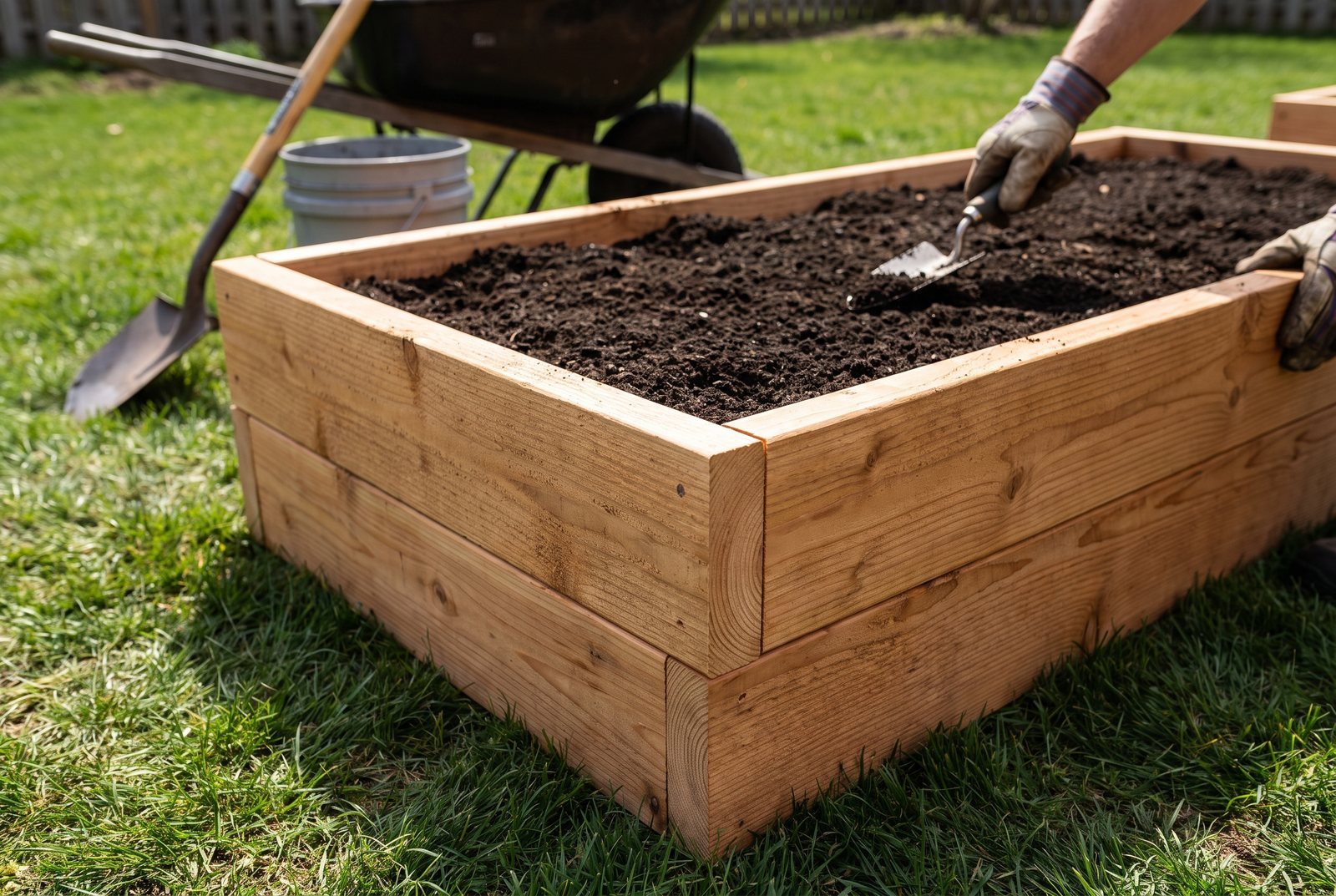
Raised garden beds. This is where the PT-pine-in-the-vegetable-garden question comes up constantly. Modern copper-treated lumber (post-2003) is considered safe for vegetable beds by the EPA and university extension programs. That said, some gardeners prefer the extra peace of mind of a plastic liner between the wood and the soil, and others skip PT pine entirely in favor of cedar or redwood. Cedar is the most popular choice for raised beds because it's naturally resistant, food-safe without debate, and looks good in a garden. Redwood heartwood will outlast cedar in the ground but costs more.
Planters. Similar logic to raised beds. Cedar planters weather gracefully and don't need finishing. PT pine planters work fine for flowers and ornamentals where food-safety isn't a concern. Redwood is the premium option if you want a planter that looks like furniture.
A real outdoor build to study
Studying a real-world deck project is a good way to see how material choices play out at scale. The build covers setting posts, framing, installing decking, and finishing, all the stages where wood selection, fastener compatibility, and proper technique matter. It's worth walking through the project guide if you're planning anything structural outdoors, because the framing and post-setting principles apply directly to fences and large planter builds too.
Before you buy
Call 811 before you dig any post holes to get underground utilities marked. Check with your local building department about permit requirements, especially for fences. And when you're at the lumber yard, inspect every board: sight down the edge for twist and bow, skip anything with large checks or loose knots, and remember that PT pine is heavier when wet, so factor drying time into your schedule.
The simplest way to decide: if budget drives the project, go PT pine and plan to stain it. If you want natural beauty with moderate cost, cedar handles almost everything well. If you want the longest-lasting wood and the look to match, and you can find it locally, redwood is worth the price.
Quick answers
Can I use cedar instead of pressure-treated pine for a fence?
Yes. Cedar is naturally rot-resistant and works well for fences. It costs roughly twice as much per board, but you skip the drying-time wait and get a better-looking result without stain. Use stainless steel screws (304 or 316) to avoid black tannin stains.
Is pressure-treated wood safe for vegetable garden beds?
Modern PT lumber uses copper-based preservatives (MCA), not the old arsenic-based CCA retired in 2004. The EPA and university extension services consider it safe for vegetable beds. If you want extra caution, line the inside with plastic sheeting before filling with soil.
How long does cedar last outdoors without sealing?
Cedar lasts 15 to 25 years outdoors with or without a sealer. Left unfinished, it weathers to a silvery gray. Sealing preserves the original color and adds some moisture protection but requires reapplication every few years.
Is redwood worth the extra cost over cedar?
Redwood heartwood typically outlasts cedar by 5 to 10 years and has superior natural rot resistance. Whether it's "worth it" depends on your budget and availability. On the West Coast where supply is better, the price gap is smaller. In other regions, cedar gives you most of the same benefits for less money and easier sourcing.
The project in this post
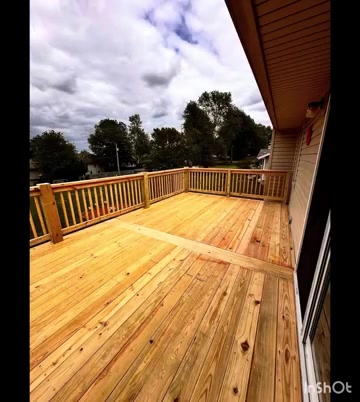
Building a Raised Wooden Deck
by VITALIK TATALIK
Open the project guideKeep reading
All posts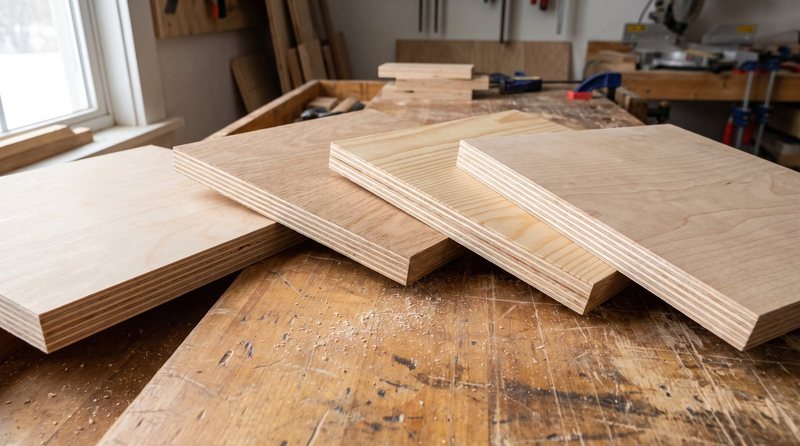
3/4-Inch Plywood for Cabinets and Shelves: Which Grade to Buy
Pine, birch, maple, or MDF core? Compare 3/4-inch plywood types by price, durability, and finish quality to pick the right sheet for your project.
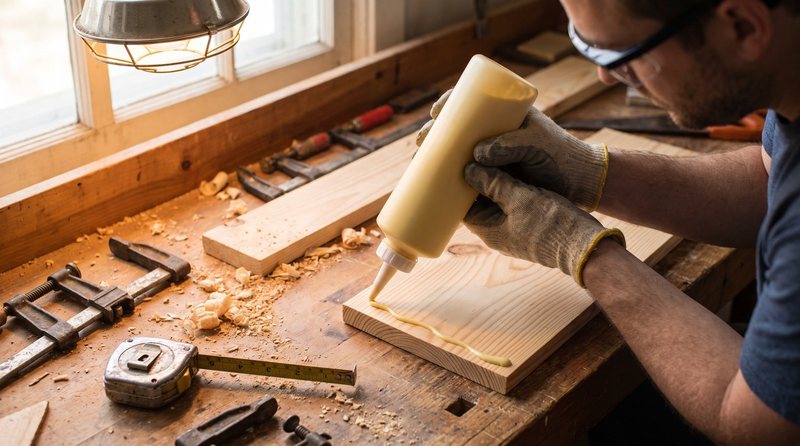
When to Use Wood Glue Even If the Plans Don't Say To
Many DIY plans skip the glue step entirely. Here's how to decide which joints need wood glue, which ones shouldn't get it, and what type to use.
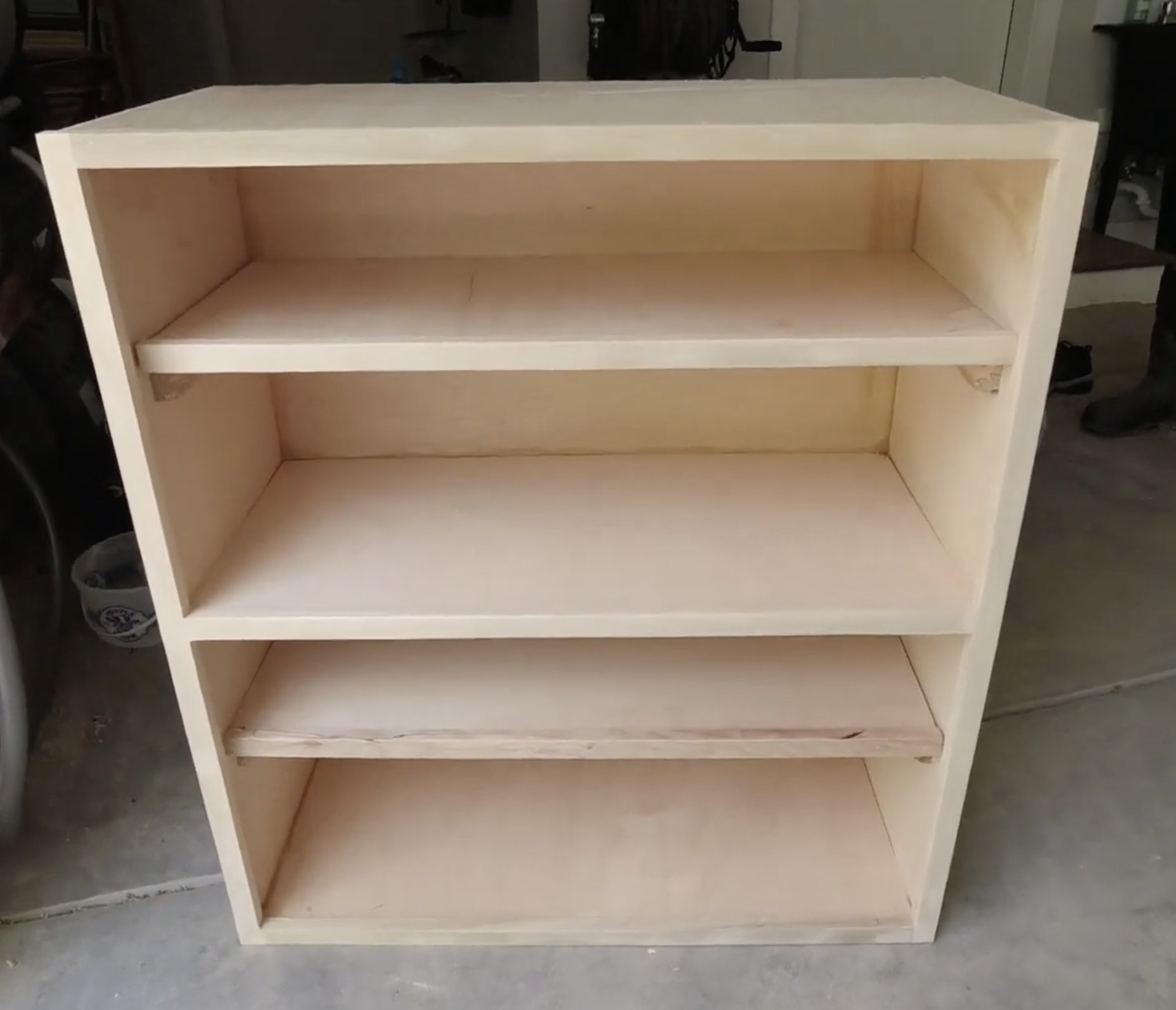
How to Build a Plywood Garage Cabinet with a Circular Saw
A simple 3/4" plywood garage cabinet built with a circular saw and brad nailer. Covers plywood choice, cost, assembly, and tips for beginners.