How to Mount Shelves and Racks to Drywall Without a Stud
Toggle bolts, snap toggles, and French cleats each solve a different problem. Learn how to choose the right anchor and install it securely.
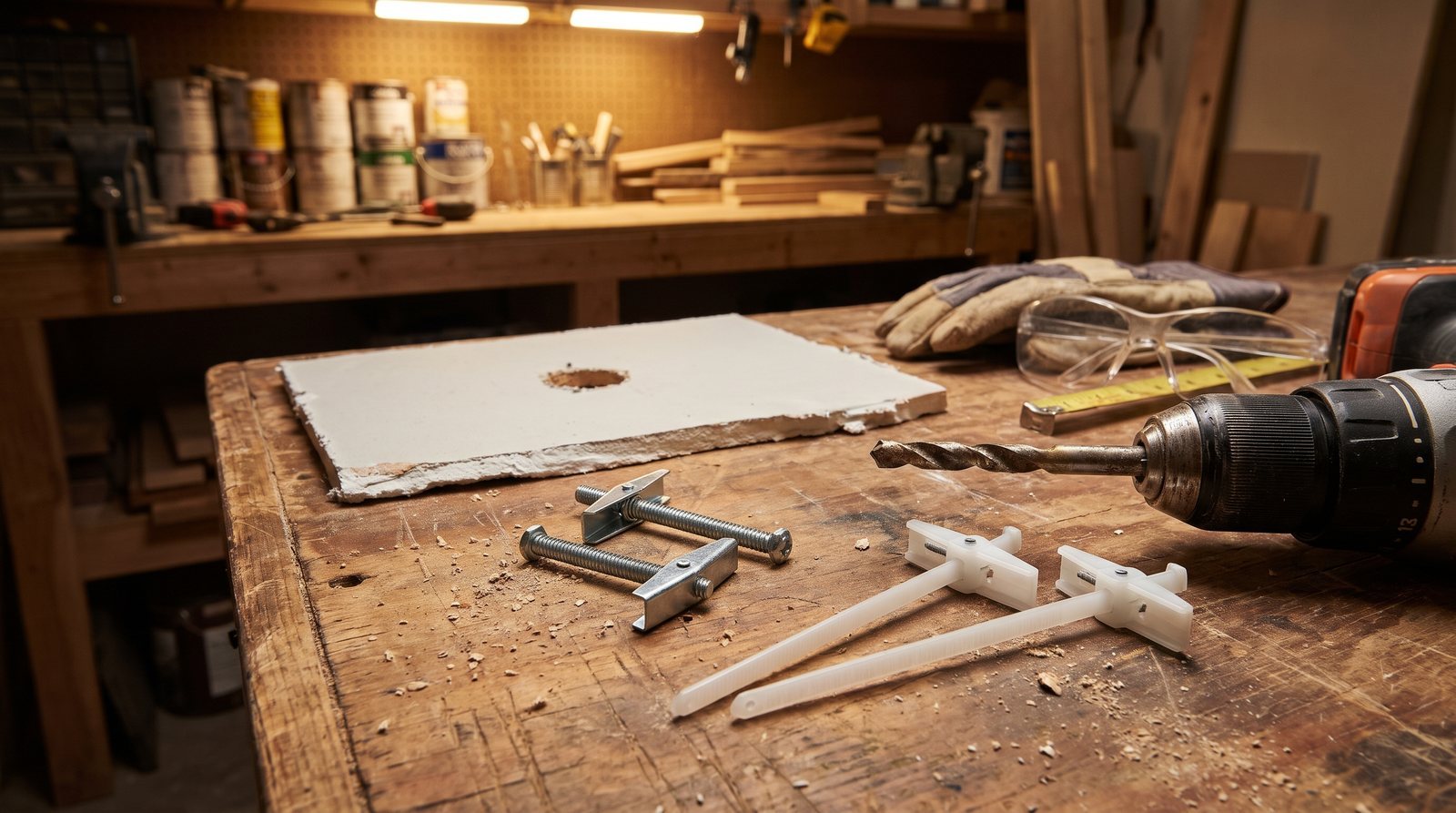
You want to hang a shelf, a coat rack, or a cabinet, but the studs are 6 inches away from where the bracket needs to go. This is one of the most common problems in home improvement, and it has good solutions. By the end of this guide you'll know which drywall anchor to use, how much weight it can actually hold, and how to install it without cracking your wall or watching your shelf crash down at 2 a.m.
The real weight limit on the box is not your weight limit
Every anchor package lists a maximum load. That number comes from a lab test where the anchor is pulled until the drywall fails. It is the breaking point, not the safe working load. A widely used rule of thumb is to load an anchor to no more than one-fourth of its rated maximum. So a toggle bolt rated for 80 lbs in 1/2-inch drywall should carry about 20 lbs in practice.
This matters more than most people realize. A floating shelf loaded with books can easily weigh 40 to 60 lbs, and the shelf itself sticks out from the wall, which adds a pulling-out (tension) force on top of the downward (shear) force. That tension component can cut a toggle bolt's effective capacity by as much as two-thirds compared to a straight-down load. If you're mounting something that projects more than a few inches from the wall, size your anchors generously and use more of them.
One more thing: using four anchors does not give you four times the capacity of one anchor. The drywall between the anchors becomes the weak link, and uneven loading means one anchor always works harder than the others. Plan conservatively.
Toggle bolts: the classic heavy-duty option
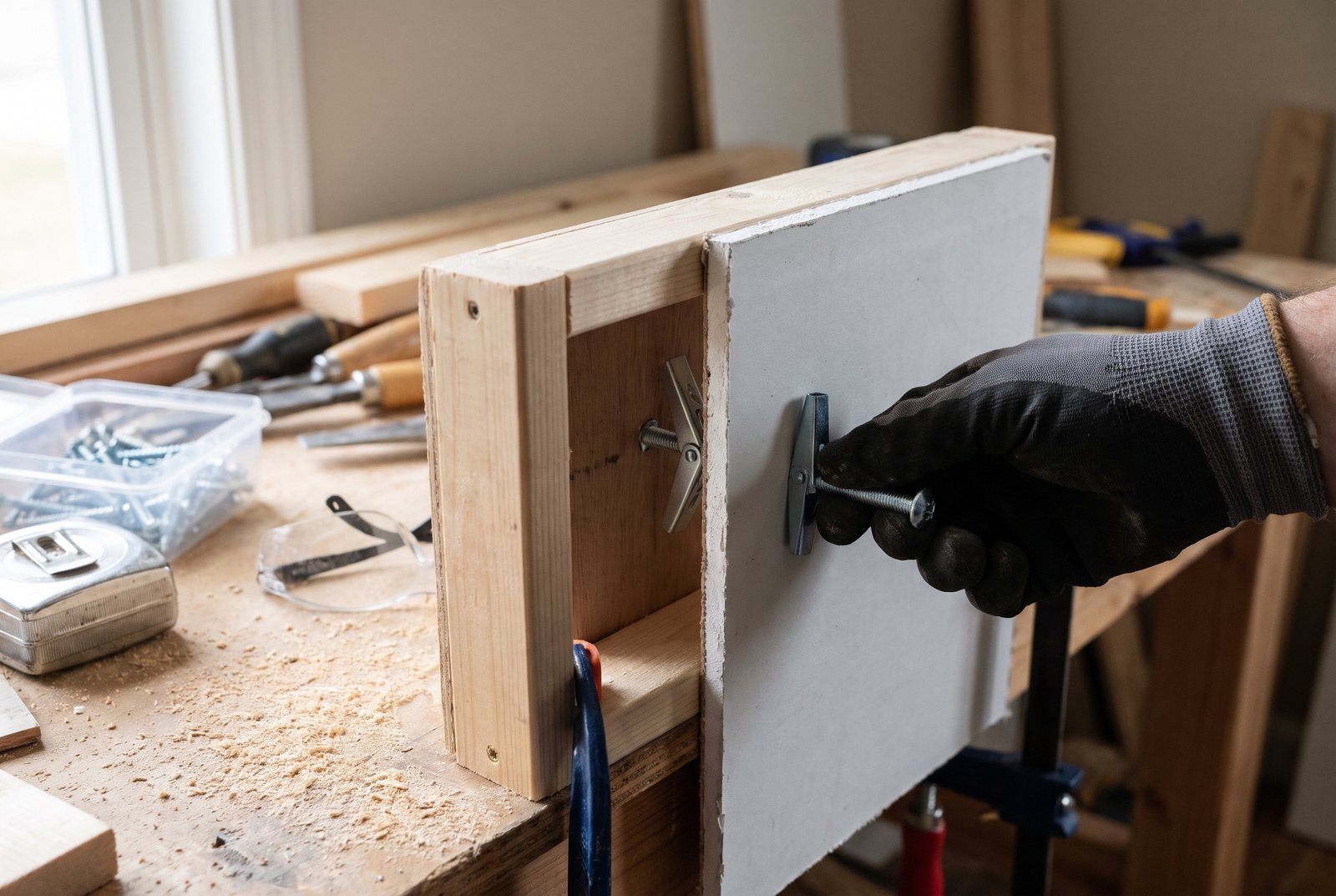
A traditional toggle bolt is a machine screw with spring-loaded metal wings. You fold the wings, push them through a hole in the drywall, and they spring open on the other side. When you tighten the screw, the wings clamp against the back of the drywall and spread the load over a wider area than a plastic anchor ever could.
Common sizes and what they need:
| Bolt size | Drill bit required | Approx. capacity in 1/2" drywall | Safe working load (÷4) |
|---|---|---|---|
| 1/8" | 3/8" | ~30 lbs | ~7 lbs |
| 3/16" | 1/2" | varies by brand | varies |
| 1/4" | 5/8" | ~80 lbs | ~20 lbs |
| 3/8" | 7/8" | ~135 lbs | ~34 lbs |
Choose your bolt length by adding the thickness of whatever you're mounting, plus the wall thickness (usually 1/2 inch for standard drywall), plus another 1/2 inch for the wings to open fully.
The biggest mistake people make is drilling the wrong size hole. Too small and the wings won't fit through. Too large and the wings have nothing to grip. Match the drill bit to the bolt size on the package, not by eyeballing it. After you push the toggle through, pull the bolt back toward you before tightening so you feel the wings seat flat against the inside of the wall. Then snug the screw, don't crank it. Over-tightening crushes the drywall and you lose all your holding power.
The drawback of traditional toggle bolts: if you ever remove the screw, the wings fall into the wall cavity. They're gone. You'll hear them rattle if you knock on the wall, which is a fun surprise for the next homeowner.
Snap toggles: the upgrade worth paying for
Snap toggles (sometimes called strap toggles) solve the falling-wings problem. A metal channel slides down two plastic straps, locks against the back of the drywall, and then you snap the straps off flush with the wall. The anchor stays put even if you remove the bolt, so you can take a shelf down and rehang it without losing the anchor.
The Toggler SnapToggle is the most common brand. Their 1/4-inch version (the BB) is rated for up to 265 lbs in 1/2-inch drywall. Applying the one-fourth safety factor, that gives you about 66 lbs of safe working load per anchor, which is a meaningful step up from a traditional toggle bolt. The 3/16-inch version (BA) is rated at 238 lbs, and the 3/8-inch version handles up to 300 lbs in single drywall. These anchors work in wall materials from 3/8 inch to 3-5/8 inches thick, so they handle everything from standard drywall to doubled-up sheets.
Pricing runs about $0.80 to $1.30 per anchor depending on size and pack quantity. A 10-pack of 1/4-inch Toggler SnapToggles is available at most home centers. They cost more than spring-wing toggles, but the ability to remove and reinsert the bolt makes them worth it for anything you might adjust later.
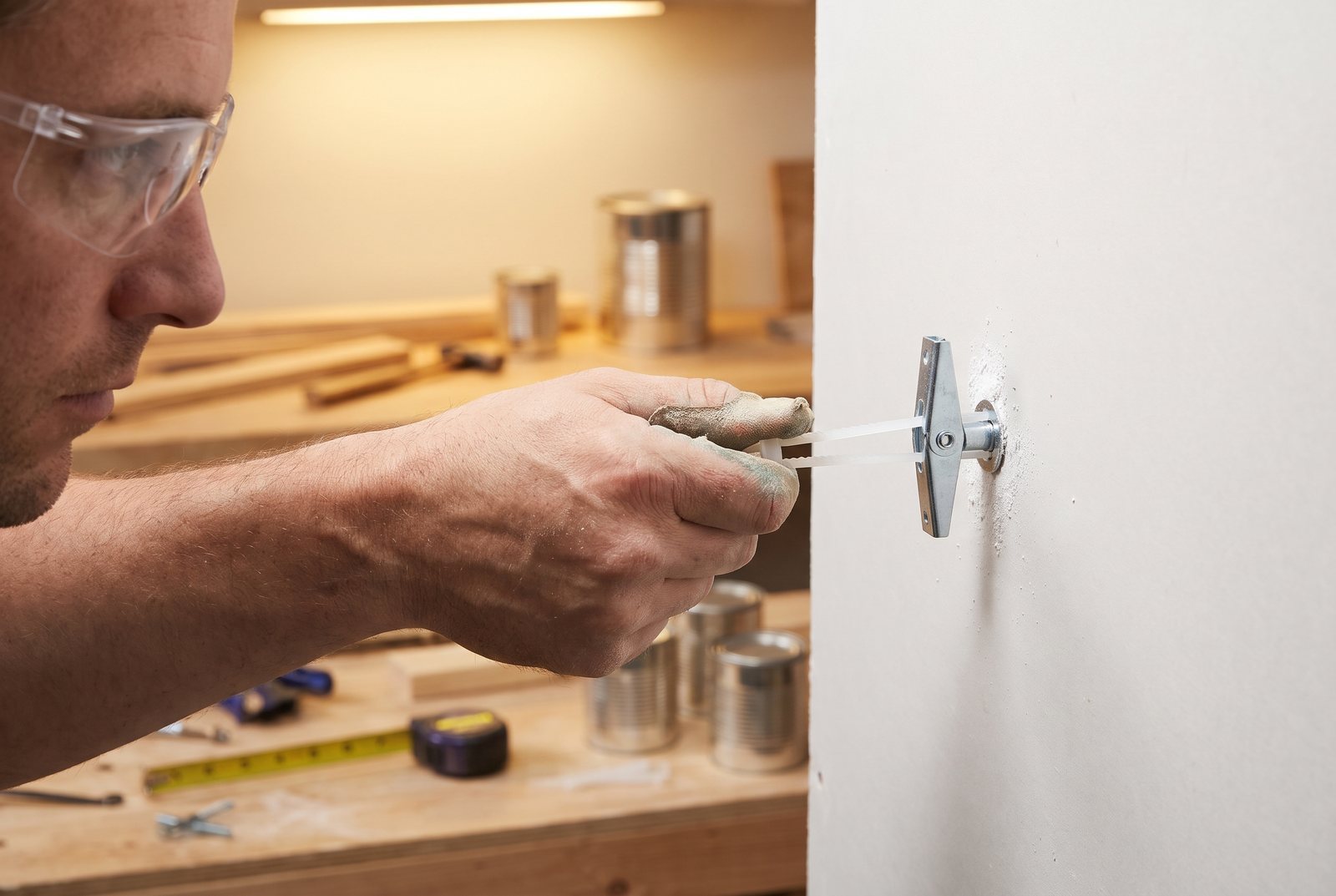
Two things to get right during installation. First, after you pull the straps tight and the channel locks against the drywall, snap the straps off cleanly at the wall surface. If the stubs stick out, your bracket won't sit flat and the load transfers unevenly. Second, use the correct thread size for the bolt. The 1/4-inch SnapToggle takes a 1/4"-20 UNC machine screw. A random screw from your junk drawer will strip the threads inside the anchor.
French cleats: powerful, but only into studs
A French cleat is two pieces of wood or metal, each with a 45-degree bevel, that interlock like a hook and a lip. One piece goes on the wall, the other on the back of whatever you're hanging. The system distributes weight along the entire length of the cleat, which is why workshop tool walls and heavy cabinets use them.
Here's the catch for this article's scenario: French cleats must be screwed into studs. A cleat screwed only into drywall will pull right out under any serious load. If your studs don't line up with where you want the shelf, a French cleat won't help unless you can span enough studs with a long enough cleat. A 48-inch cleat, for example, will cross at least two studs at standard 16-inch spacing and probably three.
For a DIY cleat, rip a piece of 3/4-inch plywood at 45 degrees on a table saw. An 8-foot 1x4 pine board ($8 to $12) also works and gives you both halves. If you'd rather not cut your own, pre-made aluminum French cleat systems run $20 to $40 for a 24-inch bar rated for up to 200 lbs. The OOK 30-inch French cleat system at Home Depot sells for about $32 and is rated for 300 lbs.
If you're building 3/4-inch plywood shelves, a French cleat on the back is one of the strongest mounting methods available, provided you can hit studs.
Picking the right method for your project
The decision usually comes down to weight and whether you can reach a stud.
If the item weighs under 20 lbs (a small shelf, a picture frame, a light coat rack), almost any anchor works. Plastic expansion anchors are fine here.
If the item weighs 20 to 50 lbs and studs aren't available, use snap toggles or 1/4-inch toggle bolts. Space at least two anchors across the bracket and keep the one-fourth rule in mind.
If the item weighs over 50 lbs, you really want to hit at least one stud. Combine a lag screw into a stud on one side with a snap toggle on the other. For a long shelf or a cabinet, a French cleat spanning multiple studs is the most reliable approach.
Kathartic Studios' DIY Rustic Coat Rack project is a good example of a wall-mounted piece where getting the mounting right matters. The rack is a single plank with cast iron hooks, and the guide walks through securing it to the wall. For a coat rack like that, two snap toggles would hold it solidly in drywall if you can't reach studs, since the rack itself is light and coats add moderate, mostly downward force.
For heavier builds like the Solid Red Oak Floating Shelves by Indy Farm Life, where the shelves are thick, solid hardwood mounted on concealed brackets, you want those brackets going into studs. Solid wood shelves are heavy before you put anything on them.
Before you drill: check your wall
Old, damp, or crumbling drywall holds almost nothing. Before you commit to an anchor, push on the wall near your mounting spot. If the surface gives or feels soft, no anchor will save you. Look for hairline cracks, water stains, or areas where paint is bubbling. In older homes, you may have plaster over lath rather than drywall, which is actually stronger for anchors but requires different drill bits (use a masonry bit for the plaster layer).
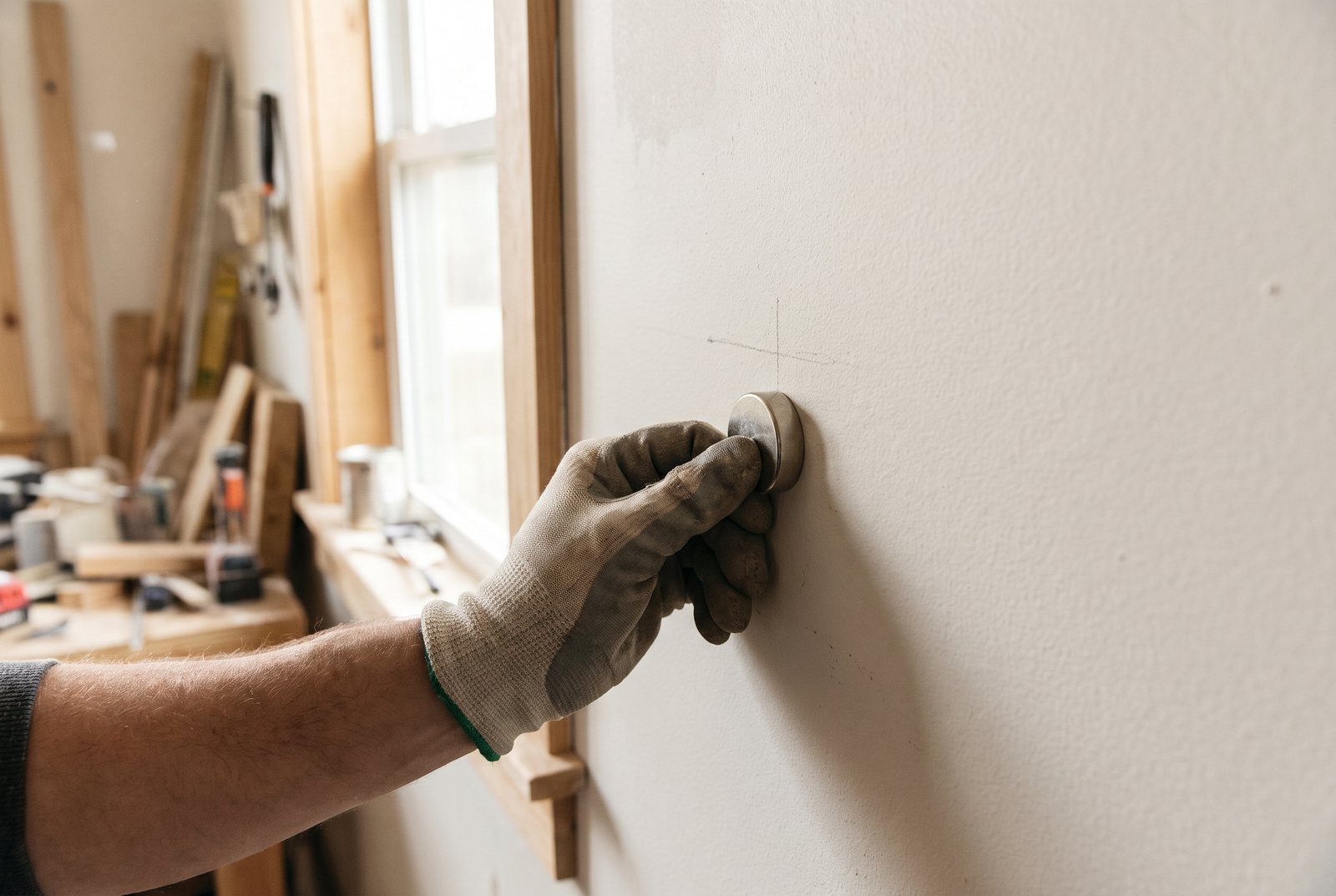
If you're in a newer build with walls packed full of insulation, a stud finder can give false readings. A strong magnet dragged slowly across the wall will find the drywall screws (and therefore the studs) more reliably than a cheap electronic finder. Once you find one stud, measure 16 inches in each direction to locate the next ones.
For anything over 75 lbs, or for wall-mounted cabinets that will hold dishes or heavy items, we'd recommend finding the studs even if it means adjusting your layout. No drywall anchor is a substitute for a structural connection when real weight is involved.
Quick answers
How much weight can I hang on drywall without a stud?
A single 1/4-inch snap toggle is rated for up to 265 lbs in 1/2-inch drywall, but the safe working load is about one-fourth of that, roughly 66 lbs. Use multiple anchors and stay well under the rated maximum.
Are snap toggles better than regular toggle bolts?
For most DIY projects, yes. They hold comparable or higher loads and let you remove the bolt without losing the anchor inside the wall. They cost a bit more (about $0.80 to $1.30 each) but save frustration.
Can I use a French cleat on drywall without studs?
No. French cleats must be screwed into studs to support any meaningful weight. A cleat attached only to drywall will pull out.
What size drill bit do I need for a 1/4-inch toggle bolt?
A 5/8-inch drill bit. The hole needs to be large enough for the folded wings to pass through but small enough for them to grip the back of the drywall once open.
Work it out in the Workshop
Put in your own sizes and get the numbers, the plan or the fix.
Projects in this post
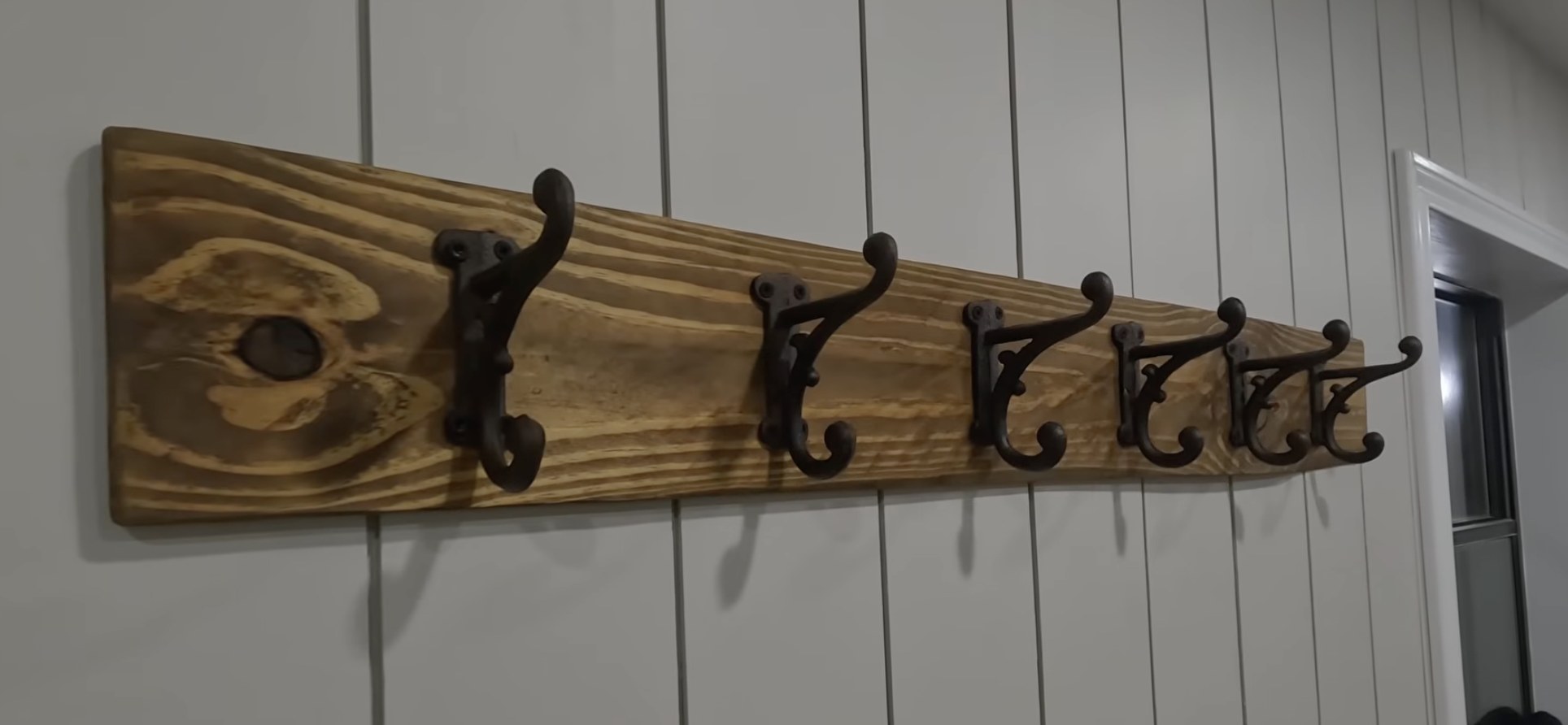
DIY Rustic Coat Rack
by Kathartic Studios
Open the project guide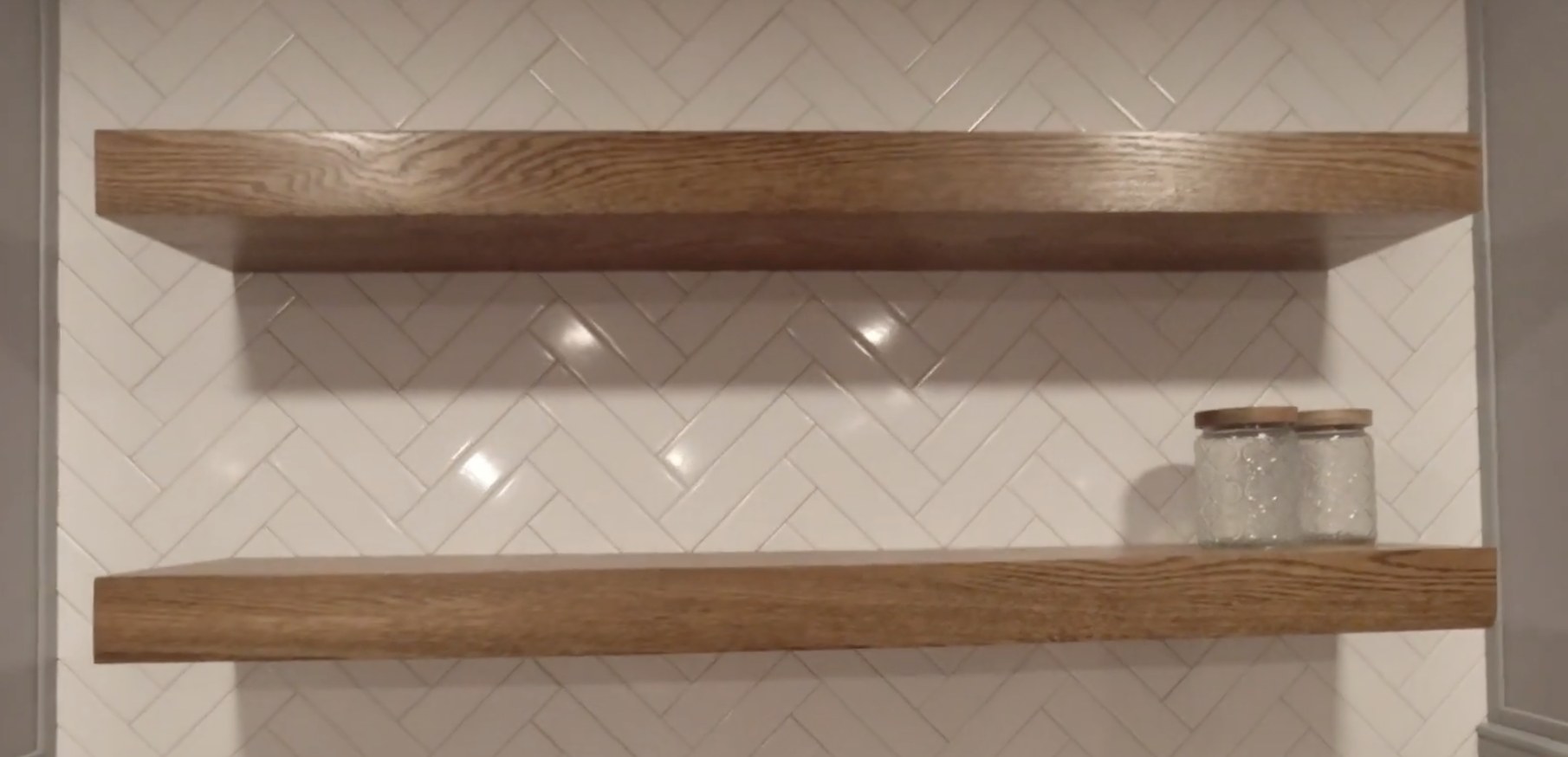
Solid Red Oak Floating Shelves
by Indy Farm Life
Open the project guideKeep reading
All posts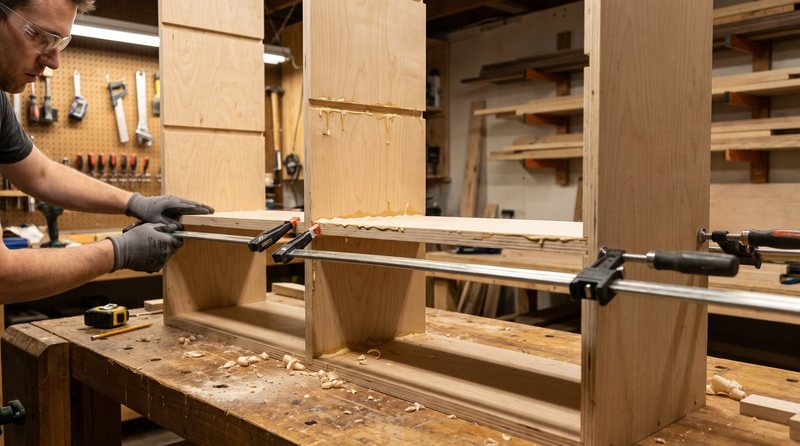
Fixed vs Adjustable Shelves: When and Why Each One Matters
Fixed shelves stop racking and sag in tall cabinets and bookcases. Learn when to use fixed shelves, when adjustable ones work better, and why most builds need both.
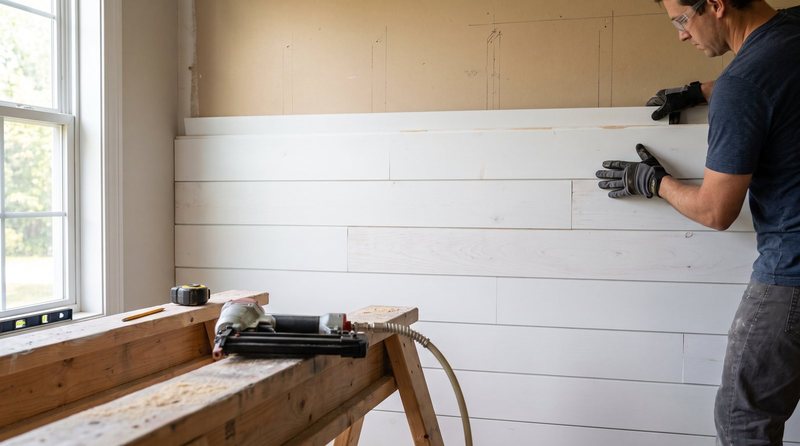
How to Stagger Shiplap Joints So Seams Never Line Up
A simple way to stagger plank joints on shiplap, board-and-batten, and accent walls. Covers the cut-off formula, stud-landing tips, and common mistakes.
How to Drill Straight Holes Without a Drill Press
Three proven methods for drilling perpendicular holes by hand: a shop-made guide block, the square-and-mirror trick, and portable drill guide attachments.