How to Install Gutter Guards on a Steep Roof Without Overshoot
Water overshoots gutters on steep roofs because it moves too fast for most guards. Learn which guard style works and the right install angle.
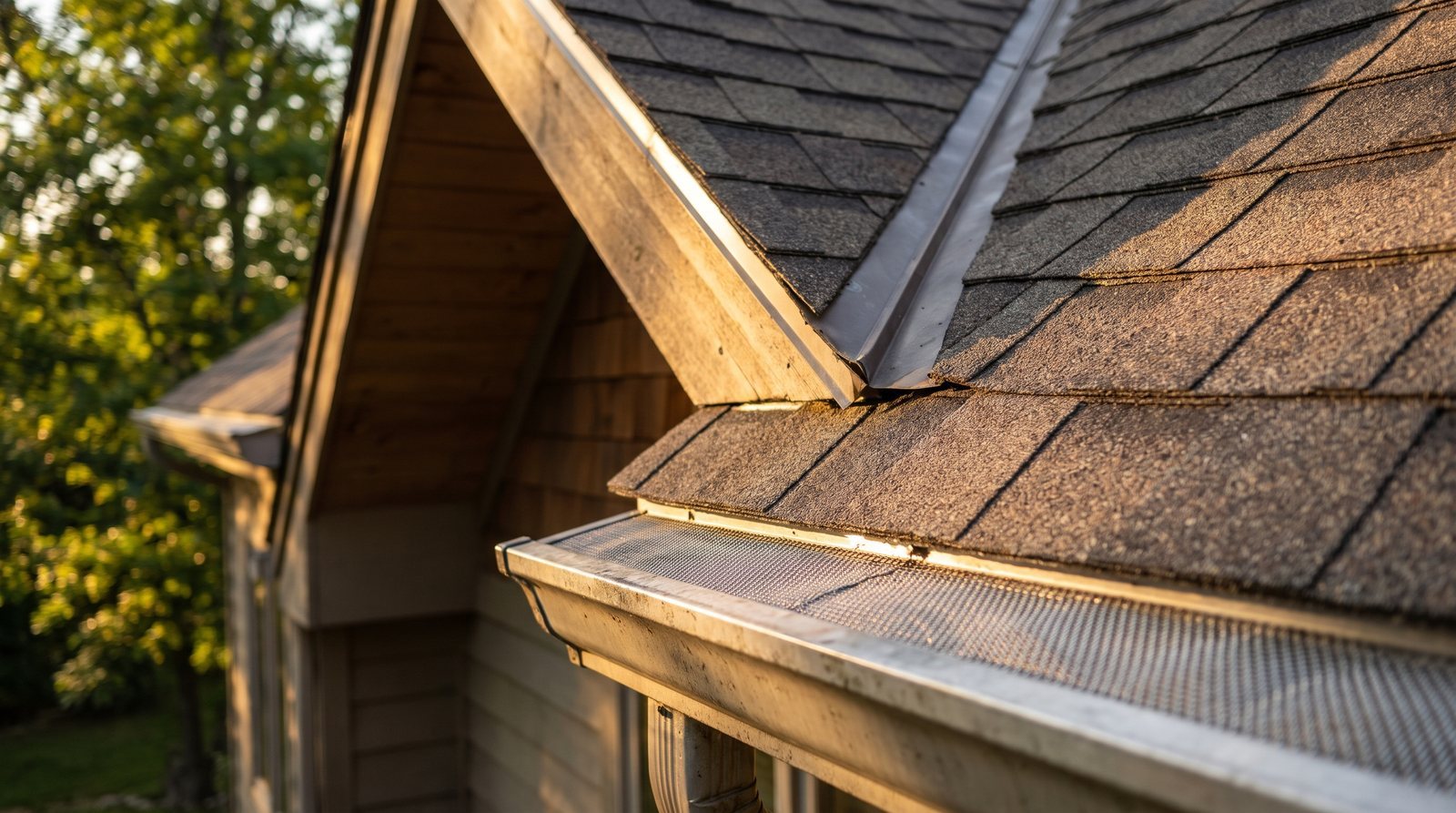
If your gutters dump water over the edge every time it rains hard, the problem probably isn't the gutters. It's the roof pitch. On steep roofs (7/12 and above), rainwater picks up so much speed on the way down that it skips right over the gutter trough, especially once you add a guard that acts like a ramp. This guide covers why that happens, which guard style actually handles it, and the specific installation angle that keeps water where it belongs.
Why water overshoots on steep pitches
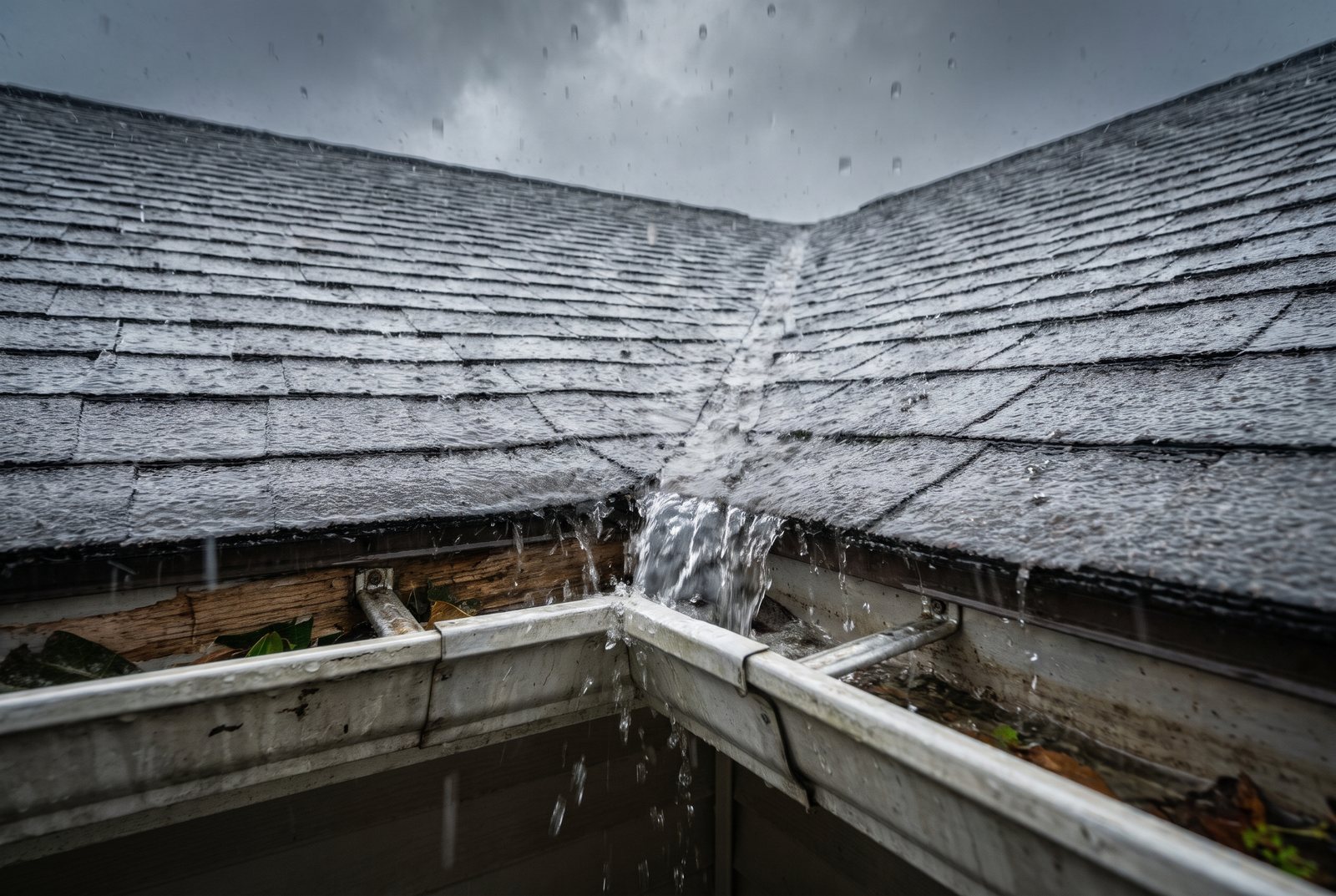
Think of your roof as a slide. The steeper the slide, the faster you go. At a 7/12 pitch or greater, rainwater accelerates enough during a moderate-to-heavy storm that it no longer drops neatly into the gutter. It sheets across whatever surface is in its path and launches off the edge.
Most gutter guards make this worse. Reverse-curve (surface tension) guards rely on water clinging to a rounded lip and curling into the trough. That works fine on a 4/12 ranch roof. On a steep colonial or A-frame, the water is moving too fast to follow the curve. It just keeps going. If the guard's nose is even slightly dirty with pollen or oxidation, the problem gets worse.
Foam inserts fail for a different reason. High-velocity water saturates the foam faster than it can drain, so the excess spills over the front. And the small pores clog quickly with shingle grit, compounding the issue over one or two seasons.
Micro-mesh guards: why they work on steep roofs
Micro-mesh is the most consistently effective style for steep pitches. A fine stainless steel mesh (typically 275 to 900 holes per square inch) sits over an aluminum frame and blocks debris as small as pine needles and shingle granules while letting water pass through.
The reason this works on a steep roof comes down to installation angle, which we'll cover below. But the mesh itself matters too. Because the openings are so small, water doesn't need to "find" a slot or follow a curve. It filters through on contact across the entire surface area. Even fast-moving water has thousands of tiny entry points per linear foot.
Several DIY-friendly kits are available at prices that make professional installation hard to justify:
| Product | Approx. price per linear foot | Where to buy |
|---|---|---|
| Raptor micro-mesh | $2.92 to $4.43 (48 ft. kit ~$140) | Amazon, Home Depot |
| EasyOn micro-mesh | $1.65 to $1.99 (100 ft. kit ~$165 to $199) | Costco |
| Gutterglove micro-mesh | $2.31 to $3.53 | Home Depot |
Look for frames with V-bend technology in the aluminum. This adds rigidity and prevents the mesh from sagging under snow or ice loads over time. Both stainless steel mesh and aluminum frames can last 20-plus years with minimal maintenance.
What about brush guards?
You'll see some sources recommend brush-style guards for steep roofs. The idea is that the bristles break up fast-moving water and redirect it downward. There's some truth to that. But brush guards trap fine debris (pine needles, seeds, helicopter pods) inside the bristles, and cleaning them means pulling out the entire brush section. If you have trees near the roofline, brush guards become a short-term fix that creates a long-term chore. We'd steer toward micro-mesh for most steep-roof situations.
The 5 to 10 degree rule for steep-roof installation
This is the part most people get wrong, and it's the single biggest reason gutter guards fail on steep roofs.
On a standard-pitch roof (say 4/12 to 6/12), you install the guard at a forward slant of roughly 5 to 25 degrees off horizontal. That angle lets debris slide off while water filters through. On a steep roof, you need to use the low end of that range: 5 to 10 degrees. Manufacturers like Raptor specify this for pitches of 8/12 and above.
Why? A shallower guard angle creates resistance against the fast-moving water. It slows the sheet flow just enough to let it pass through the mesh instead of skating over the edge. If you install the guard at the same steep angle as the roof, you've just extended the ramp.
Here's how to check your angle during installation: the mesh trough (the lowest point of the guard between the back edge and the front lip) should sit at least 1/8 inch below the top of the gutter lip. If water pools on top of the guard, you've gone too flat. If water still overshoots, the angle is still too steep. Adjust in small increments.
Step-by-step installation on a steep roof
Before you touch a guard, clean the gutters completely. Remove all debris, flush the downspouts with a hose, and check the gutter slope (you need a minimum of 1/16 inch drop per foot toward each downspout). Fix any loose hangers or sagging sections. Installing guards over clogged or misaligned gutters is the most common mistake, and it guarantees problems within the first heavy rain.
Also measure your gutter width. Most residential gutters are 5-inch or 6-inch K-style. For steep roofs or large roof areas, 6-inch gutters handle the higher water volume much better. If you're running 5-inch gutters on a steep roof and already having overflow issues, upgrading the gutters may be worth doing before adding guards.
Fastening the guards
-
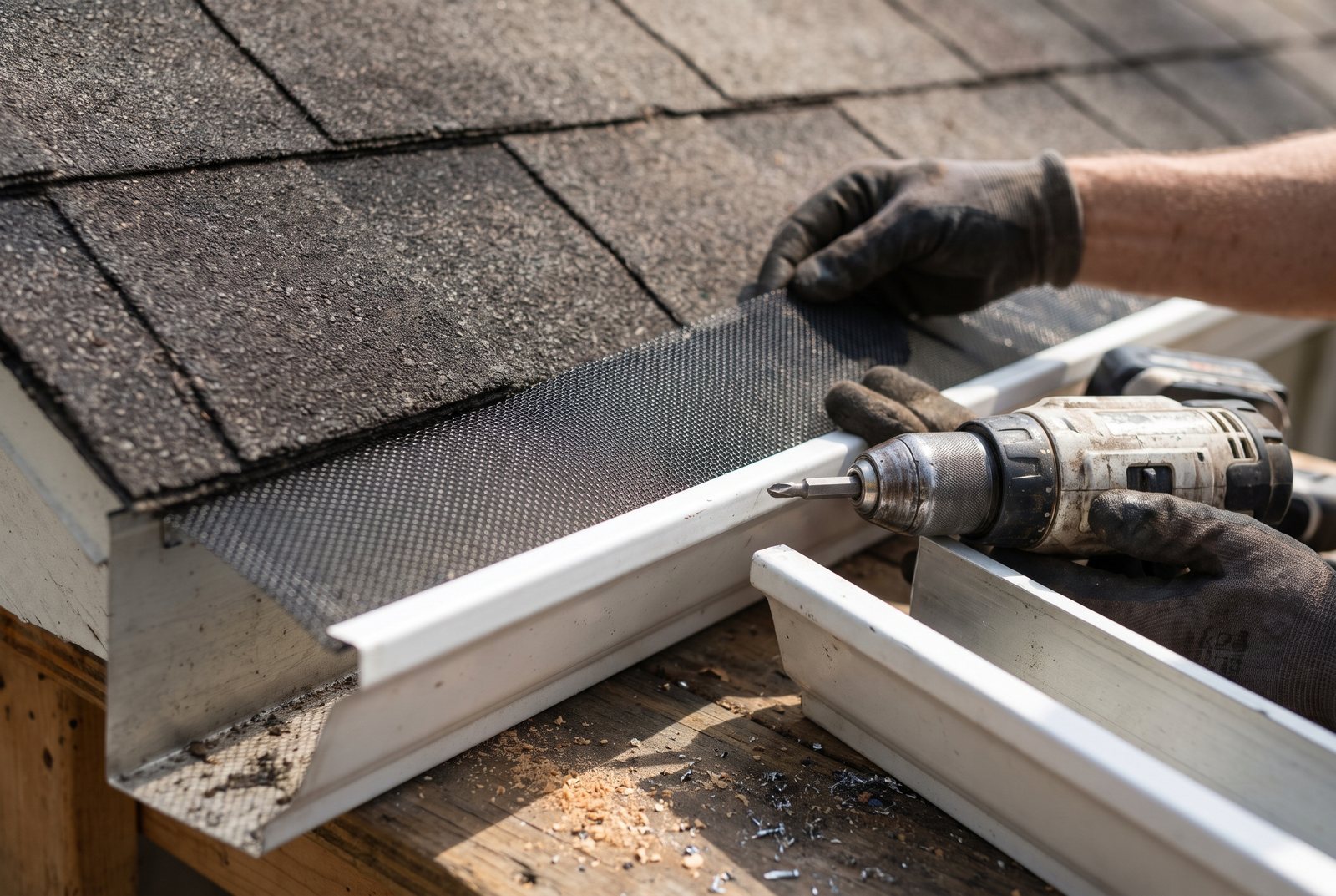
Slide the back edge of the guard under the first row of shingles. It should slip under without force. If your shingles are sealed down tight (common on steep roofs where adhesive strips bond under sun heat), don't pry them up. Instead, bend the rear flange of the guard and fasten it directly to the fascia board. Screwing into shingles can void your roof warranty and create leak points.
-
Set the front edge of the guard flush on the top front lip of the gutter. No gap. A gap between the guard's front edge and the gutter lip lets debris wash in and defeats the purpose.
-
Secure the front edge with #8 x 3/8 in. or #8 x 1/2 in. self-tapping, hex-head stainless steel screws. Use three screws per 4-foot section, evenly spaced. Stainless steel matters here because galvanized screws will eventually corrode against aluminum.
-
Some kits include 3M VHB double-sided tape as an alternative or supplement to screws. If you go this route, apply it when the air temperature is at least 60°F (65°F to 100°F is ideal). The tape reaches about 90% bond strength in 24 hours and full strength in 72 hours. Don't rely on it alone in areas with heavy snow loads.
-
After each section is fastened, step back and sight along the guard from the end of the run. You're checking that the angle stays consistent, section to section. An uneven angle creates low spots where water pools and high spots where it overshoots.
A real-world example
Indy Farm Life walked through this exact problem on their project, Installing Perforated Gutter Guards on a Steep Roof. Their steep-pitch install demonstrates the overshoot issue and shows how adjusting the guard angle solves it. If you want to see the technique before you're up on a ladder, their project guide is worth a look.
Safety on a steep roof
OSHA defines a steep roof as 4/12 or greater and requires fall protection for any work 6 feet or more above a lower level. Those rules apply to job sites, not homeowners working on their own homes, but the physics of a fall don't care about your employment status.
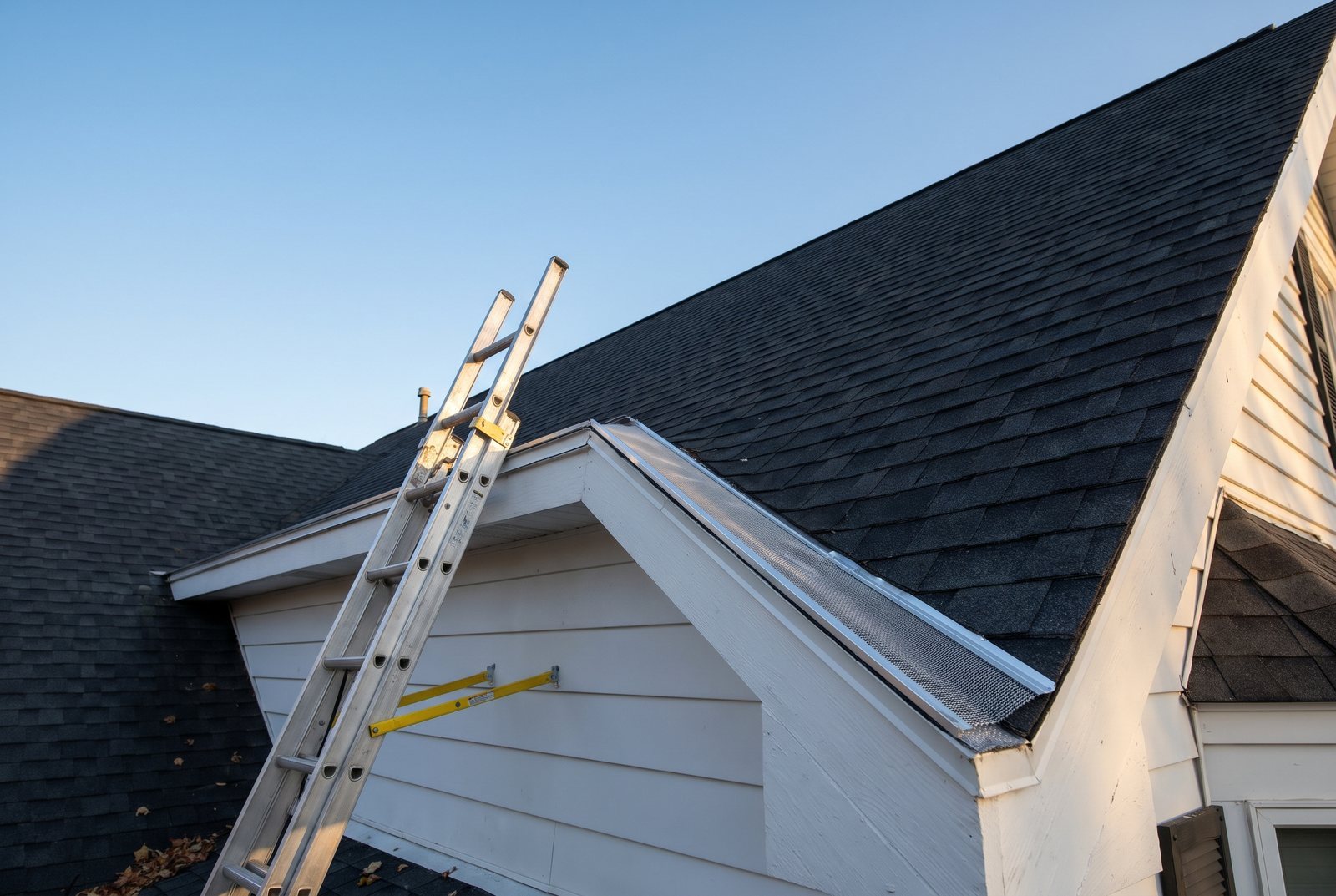
Use an extension ladder with a standoff stabilizer so you're not leaning the ladder against the gutters (which bends them). Place the ladder base 1 foot out from the wall for every 4 feet of height. On a steep roof, a personal fall arrest system (harness, lanyard, and roof anchor) is not overkill. It's the same gear roofers use every day.
If your roof is three stories or higher, or if you're not comfortable working on a slope, hire a licensed gutter installer. The materials are cheap. A fall is not.
Wildfire zones and local codes
Most US jurisdictions have no specific building code for gutter guards on single-family homes. However, in wildfire-prone areas (especially those following California Building Code Chapter 7A), gutter guards may need to be non-combustible with a fire-resistance rating meeting ASTM E2768. Stainless steel mesh on an aluminum frame typically qualifies, but check with your local building department if you're in a designated wildfire interface zone.
Your underlying gutter system still needs to meet code: proper slope, secure fascia attachment, and adequate downspout spacing (generally one downspout per 40 linear feet of gutter).
Quick answers
Do gutter guards work on a 10/12 or 12/12 roof?
Yes, but only if you use micro-mesh guards installed at a shallow 5 to 10 degree angle. Reverse-curve and foam guards are poor choices at these pitches because water moves too fast to follow a curve or soak through foam.
How do I stop water from overshooting my gutter guards?
Reduce the installation angle of the guard so it sits nearly flat, between 5 and 10 degrees. The front edge must be flush with the gutter lip with no gap. If water still overshoots after adjusting, your gutters may be undersized for the roof area; consider upgrading from 5-inch to 6-inch K-style.
Can I install gutter guards myself on a steep roof?
You can, and the materials cost roughly $1.65 to $4.43 per linear foot for micro-mesh kits. The real concern is safety. Use a harness and roof anchor on any steep pitch, and set the ladder at a 4-to-1 ratio with a standoff stabilizer.
Do I need to lift shingles to install gutter guards?
Not always. If shingles are sealed down, bend the guard's rear flange and fasten it to the fascia board instead. Forcing shingles up can break the seal, void your warranty, and create leak paths.
The project in this post
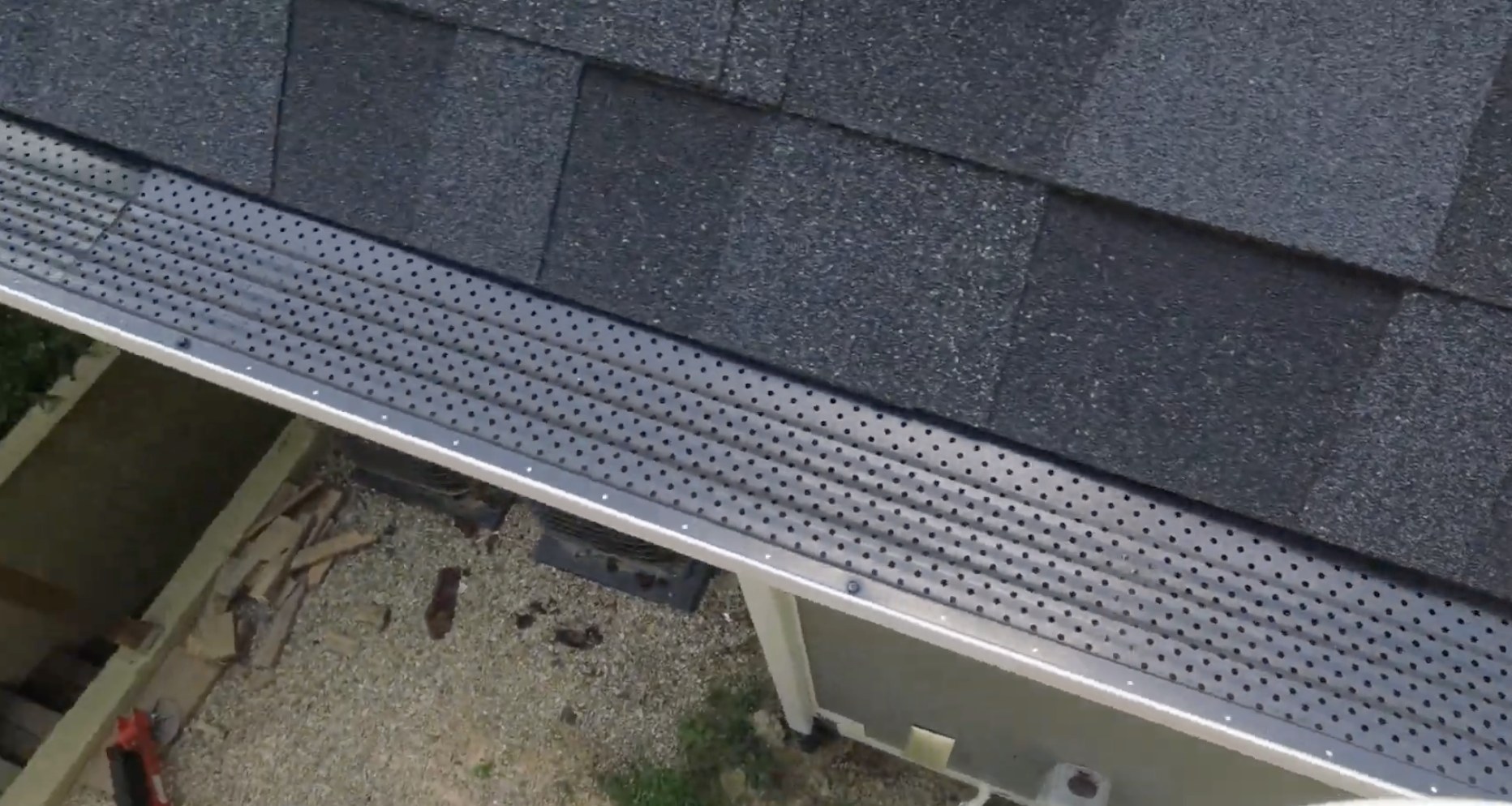
Installing Perforated Gutter Guards on a Steep Roof
by Indy Farm Life
Open the project guideKeep reading
All posts
How to Winterize a Wood or Composite Deck Before Frost
A fall checklist for cleaning, sealing, and protecting your deck before winter. Covers wood and composite options, fastener checks, and furniture storage.
How to Keep Fence Pickets Level on Uneven Ground
A string line, the right layout method, and a plan for your slope are all it takes. Here's how to get a straight fence top on ground that isn't.
Best Wood for Raised Garden Beds: Cedar, Redwood, PT, and Pine
Cedar, redwood, pressure-treated pine, and untreated pine compared for longevity, food safety, and cost. Clear recommendations by budget and climate.